
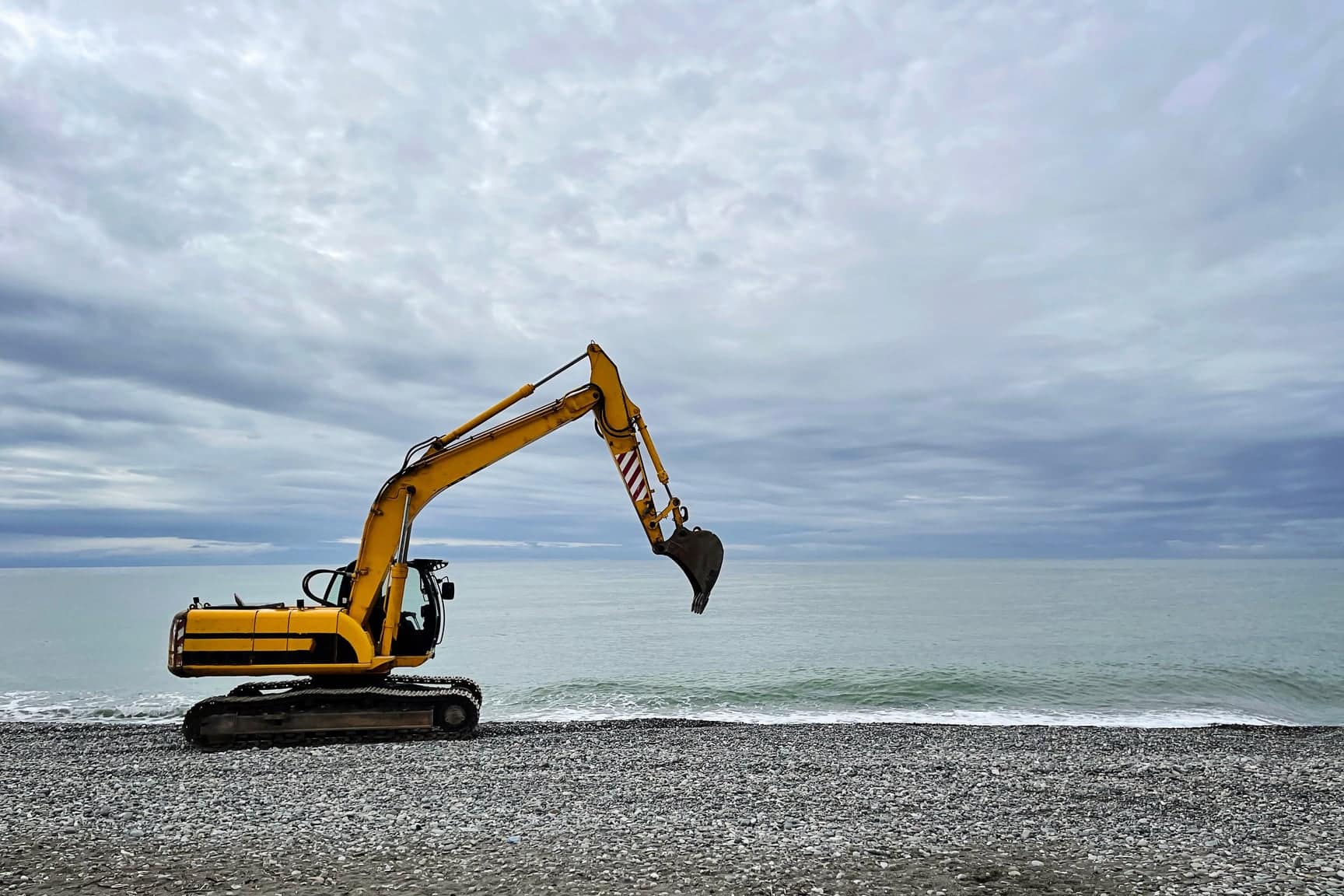
General liability insurance is the policy an excavation contractor carries for damage its work does to property that belongs to someone else, and for injuries to people who are not on its payroll. It is also designed to pay for a defense when someone claims the business caused that harm. On a dig, the loss to ask about first is the buried line the bucket finds before anyone knew it was there, and how the policy’s wording treats it.
Every excavation job moves earth next to things the contractor does not own: gas and water services, power and communication lines, a neighbor’s foundation, the curb, the street, the driveway the trucks cross. When one of those is damaged, the owner, the utility and the general contractor may all look for the policy that answers. Below, those losses come one at a time, with where the wording can narrow and the losses that belong to other policies in the program.
The line between your work and someone else’s property
General liability is written for harm to others. A gas service sheared by the bucket, a sewer lateral crushed under a loaded track, a retaining wall next door pushed out of line by the weight of a spoil pile: in each, the damaged property belongs to someone else, and that is the ground the policy is designed to address. The policy is also designed to pay for a lawyer when the claim is disputed, which on a utility strike can matter as much as the repair.
What the policy is not written for is your own equipment, your own crew or your own vehicles on the road. The excavator that rolled into the trench while it hit the line is a contractors equipment question, the laborer hurt in the same event is a workers’ compensation question, and the dump truck that cracked the driveway on the way in may be a commercial auto question. Keeping those apart is how a bad day gets sorted into the policies written for each part of it.
Read across the columns. Damage to property that belongs to someone else, such as a gas service line struck by a bucket, a neighbor’s foundation that settles beside a dig, or a street cracked by a loaded machine, is the ground general liability is designed to address, subject to its exclusions and endorsements. Damage to the contractor’s own machines and attachments belongs to contractors equipment insurance. An injury to someone on the contractor’s own crew belongs to workers’ compensation. The figure shows where each loss is sent first, not what any policy pays. No figures are shown.
When the bucket finds a buried line
The strike at the top can play out in an order like this. The machine stops, the crew clears the area, the utility is called and the line is made safe. Then the questions start: whether a locate request was made, whether the line was marked, how far the dig was from the marks, and who pays for the repair, the lost service and the time the utility’s crew spent. The utility may bill you directly. A business that lost gas or power may also look to you for what the outage cost it.
Gas services and mains
A struck gas line is a loss an underwriter may ask about first, because it can turn from a repair bill into a fire or an explosion. The policy’s wording on underground damage and explosion is the part to read before the job, not after it.
Power, fiber and communication lines
A cut fiber or communication line can bring a bill for the repair and a claim for the service that went down. Whether the second part is property damage under your policy, or a loss of use the policy treats differently, turns on the form and on how the claim is framed.
Water and sewer
A broken water main or sewer lateral can flood a basement or undermine a street. The damage to the line and the damage the water does afterward are both questions for the policy, and both are worth raising on the application if your crews work near older infrastructure.
Locate requests are part of this story. The national before-you-dig service routes a request to the local center. The rules behind it, and what follows when a line is not marked, differ from state to state; the state pages take them up one state at a time, with Nebraska, New Mexico, Oklahoma, South Dakota, Utah, Wyoming and Kansas among them.
Damage next door: settlement, undermining and collapse
Basement and foundation digging puts your work right against structures that will stay standing. When a neighboring wall cracks, a slab drops or a porch pulls away from the house as the excavation opens up, the owner’s claim is against the business that dug. That is property damage to others, the ground general liability is designed for. It is also the claim where collapse and subsidence wording does the most work, and where a policy may treat the event differently depending on whether the structure fell, settled or simply cracked.
The same is true of grading. Water that used to run across a lot one way and now runs onto the next property can damage a building, a yard or a driveway over time. Who changed the grade, and when, becomes the question the claim turns on.
Read from the top layer down. The insuring agreement is written for damage to the property of others caused by the business’s work, on its terms. The exclusions take parts of that grant away, and an excavation contractor should ask in particular about underground damage, collapse, explosion, pollution and the contractor’s own faulty work. Endorsements then restore or narrow pieces of what the exclusions removed. The declarations set the limits the policy will pay to. Last, the contract that hired the crew decides who must be named as an additional insured and whose policy answers first. Every layer is read together; the figure shows the order of reading, not any amount. No figures are shown.
Questions to raise before the application is signed
The policy you buy is the one you will be held to. These are the parts of a general liability policy an excavation contractor should ask about by name, because each can change the answer to the claims above.
Underground damage, collapse and explosion
Some policies written for contractors limit or exclude damage to underground property, collapse of a structure caused by the work, and explosion. Others include them, or give them back by endorsement. Ask which applies to the policy in front of you, and whether the answer changes for any kind of work you do.
Pollution
Fuel, hydraulic fluid, sediment or contaminated soil leaving the site can fall under pollution wording rather than ordinary property damage. If you work near streams, on sites with old tanks or with fill you did not source, raise it before binding.
Your own work
General liability is designed for damage your work causes to other property; ask how the policy treats the cost of redoing work that was done wrong. Fixing a pad that was graded out of tolerance can be a business cost the policy does not reach; damage that the bad pad later causes to someone else is a liability question.
The operations described on the policy
The declarations describe what your business does. If that description says site preparation and your crews also tear down buildings or clear wooded lots, ask whether demolition and land clearing are within it before you bid that work. The page on insurance for demolition contractors sets out what a tear-down adds to that question.
Working for a general contractor
When excavation work arrives as a subcontract, the subcontract carries its own insurance terms. A general contractor can ask for a certificate before your machines reach the site, and the contract behind it can ask for more than the certificate shows. When the same contract also names workers’ compensation, our post on the two lines of a bid package reads them side by side.
Additional insured status
The general contractor, and sometimes the project owner, may ask to be added to your policy as additional insureds so your policy can respond for them when a claim comes out of your work. That status comes from an endorsement on the policy. The contract may name the kind of endorsement it wants, including whether it must reach work you have already finished.
Primary and non-contributory, and waivers
A subcontract may also ask that your policy answer before the general contractor’s own, and that your insurer give up its right to recover from them. Each request is an endorsement or a policy term, not a box on a form, and each is worth confirming before you sign the contract rather than after the certificate is rejected.
The certificate
A certificate summarizes what the policy says on the day it is issued. It does not change the policy, so the endorsements the contract calls for have to be on the policy first. Send the insurance section of the contract with the request and the agent can check it against the policy before the certificate goes out.
Where this policy hands off to the others
A strike can raise questions under more than a policy at once, and each policy’s own wording decides its part. Damage to what belonged to someone else is the general liability question. The machine is a question for contractors equipment insurance, the injured employee for workers’ compensation, and the truck and trailer on the road for commercial auto. When a claim is larger than the general liability limit, an umbrella may sit above it on its own terms. A shop or yard that burns is a question for property insurance instead.
Choosing limits for excavation work
The declarations page lists the limits that apply: a per-occurrence limit, a general aggregate for the term, a products and completed operations aggregate for work you have finished and left, and sublimits such as medical payments and damage to rented premises. Read them with your agent against the jobs you take, since the limits are set by the policy and your contracts.
The contracts you sign can set the floor. A general contractor, a municipality or a utility owner may name the limits it expects, and the work you plan to bid next is a fair guide to where the program needs to be. Past the contract minimum, weigh a higher general liability limit against an umbrella layered over the liability policies, with the depth and nearness of your digging in mind.
Why Excavating Business Insurance
We read a general liability quote with a strike in mind, line by line, before it is signed. Before it goes to market we ask what your crews dig, how deep, how close to standing structures, and how they handle locates. Each quote is then checked clause by clause for the underground, collapse, explosion and pollution wording and for the additional insured endorsements your contracts call for, and you see where the quotes differ before you compare what they cost. How this policy fits the rest of an excavation program is on the excavation insurance page.