
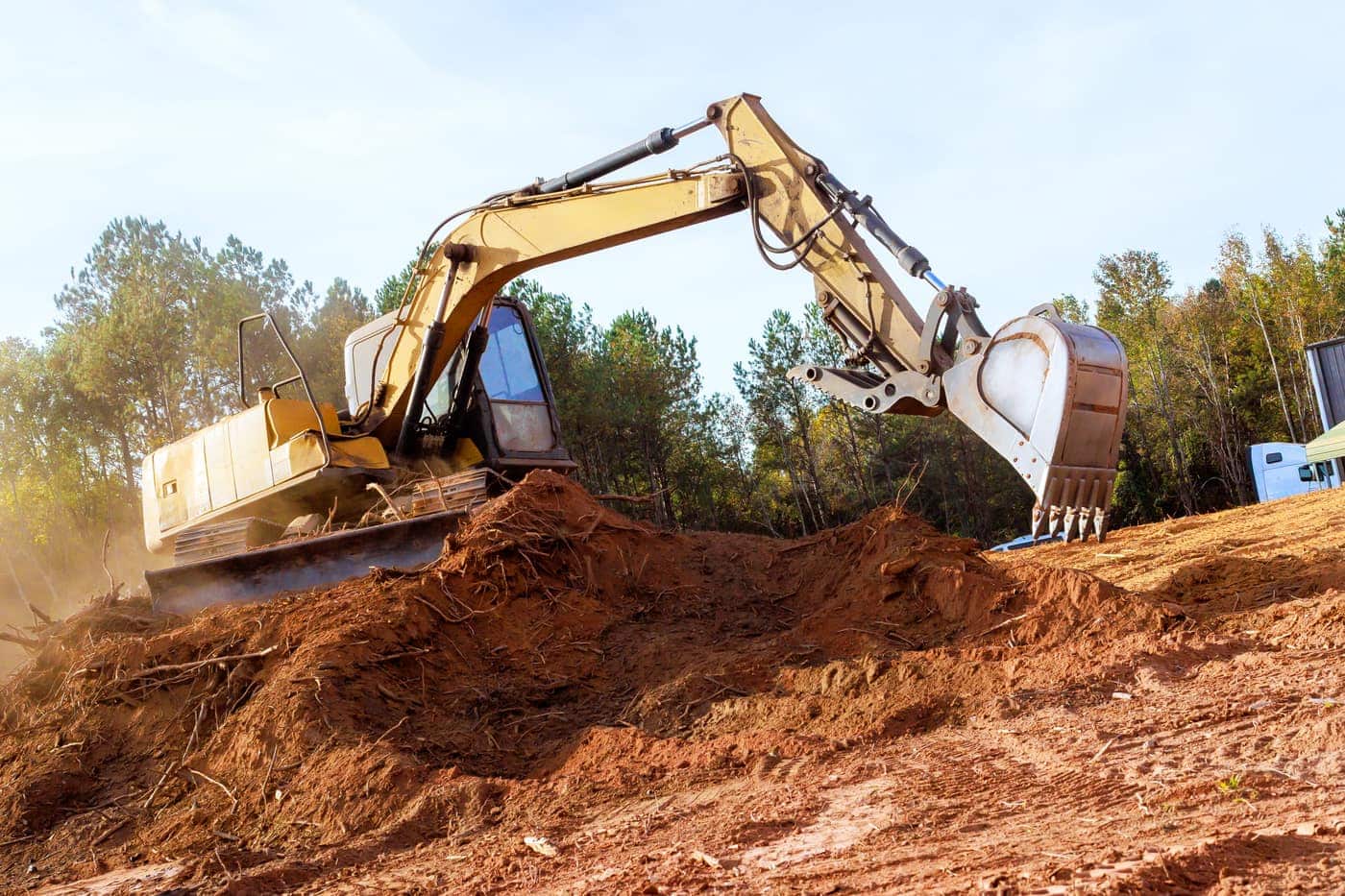
For a Missouri excavation business, two statutes frame the program. The damage-prevention act puts the notice first: an excavator shall not make or begin any excavation on public or private ground “until such excavator gives notice to the notification center”. The workers’ compensation chapter puts the employer’s duty next: “Every employer subject to the provisions of this chapter shall, on either an individual or group basis, insure their entire liability under the workers' compensation law”.
Read each quoted sentence beside its Revisor link, and ask the office named for any point still open. The full policy picture sits on our excavation insurance page; here the subject is Missouri alone.
Missouri’s notification center and your notice to it
The damage-prevention act opens its definitions section with the phrase “For the purposes of sections 319.010 to 319.050” (RSMo § 319.015), and that is how the Revisor’s site prints the range of sections it governs. The duty itself sits in a later section. In the statute’s words, an excavator shall not make or begin any excavation in any public street, road or alley, right-of-way dedicated to the public use or utility easement of record or within any private street or private property until such excavator gives notice to the notification center (RSMo § 319.025). The quoted text reaches private property as well as public ground, which matters to a crew digging a foundation for a homeowner or a builder.
Timing is in its own section. The notice-form section says the notice must come “at least two working days, but not more than ten working days, before the expected date of commencing the excavation activity” (RSMo § 319.026). That window has two edges, so a request filed far too early and a request filed too late both deserve a second look. A crew chief who sets a dig date should check the calendar against that sentence, and write the date the request went in on the job ticket.
The statute also says who must call. It defines the excavator as “‘Excavator’ , any person making one or more excavations who is required to make notices of excavation under the requirements of sections 319.010 to 319.050” (RSMo § 319.015). A company that hires subcontractors to open trenches, or that is hired by a general contractor to grade a pad, should settle in the subcontract which party places the notice. The statute draws the line by who makes the excavation; the paper you sign decides who handles the paperwork.
Reaching the center. The statute gives the recipient no name beyond the notification center, and we have not confirmed one, so no phone number or website is printed here. Utilities with lines near the site can tell you how a request gets there. Keep their reply with the job file.
The ticket you keep. The statute fixes a two-edged window and a named recipient, so a dated copy of your request is the paper that shows your crew followed it. An underwriter may ask how your crews locate lines, and an adjuster handling a strike may ask what notice went in. A request on file lets you answer from the page. It does not decide how a claim is handled; the policy wording does that.
A Missouri dig begins with a notice to the notification center inside the window the statute quotes. The crew digs, a buried line may be struck, and the liability policy may then respond on its terms and the facts of the job. No figures are shown.
A cut line and a neighbor’s wall: how the wording decides
A dig can end in a bill for damage to property that is not yours, and the machine is still running when it happens. A cut gas main, a severed fiber conduit, a broken water line, a cracked sewer lateral and the wall of the house next door all fit that description. That is the exposure the general liability form may address, and only on the terms it prints.
Whether the policy responds, and how much it pays, turns on its wording and the facts. An insurer may read the description of operations on your application against the work your crew was doing when the line was hit. It may also read the limits and the deductible or retention against the loss. They also read your contract, because a construction contract may shift responsibility for utility damage by clause, and a policy may carry conditions that tie coverage to how the work was done. Ask your agent how those parts of your own policy read, in plain terms, while the application is still open.
A strike can bring more than one loss. The utility sends a repair bill, a business next to the site loses its power for a day, a neighbor reports a cracked foundation, and your own machine may sit with a bent boom. The utility bill and the neighbor’s claim are third-party questions. The damage to your own excavator is an equipment question, and a different policy may answer it. Keeping those lines apart on paper, with the machine on an equipment schedule and the third-party exposure on the liability form, makes the first call to your agent shorter.
The application is where the wording starts. Describe the work honestly: basements and footings, trench work for utilities, site preparation, grading for building pads. Tell the agent how your crews request locates and who on the crew signs off on a dig. A policy written to the work you describe can be read against the work you actually did. A policy written to a thinner description leaves more to argue about after a loss.
Questions worth putting to your agent before a Missouri dig: Does the application’s description of operations name foundation work, trenching and pad grading separately? Does the policy carry any condition tied to how a locate was requested? Which limit applies if the utility and the neighbor both claim? Is a machine damaged in the same strike handled on the equipment schedule? The answers are in the policy, not in this page, and writing them down next to the job ticket gives you one file to open when a claim arrives.
Credentials for Missouri dig work: a question to put to the state
Which license, registration or permit Missouri excavation or grading work calls for is a point we have not confirmed, and nothing here answers it either way. The Division of Professional Registration is the place to start. Write down what you are told, with the date and the name, and keep it with the bid.
An application may ask what credentials your business holds, and a permit office may ask for a certificate before it issues anything. Describe the work to the permit office and to the underwriter in the same words, so the two files never disagree.
Your crew and Missouri’s workers’ compensation law
The Missouri statute on employer insurance reads: “Every employer subject to the provisions of this chapter shall, on either an individual or group basis, insure their entire liability under the workers' compensation law” (RSMo § 287.280). That sentence is the employer’s duty. The same chapter defines who counts as an employer, and one clause is aimed at the building trades: the definition section says that “except that construction industry employers who erect, demolish, alter or repair improvements shall be deemed an employer for the purposes of this chapter if they have one or more employees” (RSMo § 287.030).
One caution comes with that quote. The text does not decide whether excavation work falls inside the construction-industry wording, so we do not say your business is or is not inside it. The Division of Workers' Compensation can tell you, and your agent can say how your own class of work is treated on the policy.
Two more points stay open here: whether a sole proprietor or company owner may elect to be included or excluded, and what legal form of insurer writes the coverage in Missouri. The Division of Workers’ Compensation is the office to put both to.
On a Missouri crew the application turns on classification and payroll. A foreman who also runs a machine is the kind of case to raise with your agent before the policy is written, along with any hours spent in the office rather than on the dig. Keep time records that show the split, and at the end of the term an audit may compare them with what the application said.
Trucks and the financial-responsibility chapter
The Missouri chapter on motor vehicle financial responsibility defines proof of financial responsibility in these terms:
“in the amount of twenty-five thousand dollars because of bodily injury to or death of one person in any one accident, and, subject to said limit for one person, in the amount of fifty thousand dollars because of bodily injury to or death of two or more persons in any one accident, and in the amount of twenty-five thousand dollars because of injury to or destruction of property of others in any one accident” (RSMo § 303.020)That is the statute’s own definition of proof, and it is the only Missouri limit stated on this page.
Whether Missouri sets a different floor for dump trucks that haul for hire is a point we have left unconfirmed. The Missouri Department of Commerce and Insurance and your agent can tell you which limits apply to your fleet. A lender, a general contractor or a public owner may write a higher figure into the contract, so read each one.
A commercial auto schedule for an excavation company lists the dump trucks, the pickups, the tractors that pull lowboys, the trailers, the service truck and any vehicle a driver takes home. It names the drivers the insurer may accept and says where the trucks are garaged and how far they travel. A truck that hauls dirt off a dig site puts road exposure beside the site work. A crew member who drives a personal pickup to a supply house is a separate question for the agent: ask how a loss in that vehicle would be treated under your auto program.
A stack of labeled layers, top to bottom: Missouri Department of Commerce and Insurance; Division of Workers’ Compensation; Your agent, with each reply. No figures are shown.
Missouri’s coverages set against its statutes
Here is how each policy in an excavation program meets the Missouri statutes above, and where it meets none.
Liability for the dig itself
General liability is the policy that may respond when a machine damages property that belongs to someone else, on its terms and subject to the application, the limits and the contract. The notification duty above is the Missouri rule that bears on the work behind that policy, and no other Missouri statute is tied to it here.
On a basement or footing job the machine sits near a house, so the liability form is read against the neighbors’ walls as well as the buried lines. On a utility or trench job the crew spends the day below grade beside a moving bucket, so the same application is read for the crew’s exposure and for the lines the trench crosses. Tell your agent which of these your work looks like.
Insuring the crew
Workers’ compensation may sit behind the employer statute quoted above, on its terms; we state only what that sentence says. The classification of your crew and the payroll you report are the practical questions.
Trucks on the road
Commercial auto insurance may be the policy for the dump trucks, pickups and trailers that move materials and machines, subject to how it is written. The proof-of-responsibility definition above is the Missouri language quoted; a floor for hauling trucks is still open.
Machines on a schedule
Contractors equipment insurance may respond to loss or damage to the excavators, dozers and loaders you list on it, on its terms. No Missouri statute is tied to it here. Ask how each machine is valued and what the policy says about a machine in transit or left on a site.
Limits above the underlying policies
Umbrella insurance sits over the liability, auto and employer’s liability forms and may add limit where a general contractor’s contract asks for more. Missouri law adds nothing to it on this page. The underlying policies must meet the umbrella’s conditions, so check those together.
The shop and what is in it
Property insurance is for the building, the tools and the stock at your yard or shop. We tie no Missouri statute to it. If you lease the shop, read your lease for who insures the building.
Hauling, hand tools and the shop sit on the same application as the dig. List the trucks that carry spoil and stone off the job, the tools the crew keeps on the truck, and the yard where machines are parked overnight, so each has a policy to answer to.
If a Missouri program needs pricing, the quote request is where the jobs and the iron go.
Two Missouri offices to ask
The Missouri Department of Commerce and Insurance is Missouri’s insurance regulator; it is the office for the insurance questions still open. The Division of Workers' Compensation, part of the Missouri Department of Labor and Industrial Relations, is the workers’ compensation regulator; it can tell you whether excavation work falls inside the construction wording of the employer definition and whether an owner may elect coverage.
For the notification center and for excavation credentials we point to no state agency; start with the statute text and the paperwork for the job.
Certificates for Missouri jobs and the contract exhibit
A contract with a general contractor or a public owner may say what insurance you carry and what proof they get. It may call for a certificate of insurance listing the policies and limits, and a request to be named as an additional insured on the liability form. Some contracts add wording on primary and non-contributory terms, waivers and notice of cancellation. These are contract terms, not Missouri statute. Ask the general contractor or owner for the insurance exhibit before you bid.
Because the statute quoted above places the insuring duty on the employer, a general contractor may ask a subcontractor for evidence that the employer duty is met. Ask your agent for a certificate matched to what each contract writes down, and check that the legal name on it matches the name on the contract.
If a contract names a limit above the liability form’s, an umbrella is one route to it, subject to the underlying policies. Show the contract to your agent before the certificate is issued, so the wording and the certificate agree.
The paper trail to keep on every Missouri job
- Place your notice to the notification center inside the window the statute quotes, and write down the date, the person and the answer.
- Decide in the contract which party places the notice on each job.
- Describe your work to the agent in full: basements, footings, trenches, pads, site preparation.
- Tell the agent how your crews locate lines and who signs off on a dig.
- Ask the Division of Workers’ Compensation whether excavation work sits inside the construction wording.
- List every truck, trailer and driver on the commercial auto schedule, and ask about vehicles employees use for errands.
- Put every machine you own on an equipment schedule.
- Ask the Division of Professional Registration and the local permitting office what each job needs.
- Keep each contract’s insurance exhibit beside its job ticket.
Missouri citations and what stays open
Each citation above links to the Missouri statute it quotes, and the Sources list gathers them with the two regulators. Still open: the notification center’s name and web address, the license or permit route for excavation and grading, owner election under the workers’ compensation law, the legal form of the insurer that writes it, and any floor for hauling trucks beyond the proof definition.