
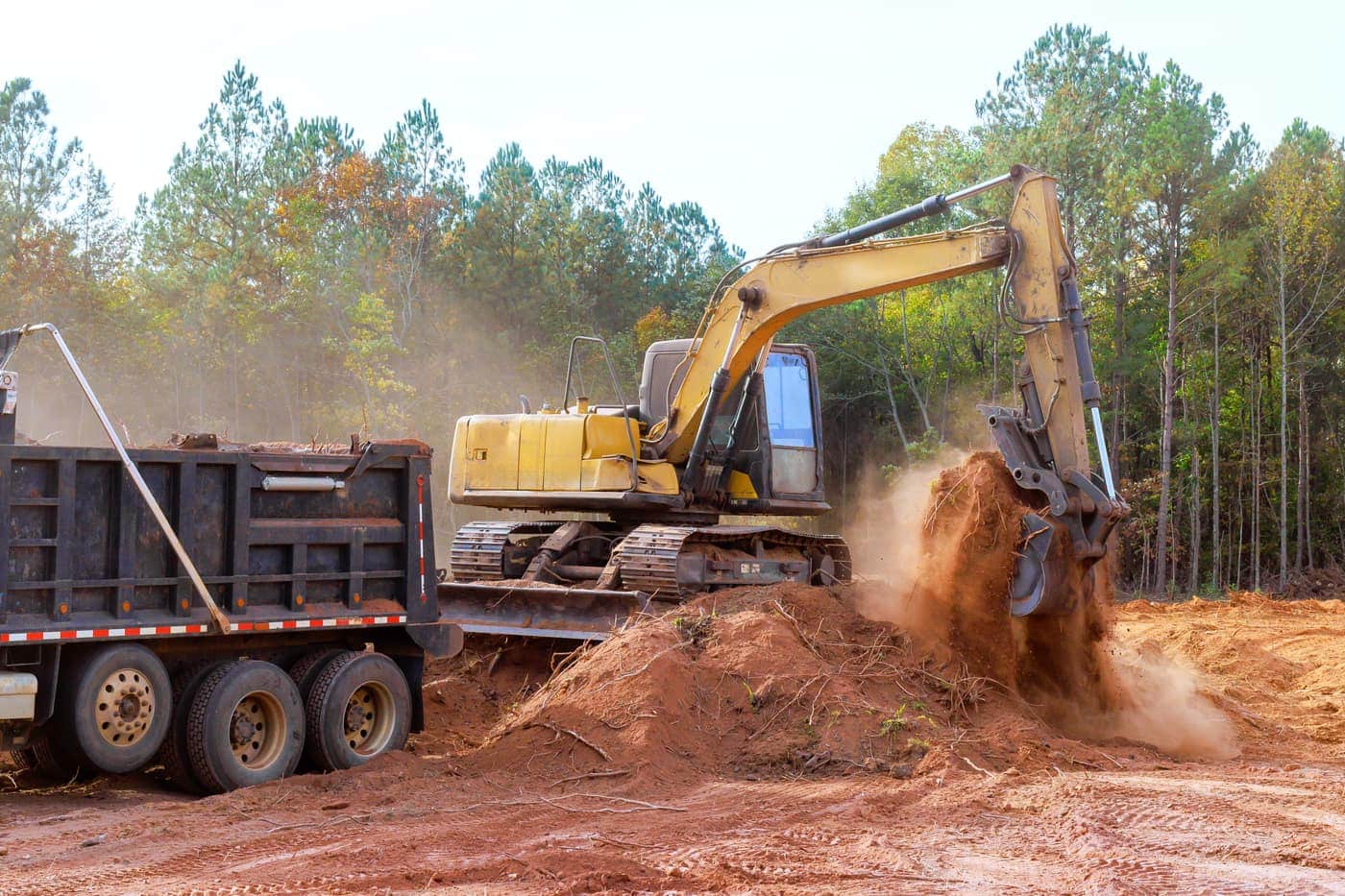
Ohio’s statute puts one step ahead of the first cut: “the excavator shall notify the protection service of the location of the excavation site and the date on which excavation is planned to commence” (Ohio Revised Code § 3781.28). The Revised Code also speaks to workers’ compensation and to the owner’s policy on a vehicle, and what it says on each shapes how you describe your crew and your trucks to an underwriter.
Every quote below carries a link to the section it comes from, and where Ohio’s rule is not confirmed the paragraph says so and names an office to ask. The program itself is laid out on the excavation insurance page; this one is about Ohio.
Notifying the protection service under Ohio’s Revised Code
The section is cited as Section 3781.28 | Excavator notifying protection service or pipeline owner (Ohio Laws). The statute calls the call center a protection service, and the center prints its name as OHIO811 on its own site. Its older web address is oups.org.
The timing sits in the same sentence of the section: the notice must come “at least two working days, not including the day of the notification, but not more than sixteen calendar days before commencing excavation” (Section 3781.28). Large multi-segment projects follow a separate agreed marking schedule, and later divisions of the section carve out exceptions, among them emergency repairs and some owner-excavators. This page relies on none of those exceptions. If you think one applies to a job, read the whole section and ask the center.
An adjuster who opens a strike claim may ask whether notice was given, on what date and what the marks showed. A ticket number, the date of the call and photographs of the marks before the cut answer those questions on paper. An underwriter may also ask how a business handles locates, so a written routine, followed on each job, is worth describing on the application.
Ohio’s definition of the excavator
The chapter’s definitions section reads: “‘Excavator’ means the person or persons responsible for making the actual excavation” (Section 3781.25). Read plainly, the person responsible for making the dig is the one the notice duty lands on. A subcontractor’s crew working under your direction is a question for the one-call center and for your own counsel.
Settle it inside the company before a job starts. Decide who places the call, how the ticket reaches the foreman and what happens when the planned start date moves, since the statute ties the notice to the date on which excavation is planned to commence. Then check that the application describes the routine you actually run, because a policy is rated on the work as described.
The flow starts with notice to the protection service that Ohio’s statute names, moves to the dig itself, then to a buried line being struck, and ends at the policy wording that decides how a property damage claim from a neighbor or owner is handled. No figures are shown.
A cut line on an Ohio site and the wording that answers it
Picture the bucket meeting a gas main, a water line or a communications cable in the trench. That is damage to someone else’s property done by your machine. The line may belong to a utility, the property owner or the neighbor, and the demand that follows may reach the repair, the property the line served and the disruption after the cut.
The answer turns on wording, and the wording is read against what you told the insurer. Start with the work description on your application, because a liability policy may respond to a loss from that work on its terms. Next come the limits you bought, which cap what the policy may pay. Finally there is the contract with the customer or general contractor, which may shift responsibility, name an additional insured or set the limits a certificate must show. Those three are set when the policy is bought and the contract is signed, so a strike may be judged against terms you can no longer change.
Report any strike to your agent promptly, and ask how the policy reads on damage to underground utilities and on any exclusion that touches your work. The notice paperwork from the section above goes with the claim.
Ask the questions that fit an Ohio dig. If your crews dig basements and foundations next to occupied houses, ask how the policy reads on damage to the neighboring structure. If you trench for utilities along a road, ask how it reads on lines you did not know were there. If you grade pads on a site you do not own, ask whether the owner’s contract moves any of that risk to you. Each answer comes from the policy and the contract, and your agent can read both with you before the work starts.
Bring a short written description of each type of work to that conversation: the depth of a cut, the machines on it, whether hand digging happens near marked lines and who supervises it. An underwriter may read that description, and a claim may later be compared against it. Keep the description current as your jobs change, and send your agent the new version.
Digging in Ohio: the license question we cannot yet answer
Whether Ohio issues a credential specifically for excavation work is not something we have confirmed. The Ohio construction industry licensing board can tell you whether one exists for your work, and the party who hired you can say in writing which credentials the job expects. Cities and counties are separate offices; ask the one where you dig.
An application may ask what credentials you hold. Answer from what the board and the hiring party tell you, and keep their answers with the application so the two stay consistent.
The Bureau of Workers’ Compensation and the state insurance fund
The statute says: “every private employer and every publicly owned utility shall pay annually in the month of June immediately preceding the policy year into the state insurance fund the amount of estimated annual premium the administrator fixes” (Ohio Revised Code § 4123.35). The Ohio Bureau of Workers’ Compensation administers that fund, and the statute that created it reads: “There is hereby created the bureau of workers' compensation, which shall be administered by the administrator of workers' compensation” (§ 4121.121). Self-insuring employers are an exception under the same section of law.
Employers should confirm with the Bureau of Workers’ Compensation how coverage is obtained in Ohio. How the fund issues or renews coverage is not something we have confirmed, so treat the sentence above as a pointer and ask the Bureau. We do not place it, quote it or write it here; the other policies in an excavation program are written alongside it.
The statute’s definition reaches an employer who “employs one or more persons regularly in the same business or in or about the same establishment under any contract of hire” (§ 4123.01). A crew on the payroll fits that wording. The definition treats other categories as excluded or elective, and the sorting is for the Bureau; ask it about any worker whose status is in doubt, such as seasonal hands or a subcontractor’s labor. Take a payroll list by job title with you when you call the Bureau.
The owner on the payroll
The same section speaks to owners: “If an employer is a partnership, sole proprietorship, individual incorporated as a corporation, or family farm corporation, such employer may elect to include as an ‘employee’ within this chapter, any member of such partnership, the owner of the sole proprietorship” (§ 4123.01). An owner is covered only after the Bureau receives the election. If you run a machine yourself, ask the Bureau about the election before an operator is hurt, and keep the Bureau’s confirmation with your insurance papers.
Ohio’s owner’s policy minimums and a hauling truck
A dump truck, a tag trailer and a service pickup all travel public roads. For the owner’s liability policy on a motor vehicle, the Revised Code sets these limits:
“(1) Twenty-five thousand dollars because of bodily injury to or death of one person in any one accident; (2) Fifty thousand dollars because of bodily injury to or death of two or more persons in any one accident; (3) Twenty-five thousand dollars because of injury to property of others in any one accident” (Ohio Revised Code § 4509.51)
Those words are the floor for an owner’s policy, and a loaded truck can produce a claim that a floor would not reach, which is a reason to ask your agent about higher limits.
How Ohio treats a commercial hauling truck beyond that floor is an open question for us. Ask your agent how your trucks are classed and whether a separate filing applies to them.
A commercial auto schedule lists each power unit and trailer by its identification number, says how each is used (hauling dirt, hauling a machine, carrying crew, towing), names the drivers and gives the garaging address. A foreman who runs to a supplier in a personal pickup is a separate question to put to your agent.
A stack of labeled layers, top to bottom: Ohio call-before-you-dig center; Department of Insurance; Bureau of Workers’ Compensation; Your agent, with each reply. No figures are shown.
How each coverage lines up with Ohio’s rules
General Liability
When a trench cut reaches a gas main or a neighbor’s fence line, your agent will open the liability policy before any other. It may respond to injury to others and damage to their property on its terms, so the application’s description of your work, the limits and your contracts all matter. Ohio’s notice statute sits beside it: a dated ticket and photographs of the marks are the papers that help explain what happened on the day. Ask how the policy reads on underground utilities, on work near occupied buildings and on any exclusion that touches the jobs you take. See General Liability insurance.
Workers’ Compensation
The statute quoted above speaks of the state insurance fund, administered by the Ohio Bureau of Workers’ Compensation. Operators, spotters and truck drivers work around moving machines and open cuts, which is the exposure this coverage addresses. Confirm with the Bureau how coverage is obtained; we make no offer to place it. What belongs in your hands is the payroll detail the Bureau will ask about and the owner election, if you work on the crew yourself. The general mechanics of classification and audit are on Workers’ Compensation insurance.
Commercial Auto Insurance
Dump trucks, tag trailers and service pickups are the units that carry your work between sites. Ohio’s owner’s policy limits are quoted in the truck section above; a minimum for a commercial hauling truck is something we have not confirmed. Schedule each unit, describe how it is used and where it is garaged, and ask your agent how a loaded truck on a county road is rated. Machines carried on a lowboy raise their own questions about the trailer and the load. See Commercial Auto insurance.
Contractors Equipment Insurance
Excavators, dozers, skid steers and compactors earn the money, and a stolen or damaged machine can stop a job. Ohio’s statutes quoted here do not speak to this coverage. The machines go on a schedule, each described as the policy asks, and a loss may be presented to it on its terms. Ask how the policy treats a machine in transit, a machine on a customer’s site and a rented unit you operate. Keep serial numbers and purchase papers where you can reach them. See Contractors Equipment insurance.
Umbrella Insurance
A strike that damages a building, an interruption of service to a neighborhood or a serious truck crash may produce a demand larger than the primary limits. An umbrella sits above liability and auto and may respond when a loss passes those limits, on its terms and subject to the underlying limits it requires. General contractors and public owners may also ask for limits above a primary policy. Nothing in the Ohio sections quoted here sets an umbrella requirement, so the decision rests on your contracts and your appetite for risk. See Umbrella insurance.
Property Insurance
The shop, the fuel tank, the parts room and the yard fence are the places where property insurance applies. No Ohio statute is quoted for it here. Ask your agent how the policy values a building and its contents, what happens to your work while the shop is damaged, and whether tools kept in a connex or a shed are included. Machines out on job sites are a separate policy, and so is the liability that follows a cut line. See Property insurance.
To see these six lined up against your own Ohio work, use the quote request.
Who to ask in Ohio, by question
For an insurance question, the office is the Department of Insurance; the statute behind it says “The superintendent of insurance shall be the chief executive officer and director of the department of insurance.” For workers’ compensation, ask the Bureau of Workers’ Compensation, which administers the fund quoted above. For a question about notice, the one-call center is OHIO811, on its own site. For a question about excavation licensing, ask the Ohio construction industry licensing board.
Take each question to the office with that role, and note who answered, on what date and what was said. For the commercial-vehicle minimum and an excavation credential, which we have not confirmed, start with your agent and the licensing board.
Reading an Ohio contract against your certificate
This page cites no Ohio rule on certificates, so what follows is conditional. A general contractor or a public owner may ask a subcontractor for a certificate showing liability and auto limits and workers’ compensation status. A contract may ask to be named as additional insured, and it may ask that an endorsement appear on the policy.
Read the contract before the certificate. The limits a contract asks for set the limits you carry, and an endorsement it requires has to exist on the policy before a certificate can show it. For workers’ compensation, ask the Bureau what proof of coverage it provides, and give that proof to the party who asks.
Notice the clauses that touch a strike. A contract may make you responsible for locating and protecting underground lines, may require you to repair damage you cause at your own cost, or may ask you to hold the owner harmless. Each of those moves risk onto your policy, and your agent should read them before you sign. A clause you cannot match to a policy is one to question at the bid stage, when it can still be negotiated.
An Ohio job folder, item by item
- The name of the person who places each call to the protection service, and the way the ticket reaches the foreman.
- The ticket, the date of the call and photographs of the marks.
- A description of your work for the application: basements, utility trenches, site preparation, grading.
- The Bureau’s answer on how coverage is obtained and how your crew is classified.
- Every truck and trailer on the auto schedule, with the commercial-vehicle question put to your agent.
- The licensing board’s and the hiring party’s written answers on credentials.
- Each contract, set beside the certificate it asks for.
Open items, and the sections behind the quotes
The quotes above are taken from the Ohio Revised Code and agency pages, and each links to its source in the list below. Three things remain unconfirmed: whether Ohio issues an excavation credential, what minimum applies to a commercial vehicle, and how coverage is obtained from the Bureau. Take those three to the offices named in the sections above.