
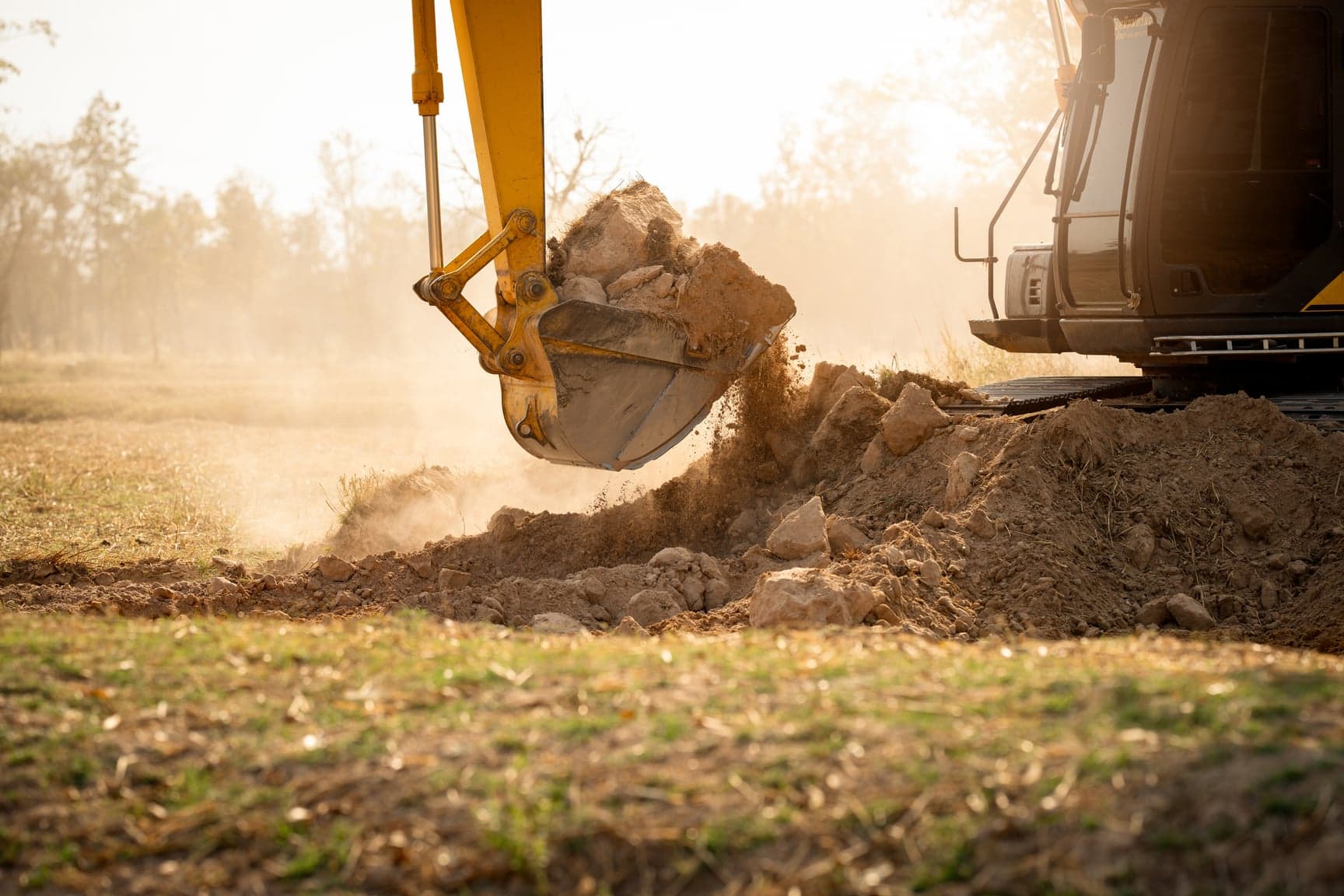
Demolition insurance is the set of policies a demolition contracting business carries for the work of taking structures down: whole buildings, interiors, additions, slabs, and the debris that follows them off the site. It is not one policy. It is general liability, workers’ compensation, commercial auto, equipment, umbrella and property coverage, each written with demolition described on the application, and each answering according to its own terms.
If you own a demolition company, you are the one this is for: the business that bids tear-downs, interior strip-outs and structure removal as its own work, whether the next trade on the site is a builder, a remediation crew or nobody at all. A contractor who digs as well as demolishes will find that side of the work on the excavation insurance page. Everything here stays with demolition.
What a demolition account looks like to an underwriter
A building contractor puts something up. Demolition takes something apart, and the thing being taken apart has neighbors, contents and a history your crew did not write. That is why a demolition account may be read on its own terms. The questions turn on how structures come down, how close they stand to buildings that stay, what may be inside them, and where the debris goes once it leaves the site.
An underwriter may want to know the kinds of structures you take down, the methods you use, how high the work runs and how much of it happens beside occupied property. Some markets may write demolition only as a named class, some may limit it by method or by height, and some may ask for a work history before they quote. Knowing which questions are coming makes the application easier to answer accurately, and an accurate application is the one a claim is later read against.
This flow follows a demolition job from the standing structure to the cleared site. The structure and its contents are surveyed first. Services are disconnected. The structure comes down, in whole or in part. The debris is sorted and hauled. The cleared site is handed back to the owner or the next trade. Each stage raises its own question for the application. No figures are shown.
From standing structure to open ground
A demolition job can move through these stages. The structure is surveyed for what it is built of and what is stored or built into it. Gas, power and water are confirmed off. The structure comes down, whole or in part. The debris is sorted, salvaged where it can be, and hauled. Then the cleared site is handed back to the owner or to the next trade. Each stage raises its own question for the application, and describing each one can tell an underwriter more than the single word “demolition” does.
Adjoining structures and what stays standing
The loss a demolition contractor plans around first is damage to something that was meant to survive the job: a party wall shared with the building next door, a neighbor’s foundation, the part of a house the owner is keeping, a storefront that stays open through an interior strip-out. Vibration, a pull that goes the wrong way or a floor that drops early can crack, shift or bring down what was supposed to stay.
Damage to someone else’s property from your work is a question for general liability, and how the policy answers depends on its wording and on how demolition was described. Some policies treat damage to the property you are working on differently from damage to property next door, so ask how yours reads both. A dated survey of adjoining buildings, with photographs, is a record an underwriter and a claims adjuster may both ask to see.
Debris, dust and the street outside
Demolition sends material where it was never meant to go. Debris falls past a fence line, dust settles on cars and window ledges across the street, and a loaded bucket swings over a sidewalk. Each of those can reach a neighbor or a passerby. Fencing, netting, dust control and the hours the crew works all shape how often that happens, and a written plan for containment and cleanup is a fact worth putting in front of the underwriter. Damage or injury to people who are not part of the job is a liability question, and how the policy answers turns on its terms.
Hazardous materials found mid-job
Older structures can hold materials that are subject to their own rules before they are disturbed, and a demolition crew may be the first to find them. Sometimes a survey comes first; sometimes the material turns up behind a wall halfway through the job. The rules on handling it are set by federal, state and local authorities, so ask the local office.
For insurance, the question is narrower: how do your policies treat a claim that involves those materials? Liability policies can carry pollution wording that bears on it, and some demolition programs add a separate pollution policy. Ask your agent how yours reads before you bid a structure that has not been surveyed, and decide in advance what your crew does when something unexpected is found.
Collapse and the order of work
A building taken down out of sequence can fall in a way nobody planned. A wall that loses its bracing, a roof that drops before the floor below is cleared, or a structure weakened by fire or age can come down early. Collapse is the exposure that ties the others together: it can hurt your crew, damage the building next door and wreck a machine in the same moment.
An underwriter may ask how jobs are planned and who on your crew decides the sequence. Engineering surveys on larger structures, written demolition plans and a supervisor on site are facts that describe how you control the order of work. If your company takes on structures damaged by fire, flood or neglect, say so on the application.
Hauling the load away
The debris from a tear-down leaves in trucks. Concrete, wood, metal and mixed debris leave the site in dump trucks and roll-off containers, and each load is a heavy vehicle on a public road. Where the loads go matters as well: a recycling yard, a landfill or a transfer station, and how far the trucks travel to reach them. Salvage you keep to sell rides the same trucks and sits in the same yard, and both facts belong on the application.
Crews and subcontractors
Demolition puts workers close to falling material, unstable floors, torches, saws and heavy machines. A demolition company may also hire subcontractors for part of the work: abatement, hauling, torch cutting or specialty removal. A subcontractor with no insurance of its own can bring its losses back to you. Collect certificates before a subcontractor starts, keep them current, and ask how your policies treat work done by others on your behalf.
Read each row from left to right. Damage to a neighboring building or to the part of a structure meant to stay is a question for general liability. An injury to your own crew during the tear-down is a question for workers’ compensation. A crash involving a debris truck is a question for commercial auto. A machine damaged by falling material is a question for contractors equipment insurance. A claim that runs past the liability limit is a question for umbrella insurance. Salvage stolen from your yard is a question for property insurance. How each policy answers depends on its terms. No figures are shown.
The coverages a demolition contractor may carry
A demolition program can be built from six policies, each written with demolition described. Here is what each one is designed to address for a demolition business and what its application may ask. How any of them answers a particular loss depends on its terms.
General Liability
General liability is designed to address claims that your work damaged someone else’s property or injured someone who is not on your crew: the cracked wall next door, the dust-coated car, the passerby struck by falling debris. For a demolition business, the way this policy describes demolition deserves the closest read of anything in the program, and how it answers a given loss depends on that wording and on how demolition was described. The application may ask what you take down, by what methods, how close you work to occupied buildings and whether you do interior or selective work. Read how general liability is structured for contractors before you compare quotes.
Workers’ Compensation
Workers’ compensation is designed to answer for your own employees’ work injuries, on the terms the policy sets. Demolition crews work beside falling material, unstable floors and cutting torches, so the class your payroll is placed in, and whether demolition payroll is kept apart from other work, can shape how the policy is written. The application may ask how many people work on site, what each one does and whether you hire subcontractors. Our page on workers’ compensation for contractor crews explains how the policy is put together.
Commercial Auto Insurance
Commercial auto is designed to answer for crashes involving the vehicles your business owns or uses: dump trucks, roll-off haulers, pickups and the trailers that move machines between jobs. A loaded debris truck on a city street is a real exposure for a demolition company. The application may ask about each vehicle, its drivers, how far it travels and what it hauls, and ask how the policy treats a truck rented for a single job. Whether a given crash is paid depends on the policy terms and the vehicles listed; see commercial auto for trucks and trailers.
Contractors Equipment Insurance
Contractors equipment insurance is written for damage to your own machines and attachments: the shears, hammers, grapples and buckets a tear-down runs on, and the carriers that work them. On a demolition job those machines work under falling material, inside weakened structures and on broken ground. The schedule should list each machine and attachment, and the application may ask where they are kept overnight and how they move between jobs. Whether a loss is paid depends on the policy form and the schedule; read about scheduling your machines and attachments.
Umbrella Insurance
An umbrella policy is designed to add liability limit above your general liability, auto and employer’s liability policies. General contractors and owners may ask a demolition contractor for higher liability limits, because a loss to an adjoining building can be large. Ask whether the umbrella follows the demolition wording of the policies beneath it, because whether it responds depends on its own terms as well as theirs. Our page on how umbrella insurance sits above your liability policies sets out the questions.
Property Insurance
Property insurance is designed for what your business owns that stays put: the shop, the office, the yard, tools and salvaged material waiting to be sold. A demolition company may store recovered steel, brick or fixtures at the yard before they are sold, and the policy should know they are there and what they are worth. Ask how the policy treats material stored at your yard compared with material left on a job site, and how it treats theft. More on property insurance for your yard and shop, and how it is read depends on its terms.
When you are ready to compare policies for your demolition business, request a quote and tell us what you take down.
Contracts on demolition jobs
Demolition contracts may ask a great deal of a contractor’s insurance. A general contractor or owner may ask to be named as an additional insured, may ask for a waiver of subrogation, and may set liability limits higher than your other work calls for. Some contracts ask you to take responsibility for the condition of what you remove, or for what is found inside it.
Each of those terms is a question for your policies, not a box on a form. Send the insurance section of a demolition contract to your agent before you sign, so the endorsements it asks for can be checked against the policies you carry and any gap can be closed before the job begins.
Describing demolition on your application
Say what you take down: sheds and garages, houses, slabs, commercial interiors, larger structures. Say how: by machine, by hand, or both, and whether you remove part of a structure or all of it. Say how close you work to buildings that stay standing. Say who hauls the debris, where it goes and what you salvage.
Name the demolition work you turn down as well. If you never take on structures over a certain height, never work inside occupied buildings, or never touch structures that have not been surveyed, say so. Those limits may be part of how the account is read. And tell your agent when the work changes: a company that took down houses and now bids commercial interiors has changed the work the program was written for, and that change is simpler to handle during the term than after a loss.
Why Excavating Business Insurance
We ask about the structures you take down, how close they stand to buildings that stay, and where the debris goes, because those answers decide how a demolition account is written. We read each quote for how it describes demolition, what it limits and what it leaves out, and we check that the umbrella follows the policies beneath it. The differences in wording are set out for you before price is weighed.