
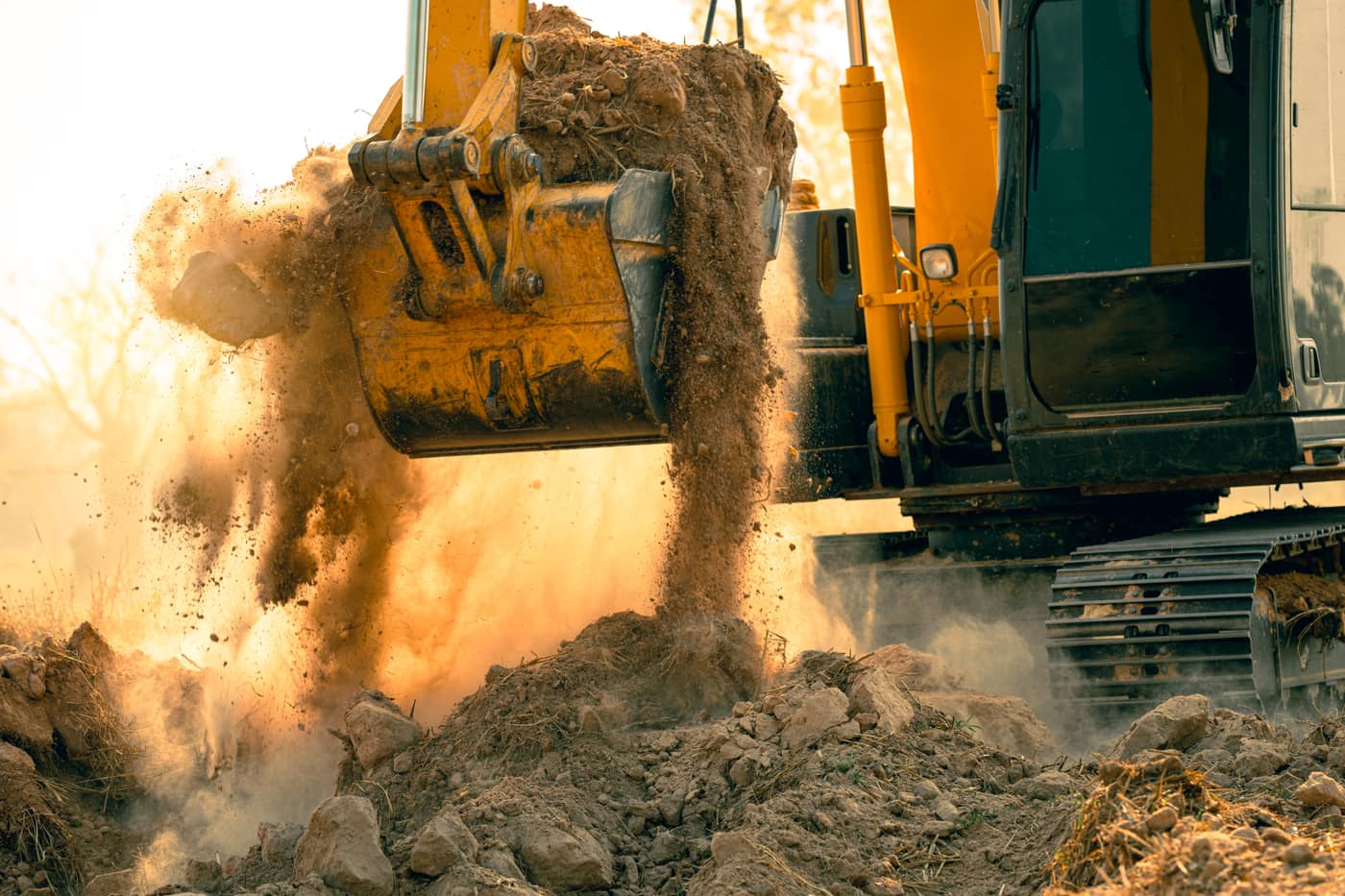
Land clearing insurance is the set of policies a clearing business carries for opening up ground ahead of grading or building: cutting brush and small growth off a lot, pulling stumps, grubbing roots, running a forestry mulcher, and burning or hauling what comes out. No single policy does all of that: a clearing program puts general liability, workers’ compensation, commercial auto, equipment, umbrella and property coverage together, each written with clearing set out on the application and each responding on its own wording.
Here the reader is the owner of a land clearing company: the business that clears house lots, pasture, right-of-way, fence lines and overgrown acreage as its own work, for builders, landowners, developers and farms. A contractor who grades and digs as well as clears will find that side of the work on the excavation insurance page. Everything here stays with clearing.
What a clearing account looks like to an underwriter
A clearing business works at the edge of things: the edge of the lot, the edge of a neighbor’s woods, the edge of a road or a power line. Its machines run on ground nobody has leveled, and its work can produce material that has to be burned, chipped, mulched or hauled. Those facts shape how a clearing account is read.
An underwriter may want to know what you clear, the machines you clear it with, how you dispose of the material, and how close the work comes to homes, roads and other people’s land. Some markets may ask whether you burn at all, some may ask how the mulcher is used, and some may ask for the share of your work that is lot clearing compared with larger tracts. Whatever the application says is what a claim will later be measured by.
This flow follows a land clearing job from overgrown ground to a cleared lot. Brush and small growth are cut or mulched. Stumps are pulled and roots grubbed out. The material is mulched in place, chipped, burned or hauled. The cleared lot goes to the owner, the builder or whoever builds next. Every stage brings an application question of its own. No figures are shown.
Clearing, grubbing and the ground beneath
A clearing job can run in this order. Brush and small growth are cut or mulched. Stumps are pulled and roots grubbed out, which opens the ground. The material is mulched in place, chipped, burned or hauled away. Then the cleared lot is handed to the owner, the builder or the next trade. Every stage brings a question of its own, and plain answers to each can tell an underwriter more than the word “clearing” alone.
Burning and fire that spreads
Burning is an exposure that sets a clearing business apart. A brush pile that seems out can still hold heat, wind can carry embers past a fire break, and dry ground can turn a contained burn into a running fire. Open-burning rules differ by location, and none of them are stated here.
What matters for insurance is how your liability policy treats a fire that leaves the lot and reaches a neighbor’s woods, barn or home. Describe whether you burn, how piles are watched and how long, and what equipment stays on site to put a fire out. Ask your agent before you light the first pile of a new season.
Mulching and flying debris
A forestry mulcher throws material. Chips, splinters, rocks and broken stems leave the head at speed and can travel farther than a crew expects. A window, a windshield, a parked car or a person on the far side of a fence line can be struck. Damage or injury to someone who is not part of the job is a question for liability, and how it answers depends on the policy wording and on how mulching was described.
Spacing rules for the crew, exclusion zones around the head and a habit of stopping when someone walks up are facts that describe how you control thrown debris. So is where you will not mulch, such as right beside a road or a home.
Stumps, roots and buried lines
Grubbing reaches below the surface. A stump pulled near a road frontage or a property line can bring up a buried line with it, and a root ball can be wrapped around a pipe or a cable nobody marked. Locate rules vary from place to place and they are not listed here; find out what applies before you grub near anything that might be buried, and ask how your liability policy treats damage to an underground line struck during stump removal.
Property lines and the wrong side of the line
A clearing crew can do everything right and still clear the wrong ground. Survey pins go missing, fence lines wander, and an owner’s idea of where the lot ends may not match the deed. Growth taken from a neighbor’s side of a line can lead to a claim even when nothing is broken, and growth taken by mistake can carry a value the neighbor will want paid.
Confirm the boundary before the machines start, keep the survey or the owner’s marked plan with the job file, and flag the line on the ground where the crew can see it. Ask how your liability policy treats a claim about growth removed from land that was not your customer’s.
Machines on rough ground
Clearing is hard on equipment. Mulchers, dozers with rakes and track machines work on slopes, stumps and soft ground, and a rollover or a fire in a machine packed with dry debris is a real exposure. Getting machines to a job is part of it too: clearing jobs can sit at the end of narrow lanes or across wet ground, and a machine that slides off a trailer on the way in is still your machine.
Hauling chips, brush and debris
Not every clearing job keeps its material on site. Chips and brush go to a yard, and debris goes to a landfill or a burn site. A loaded truck may travel public roads, sometimes pulling out of a muddy lot onto pavement. Where the loads go, how far they travel and who drives them are all facts for the application. So is mud tracked onto the road, which a driver behind your truck may not expect.
The crew in the brush
A clearing crew works with saws, around thrown debris and on footing that shifts. Heat, insects and long days in the field add to it. A clearing business may also bring in subcontractors for hauling or burning. Ask each subcontractor for a current certificate before the first day on the job, and ask your agent how your program reads work others do for you.
Read each row from left to right. A burn or flying chips that reach a neighbor belong with general liability. When a clearing hand is hurt, workers’ compensation is the policy to ask. A crash involving a haul truck is a question for commercial auto. A mulcher or machine damaged or burned on the lot is a question for contractors equipment insurance. A fire claim larger than the policy beneath is a question for umbrella insurance. Tools or stored mulch lost at your yard are a question for property insurance. Each answer turns on the policy’s own wording. No figures are shown.
The coverages a land clearing business may carry
A clearing program can be built from six policies, each written with clearing described. Here is why a land clearing business buys each one, what it is meant to handle and what its application may ask. How any of them answers a particular loss depends on its terms.
General Liability
When a job hurts a bystander or damages land or property that belongs to someone else, the claim is a question for general liability. For a clearing business, those claims start with a burn that spreads, chips thrown through a windshield, a stump pulled with a buried line attached, or growth taken from the wrong side of a property line. Expect the application to ask whether you burn, how you mulch and how close you work to homes and roads. See general liability insurance explained for how the policy is built and how its wording decides what it answers.
Workers’ Compensation
When someone on your own payroll is hurt at work, workers’ compensation is the policy written for it, on the terms it sets. A clearing crew runs saws, works near a mulching head and walks ground full of stumps and holes, so the class the payroll is placed in matters to how the policy is written. The application may ask what each person on the crew does, which machines each one runs, and whether you hire subcontractors. Read how workers’ compensation is written before your next renewal.
Commercial Auto Insurance
The trucks that carry your material and your machines are written on commercial auto: haul trucks, chip trucks, dump trucks, pickups and the trailers that carry your machines between jobs. A loaded truck pulling out of a muddy lot onto a highway is a real exposure for a clearing company. Expect questions about each vehicle, its drivers and how far it travels. Whether a given crash is paid depends on the policy and the vehicles listed; see commercial auto insurance for haul trucks.
Contractors Equipment Insurance
Your own iron is the subject of contractors equipment insurance: the forestry mulcher and its head, dozers with rakes, track machines, grinders and the attachments that ride on them. Clearing puts those machines on slopes and stumps, among dry debris that can catch fire, and on trailers moving down narrow lanes. The schedule should list each machine and attachment you run. How a machine loss is settled turns on the equipment form and what the schedule lists; read about contractors equipment coverage for your machines.
Umbrella Insurance
An umbrella sits on top of the liability policies in a clearing program and adds limit above them. A fire that runs from a clearing job into a neighbor’s woods or buildings can produce a claim larger than the policy beneath it, and developers or landowners may ask for higher limits in the contract. Ask whether the umbrella follows the burning and mulching wording of the policies beneath it; whether it responds depends on its terms and theirs. Our page on umbrella insurance for larger claims lays out the questions.
Property Insurance
Your shop and yard are the ground property insurance stands on: the shop where machines are serviced, the office, tools, spare mulcher teeth, stored fuel and any chips or mulch waiting at your yard to be sold. Ask how the policy treats material and tools stored at the yard compared with those left on a job site, and how it treats theft and fire. How a loss is answered depends on the terms; see insuring your shop, yard and stored material.
Starting a clearing company from scratch? The article on the insurance questions of a first clearing business walks through the papers to put in order before the first lot.
When you are ready to compare policies for your clearing business, start a quote request and tell us how you clear.
Contracts on clearing jobs
Builders, developers and utilities may ask a clearing contractor for more than a certificate. A contract can ask to name the customer as an additional insured, ask for a waiver of subrogation, set liability limits above what your smaller jobs call for, or make you responsible for the condition of the site when you leave it. Some ask you to answer for erosion or runoff from the cleared ground until the next trade arrives.
Read those terms as questions your policies must answer. Before you sign, pass the contract’s insurance pages to your agent and have the requested endorsements compared with the program you hold.
Describing clearing on your application
Say what you clear: house lots, pasture, fence lines, right-of-way, overgrown acreage. Say how: with a mulching head, a dozer and rake, a track machine with a thumb, saws, or a mix. Say what happens to the material: mulched in place, chipped, burned or hauled, and where it goes. Say who you clear for: builders, landowners, developers or utilities.
Name the clearing work you turn down as well, such as steep slopes, burning in dry months, or lots beside occupied homes. Those limits may be part of how the account is read. If the work grows into larger tracts or new kinds of jobs, tell your agent during the term rather than at renewal.
Tree work that belongs to another program
This program is written for clearing ground. A business built around tree removal, trimming and arborist work on individual trees is a different trade with its own questions. If that describes the work, our sister program Tree Guard is written for it.
Why Excavating Business Insurance
We ask how you clear, whether you burn and what happens to the material, because those answers decide how a clearing account is written. We read each quote for how it describes burning and mulching, check that every machine is on the schedule, and show you how the quotes differ in wording, not only in price.