
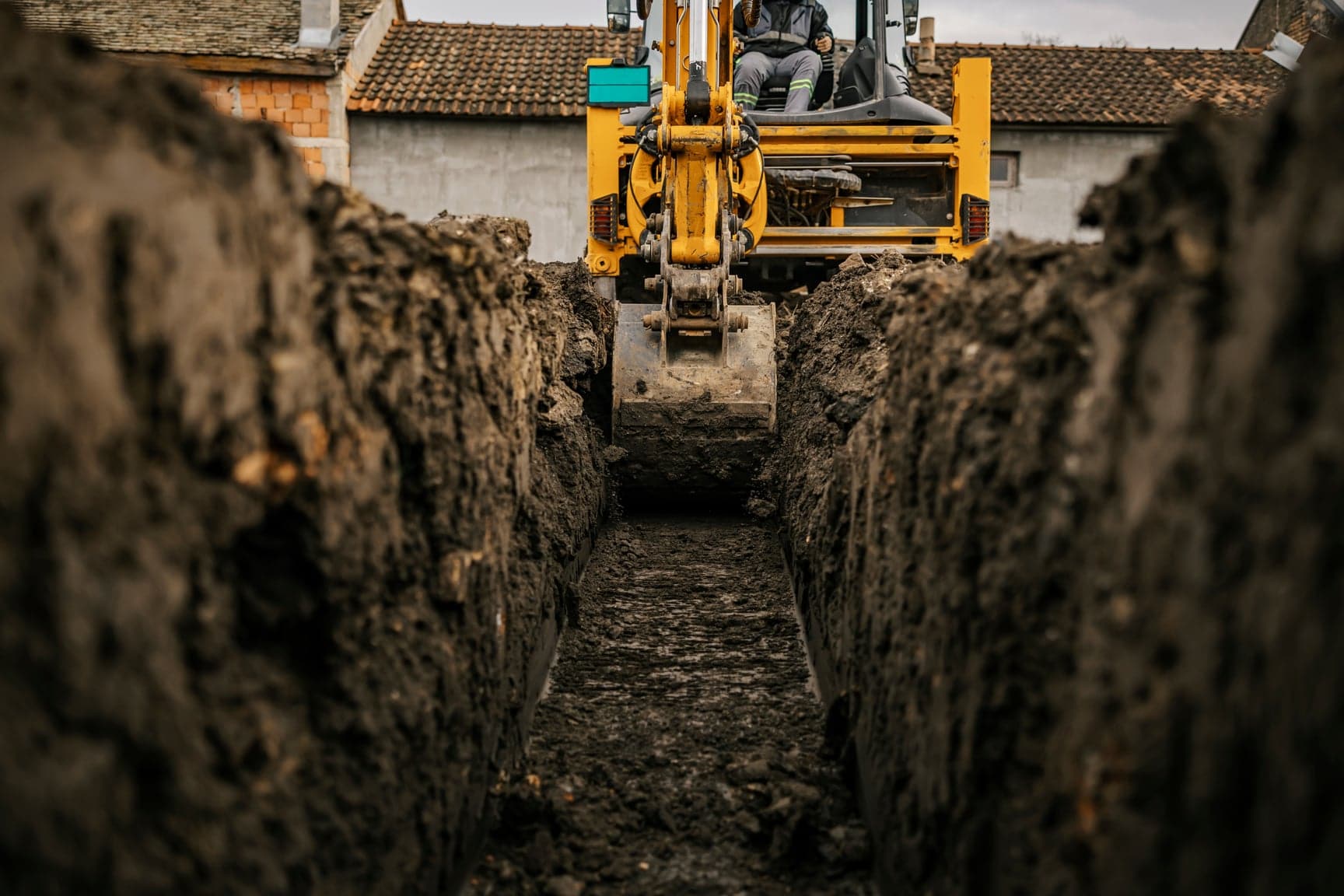
Contractors equipment insurance is the policy written for the machines themselves: the excavators, dozers, loaders, backhoes and compactors an excavation business owns or rents, and the buckets, breakers and thumbs that go with them. It is designed to respond to physical loss of or damage to the equipment on its schedule, on the job, on the trailer and in the yard, within the causes of loss and the valuation the policy states.
For an excavation business the fleet can be the largest thing on the balance sheet, and a machine out of service can stop a job. A building policy stays at an address and an auto policy follows the trucks; neither is built for an excavator that spends Monday in the yard, Tuesday on a lowboy and the rest of the week in a trench. Read on for how that machine is written, where it can be lost, how a loss is valued, and the questions to ask before the schedule is final.
A schedule of machines, inside a full program
The policy starts from a list. Each scheduled machine carries a description and a value, and serial numbers and photographs sit on file with the agent. The policy is written around that list, so a machine bought last month that never reached the schedule may sit outside it unless the policy has a provision for newly acquired equipment.
If your machines are part of a whole program, the picture is this: general liability for the damage the work does to others, workers’ compensation for the crew, commercial auto for the trucks, and this policy for the fleet. When the program is built together, the schedule can be checked against the auto policy and the liability policy so that nothing falls between them.
The Small Business Administration’s guide to business insurance lists property coverage for businesses with significant physical assets. For an excavation contractor, a large part of that property moves from job to job, so it can be written here rather than on a policy tied to a building.
Read across the columns. On the job site, a machine can roll into an excavation, be vandalized overnight or be struck by another contractor’s equipment. In transit, it rides a lowboy trailer between jobs, where a shifted load or a crash damages it. In the yard, it waits between jobs, where theft and fire are the losses to ask about. Contractors equipment insurance is written for the machines on its schedule in each of these places, within the causes of loss and conditions the policy states. No figures are shown.
Where the machine is when it is lost
On the job site
A machine can slide into the excavation it is digging, tip on a soft slope, be struck by another contractor’s equipment or be vandalized after the crew goes home. Each is a physical loss to a scheduled machine. Ask how the policy treats equipment left on a site with no one there, and whether it expects anything of you overnight.
On the trailer
Between jobs the machine rides a lowboy. A load that shifts on a turn, a trailer that leaves the road, or a machine that strikes an overpass are all losses to the equipment in transit. The truck and the trailer belong to the commercial auto policy, so a crash can open a claim on both at once.
In the yard and the shop
Machines waiting between jobs face theft and fire. The equipment inside a shed is this policy’s question; the shed itself, and the tools and parts kept in the shop, are a property insurance question.
Theft from the site and the yard
Machines can be stolen from sites and yards, and attachments are smaller and easier to carry off than the machines they fit. An underwriter can ask how you secure equipment left on a job, whether machines carry tracking devices or immobilizers, and how the yard is fenced and lit. Good answers can help the application; they also help when a loss is reported, because a recorded serial number and recent photographs make a stolen machine easier to identify.
Read the theft wording itself. Some policies treat a machine that is missing with no sign of theft differently from one taken from a locked yard, and some set conditions for equipment left unattended on a site.
Read from the top down. The schedule lists a value for each machine. The valuation basis in the policy decides whether a loss is paid at actual cash value, which takes age and wear into account, or at replacement cost, which looks to what a comparable machine costs now. The deductible is taken from what remains. Any loss payee, such as the lender on a financed machine, may be named on the payment. What is left is what the policy pays, under its own terms and exclusions. No figures are shown.
How a machine is valued when it is lost
When a machine is destroyed, the payment begins with the value on the schedule and is then shaped by the valuation basis the policy uses. Actual cash value takes age and wear into account; replacement cost looks to what a comparable machine costs now. The deductible comes off what remains, and a lender on a financed machine may be named on the payment.
The value you put on the schedule matters more than it looks. A machine listed below what it would cost to replace can leave a gap the policy will not fill, and some policies apply a penalty when the total scheduled value falls short of what the fleet is actually worth. Review the schedule against current values at each renewal, not only when you buy a new machine.
Rented, leased and borrowed equipment
Rented machines fill gaps in the fleet for a job or a season. The rental agreement says who bears the loss while the machine is in your care and what proof of insurance the rental company wants. A contractors equipment policy can extend to rented equipment within a limit and terms of its own; whether it does, and for how much, is a question for the policy in front of you.
A leased or financed machine adds a lender or lessor who can ask to be named on the policy. A machine borrowed from another contractor sits in the gap between their policy and yours, so settle in writing whose insurance answers before it leaves their yard.
Attachments, tools and smaller items
Buckets, breakers, thumbs, compaction plates, laser levels and the hand tools on a service truck are part of the fleet too. Larger attachments can be listed one by one; smaller items can be written under a blanket amount for unlisted equipment, sometimes with a cap per item. Ask where your attachments sit on the schedule, and whether tools kept in a pickup are covered here, on the property policy, or not at all. A mulching head belongs on the list as well; the page for land clearing businesses explains why for a business that clears land.
What the policy is not written for
Contractors equipment insurance is designed for sudden physical loss. Wear and tear, gradual deterioration and a machine that simply breaks down from mechanical or electrical failure are exclusions to ask about, and some policies offer breakdown coverage as a separate option. Ask how the policy treats each before you rely on it.
Damage the machine does to others is a different question. A struck gas line, a cracked foundation next door or a street broken up by a loaded track are questions to put to the general liability policy and its wording. An operator hurt when the machine tips is a question for workers’ compensation.
Keeping the schedule current
A fleet changes between renewals. Machines are bought, sold, traded and moved between states. When a machine joins the fleet, tell the agent before it goes to work, and ask how long the policy’s provision for newly acquired equipment lasts. When one leaves, take it off so you are not paying for a machine you no longer own. Before a machine goes to a job over the line, look up both states: New Jersey, Rhode Island, Virginia, West Virginia, Tennessee, Kentucky and North Carolina each have a page here.
Owner-operators and the sister brand
If you run a fleet inside a full program, this is the line for it. If you are an owner-operator running your own machine rather than a fleet, our sister brand Equipment Guard writes for that buyer.
Setting limits and deductibles
The limits on a contractors equipment policy follow the schedule: a value for each listed machine, an amount for unlisted tools and attachments, and limits for rented equipment and for newly acquired machines. The deductible is a choice that trades premium against what you keep on each loss. None of these is a number this page can set; each comes from the fleet you run and what it would cost to replace.
Why Excavating Business Insurance
We build the equipment schedule with you, machine by machine, and check it against the auto policy for the trailers and the liability policy for the work. Each quote is then marked for its valuation basis, its theft and unattended-equipment conditions, its limit for rented machines and its breakdown option, and we walk you through a stolen or rolled machine under each before you choose. How the schedule fits the rest of the program is on the excavation insurance page.