
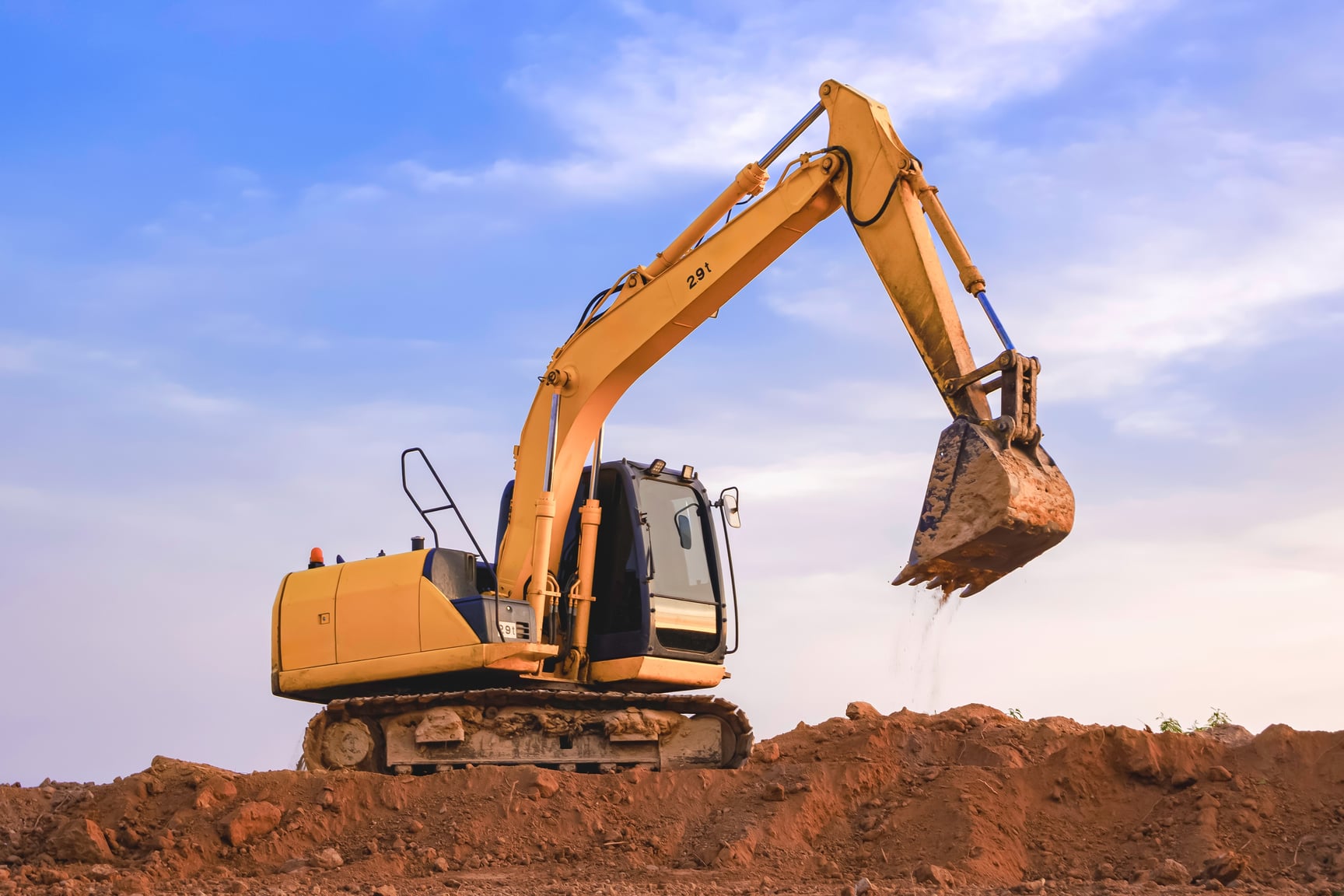
Rhode Island’s statute on excavation near public utility facilities opens with a flat rule: “No person, public agency, or public utility shall engage in excavation in the approximate location of public utility facilities”. (Statute) Workers’ compensation is compulsory for an employer the law covers, while the state’s auto limits and the registration question for earthwork are unconfirmed, and the sections below name who to ask about each.
Next, set up your own routine: place the call, keep a written note of the notice, and send your machines, crew and haul routes with a quote request. Our overview of excavation insurance shows how the six policies fit together, and the sections below tie each one to a Rhode Island rule where a stated rule exists.
Dig Safe System, Inc. and the excavation-near-utilities statute
The one-call center for the state is Dig Safe System, Inc.. The statute itself refers to a public utilities association rather than naming the center, and the center prints its own name on its home page. The notice section says who must give notice: “any person, public agency, or public utility responsible for excavating within one”. (Statute) The same section sets the timing: “at least seventy-two (72) hours, excluding Saturdays, Sundays, and holidays, but not more than thirty (30) days before commencing the excavation”. (Statute)
Questions about how a call is taken, what a ticket looks like or how a utility responds belong with Dig Safe System, Inc. If you run crews from Pawtucket to Newport, the same practical habit works everywhere: one person owns the call, the date goes on the job sheet, and the foreman can show it on request.
A written note of the notice does real work later. When a claim is reported, an adjuster, an agent or a general contractor may ask what you did before the bucket went in. A dated note answers that without a search through texts and voicemails. It does not decide who pays, because the policy wording and the facts of the job do that, but it keeps the conversation about the policy rather than about whether the call happened.
A diagram of the steps. A call is placed with the utilities center, the crew digs, a buried line may be damaged, and a claim may follow. No figures are shown.
When a Providence-area trench cuts a service line
The lead claim against an excavation business is third-party property damage during machine work, and the gravest version is a strike on a buried gas, water, electric or telecom line. The claim comes from someone else: the utility that owns the line, a neighbor who loses service, a property owner whose site is damaged. The excavation company’s own machine and crew sit on the other side of the claim.
A claim of that kind may be brought under general liability, on its terms. An adjuster may read the application’s description of your work, the limits you chose, the exclusions in the form and the contract you signed for the job side by side. A policy that was written for light grading may read differently from one written for utility and trench work, which is why the application matters as much as the policy.
Report damage to your agent as soon as it happens, before you restore or remove anything. Photographs of the site, the dated notice, the paint or flag marks on the ground and a list of who was on the machine help the claim person see the job the way you saw it. Your agent can tell you how a strike on a long run of trench would be read against your own policy form.
The Contractors’ Registration and Licensing Board and earthwork
Rhode Island has a Contractors’ Registration and Licensing Board, the body listed for licensing. The chapter that creates it says: “The board retains jurisdiction and may conduct hearings regarding violations against all contractors required to be registered or licensed by the board”. (Statute) That route is a general contractor registration issued by the Board. It is not stated to reach excavation work, so we do not claim that it does.
Whether a Rhode Island company that only digs, grades or lays utility trench must register is unconfirmed. Ask the Contractors’ Registration and Licensing Board, in writing if you want a record of the answer. A general contractor that hires you may ask for registration details in a subcontract, and the contract is where that request would appear.
When you speak with the Board, bring the exact words you use to describe your work: basement digging, site preparation, trenching for service lines, hydro excavation. A clear description gets a clearer answer than a general question about excavating.
Employers who regularly hire: Rhode Island’s workers’ compensation duty
Workers’ compensation in Rhode Island is compulsory for an employer subject to the chapters. The securing section reads: an employer “shall secure in one of the following ways the compensation for which the employer is or may become liable under those chapters”. (Statute) The definition of who is subject reads: “that regularly employs employees in the same business or in or about the same establishment under any contract of hire”. (Statute) An employer that is exempt has a path in: “Employers exempted by § 28-29-7 may come within chapters 29 — 38 of this title by election”. (Statute)
Excavation work puts people near moving machines, open cuts and haul trucks, so the policy side is worth getting right. The people on a policy may be described by the work each one does, and a working owner’s role is a question to put to your agent along with the rest of the crew.
No workers’ compensation regulator is listed for the state, so the question of who writes the coverage and how an exempt owner elects it goes to your insurance agent. For the policy itself, see workers’ compensation insurance.
Trucks on Rhode Island roads: the limits we have not confirmed
A dump truck, a lowboy trailer and a pickup towing a skid steer share the roads with everyone else, and the state’s minimum liability limits belong in your plan. Those limits are unconfirmed, and so is any separate commercial-vehicle rule, so we state no figure. No insurance or motor-vehicle regulator is listed for the state; your agent can supply the limits for your plates and your use.
The commercial auto schedule lists each vehicle and who drives it. For an excavation company the schedule questions are practical: which trucks haul spoil off the site, which pickups carry tools between yards, which trailers move the machines, and whether employees use their own vehicles for company errands. A lender or a general contractor may ask for limits above the state minimum in its own paper, and that is a contract question, not a state rule.
A stack of labeled layers, top to bottom: Dig Safe System, Inc.; Contractors’ Registration and Licensing Board; Your agent, with each reply. No figures are shown.
Policy lines that answer Rhode Island trench, grade and haul work
General Liability
For an excavation company, general liability is where third-party claims from the dig are brought: the neighbor’s damaged fence, the cut conduit, the crushed driveway on a Warwick lot. Rhode Island’s utilities notice statute puts the duty to give notice on the party responsible for the dig, so a claim after a strike may invite questions about the call. The policy may respond on its terms, and the limits, exclusions and your application’s description of the work decide the outcome. Keep that description accurate, including trenching and basement digging, and name the subcontractors who dig for you so the application matches the work your crews do.
Workers’ Compensation
Workers’ compensation sits behind the crew on the machine and in the cut. Rhode Island’s securing statute is quoted above, and the line between an employer that is subject and one that is exempt turns on regular employment under a contract of hire and on any election. A policy for an excavation business may describe the people on it by the work each one does: machine operation, hauling, laboring in the cut and supervising the site. Ask your agent how your own payroll and any hired crews would be described, what an exempt owner’s election would change, and what the audit asks you to keep.
Commercial Auto Insurance
Commercial auto insurance belongs to the vehicles that leave the yard: the dump trucks hauling spoil, the service trucks carrying fuel and hand tools, the pickups that tow trailers to Cranston or East Providence jobs. Rhode Island’s minimum limits are unconfirmed, so the plan starts from the vehicle list and the use of each one. Tell your agent who drives, where the trucks run and what they carry. Hired and borrowed vehicles, and trailers hauled by someone else’s truck, are worth raising at the same time, along with any vehicle that a lender or a contract names.
Contractors Equipment Insurance
Contractors equipment insurance schedules the backhoes, skid steers, loaders and attachments that earn the company’s living, along with the excavators. A machine can be damaged on a site, stolen from a yard or lost in transit on a trailer, and the policy may respond on its terms and its schedule. Ask your agent how rented machines, small tools and attachments are written, because those items can be handled differently from a scheduled machine, and how the deductible applies to a machine moved between towns. Keep serial numbers and a photograph of each machine with the schedule so a loss can be described quickly.
Umbrella Insurance
Umbrella insurance is the layer that a large loss may reach after the primary liability and auto limits are spent. A strike that damages a utility line and interrupts service, or a haul truck crash on a public road, can put those primary limits under pressure. A general contractor or a public owner may require an umbrella limit in a subcontract. Ask your agent which primary policies the umbrella follows, what its form requires of them before it responds, and whether the limit in your contract matches the limit you carry.
Property Insurance
Property insurance is the policy to ask about for what the company keeps under one roof or inside one fenced yard: the yard office, the service shop, tools, parts, fuel tanks and any inventory. Fire, theft and storm damage to a building or its contents are the questions to put to your agent, since a policy may respond only on its terms. Machines that live outside the shop may fall under the equipment policy instead, so the two should be read together. To price the six policies together, send a quote request that describes your Rhode Island work.
Excavation work from Newport basements to Cranston trenches
An application describes the jobs you sell, because an underwriter may price the exposure from that description. Your business may list any of the six jobs below, each with a short note on how it reads on paper.
General excavation
Opening ground with a machine and moving the material to where the plan puts it. On an application this is the broadest description, and it is worth pairing with the job types that follow so an underwriter can see the real mix.
Land grading and building pads
Leveling a lot ahead of a builder’s foundation, with attention to slopes and drainage. An application may ask how large the sites are, who sets the grade, and whether the work is for a builder or for a land owner.
Site preparation
Getting a parcel ready for the trades that follow: stripping, rough grading, access roads and staging space. Describe it with the other trades on the site, because that decides how large a crew shares the ground with your machines.
Utility and trench work
Cutting a trench for a service line and closing it again. This is the work closest to the notice statute above, because the cut runs through ground where public utility facilities may sit. Say whether you set pipe or only dig.
Basement and foundation digging
A footing or a basement dug on a lot that may sit tight against a neighbor. Underwriters may ask about shoring, adjoining structures and how close the cut comes to a property line.
Hydro excavation
A vacuum truck and pressurized water lift soil away from buried lines. If you run one, name it on the application, and tell your agent whether it is owned or rented.
What an insurance application asks a Rhode Island excavation contractor
The application is where a policy takes its shape, and a complete one avoids surprises at claim time. Expect questions that are specific to the machine and the cut.
Work and sites: which of the six kinds of work you perform, the kinds of site, and whether you work for builders, owners, public bodies or all three. Machines: what you own, what you rent, what you lease, and where each is kept. Hauling: which trucks and trailers move machines and material, who drives them, and how far a haul runs. Subcontractors: who you hire, whether each carries insurance of their own and how you collect a certificate. People: the crew, the owner’s role and the payroll for each class of work.
Contracts: whether you sign indemnity wording, whether you are named as an additional insured for others, and whether your contracts ask for limits above what you carry. Utilities: how you manage the call before the dig, who places it, and where the notice note is kept. A tidy answer to that last item can show an underwriter that the company treats the one-call law as a routine and not an afterthought.
Who to ask in Rhode Island: Dig Safe System, Inc. and the Contractors’ Registration and Licensing Board
Two bodies are listed for Rhode Island. Dig Safe System, Inc. is the one-call center, and the Contractors’ Registration and Licensing Board, whose chapter is linked in the sources, is the body listed for licensing. Ask the center about the call before the dig and the Board about registration.
For workers’ compensation and for the commercial auto limits no agency is listed, so those questions go to your agent. If you want an answer in writing, send the question by email and keep the reply with your policy papers. When a general contractor asks for a state document you cannot name, ask the contractor which office it means.
Hiring a sub or starting a business: the paperwork side
A general contractor or the owner of a larger site may ask for a certificate of insurance from a sub before the work begins, and a public owner may write its own insurance requirements into the bid documents. Read the wording for the limits it asks for, the additional insured language and any requirement that your policy be primary. Your agent can tell you whether your current program meets the wording, or whether a change is needed before you sign.
If you hire a trenching sub, ask for their certificate before they start, and ask that it name your company when the contract calls for it. A new excavation company in Newport or West Warwick faces the same questions as an established one, with the added task of building a loss history from the first job. Start with the description of your work and the machines you can show, and add the rest as the company grows.
Gathering your papers for the quote form
- The date and the written note of each notice you placed with Dig Safe System, Inc.
- A list of machines, trucks and trailers, with where each one is kept.
- A plain description of the work you sell, using the six kinds listed above.
- Payroll by role: operators, laborers, drivers, foreman and the owner.
- The names of your subcontractors and a certificate from each.
- Contracts that ask for certificates, additional insured wording or umbrella limits.
- Any question for the Contractors’ Registration and Licensing Board that is still open.
The statutes and sites behind these answers
The citations above are the sources: the Rhode Island statute on excavation near public utility facilities, the statute on notice before excavating, the chapter on the Contractors’ Registration and Licensing Board, the workers’ compensation sections, and the home page of Dig Safe System, Inc. Still unconfirmed are whether excavation work needs registration, who writes workers’ compensation for an employer, and the state’s limits for cars and commercial vehicles. Ask the Board or your agent for those, and the center for anything about the call.