
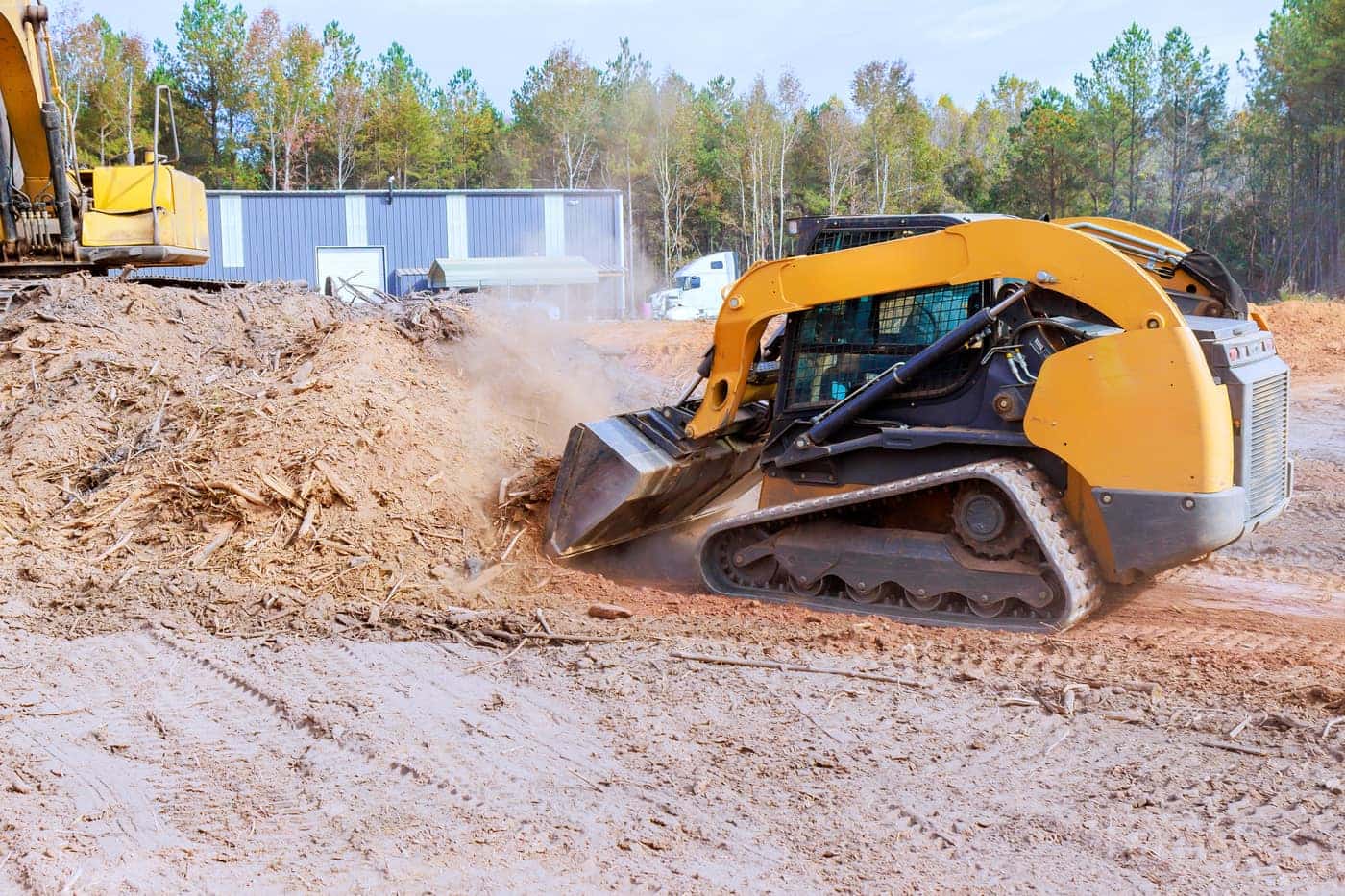
Michigan’s duty section reads “An excavator shall provide a dig notice to the notification system at least 72 hours, but not more than 14 calendar days, before the start of any blasting or excavation” (duty section). For an excavation business that makes the call a job-start step for your crews. Workers’ compensation binds Michigan employers on the statute’s own words, and your trucks meet a liability floor the statute prints.
Each quote below carries a link to the statute section behind it, and a point we have not confirmed is marked with the body to ask. For the wider picture of how the policies fit together, see our excavation insurance page; this one stays on Michigan.
The notification system and the excavator’s duty under the Michigan act
The law that governs digging near buried lines is cited in its own short title as “This act shall be known and may be cited as the ‘MISS DIG underground facility damage prevention and safety act’” (the act). Its working rule is the duty section, and the exact words matter, notice timing included: “An excavator shall provide a dig notice to the notification system at least 72 hours, but not more than 14 calendar days, before the start of any blasting or excavation” (duty section).
Who counts as the person who must call? The definitions section answers: “‘Excavator’ means any person performing excavation or blasting” (definitions). That reads on the work, not on the title of the person. An owner running a machine, a foreman directing a crew and a company that hires a subcontractor to trench each deserve a clear internal answer to one question: whose name is on the notice for this job? Write the answer on the work order.
The notification system is a named body. The act’s own definition reads “‘Notification system’ means MISS DIG System, Inc., a Michigan nonprofit corporation formed and operated by each facility owner and facility operator to administer a 1-call system” (definitions), and the center’s public site is MISS DIG System, Inc.. The same definitions section names the Michigan public service commission, quoted again below. Ticket handling, hours and urgent jobs are matters for the center to explain.
A dated note of the notice, the name of the person who placed it and a description of what was marked on the ground give your agent and, later, a claims adjuster something concrete to read. They may not decide how a policy responds, and a notice does not promise a claim outcome. Keep them with the job file, the contract and the certificate you issued for that job.
Where more than one contractor digs, each outfit performing excavation falls within the statute’s definition of an excavator. Ask the center how it handles a shared site, and write down the answer with the date and the name of the person who gave it. How long a mark lasts on the ground and what follows an expired notice are also the center’s to answer; keep its answers in the truck.
The figure follows a Michigan job from the statutory notice to a loss read on its wording. The excavator gives notice to the notification system, the work proceeds, a line or structure may be damaged, and the policy wording then decides what may respond. No figures are shown.
A pipe, a wall or a neighbor’s footing: reading the loss
A bucket meets a buried gas line, a water main, a communications duct or a neighbor’s foundation wall, and the damage belongs to someone else. Third-party property damage is the claim a machine operator’s program is built around, and general liability may respond to that kind of loss. What it pays depends on what the policy says.
Four things shape the answer, and your agent can walk you through each. First, the description of your work on the application: site grading and utility trenching are different descriptions, and your agent can show how each is written. Second, the limits, stated per occurrence and in total. Third, the contract: owners, general contractors and public bodies may require specific wording, additional insured status or higher limits, and a contract may also move liability onto you. Fourth, exclusions and conditions: a policy may carry exclusions or conditions that touch underground damage, so ask your agent to point to them.
None of this says a given strike is paid. A policy may respond on its terms, and a claim is decided on the facts, the wording and the law. Ask your agent to take the policy you hold and read it against a basement dig that meets a gas service, a trench that cuts a communications line and a grading pass that damages a neighbor’s retaining wall. If the answers are unclear, the program needs another read.
Your own machine is a separate question for your equipment policy, and one strike may raise questions under more than one policy. Ask your agent how each policy reads for the same event.
Licensing for excavation work in Michigan: who to ask
We have not confirmed whether Michigan licenses excavation on its own. For trench, grading and site work, the city or county office that issues permits for the job can tell you what the work needs there, and the contract you are signing may set a condition of its own.
Whatever answer you get, tell your agent. The application describes your work, and a mismatch between that description and the work your crews perform can surface when a claim is reviewed. If a job moves you into work you did not describe, say so before it starts.
Employers bound by the Michigan workers’ compensation act
The Michigan workers’ compensation act opens its coverage with a sweeping sentence: “Every employer, public and private, and every employee, unless herein otherwise specifically provided, shall be subject to the provisions of this act and shall be bound thereby” (employer coverage section). Workers’ compensation is compulsory for the employers the act binds.
Who falls under it? The coverage section reaches “All private employers, other than agricultural employers, who regularly employ 3 or more employees at 1 time” (coverage section). Another subdivision of that section reaches some smaller employers, and we do not summarize it here. If your crew sits near that line, or your headcount swells in season, put your payroll to your agent and to the state’s workers’ compensation agency.
Whether an owner or officer may elect in or out of coverage is for your agent and that agency to answer; so is the kind of insurer that writes the coverage for a Michigan employer.
Payroll records sorted by role make the end-of-term audit easier to match to what you told the agent at the start. Keep time sheets that show who ran a machine and who worked on foot, and tell your agent when a seasonal hand joins.
The financial responsibility section and your fleet
For vehicles, the financial responsibility section of the Michigan Compiled Laws prints a policy minimum in these words:
“$20,000.00 because of bodily injury to or death of 1 person in any 1 accident and, subject to said limit for 1 person, $40,000.00 because of bodily injury to or death of 2 or more persons in any 1 accident, and $10,000.00 because of injury to or destruction of property of others in any 1 accident” (financial responsibility section)
That is the statute’s own text for liability limits per vehicle, and the figures sit in the quote. It is a floor, not a recommendation, and a contract may ask for more. A separate commercial or motor-carrier minimum is not something we have confirmed; your agent and the state’s transportation regulators can tell you about the trucks you run, the loads you haul and any interstate rule that could apply to your fleet.
On a commercial auto schedule, list the dump trucks, the tractors and lowboys that move machines, the service trucks and the pickups the foreman drives. List who drives them, where each is kept and how far it ranges. Say whether trailers are included and whether employees drive their own vehicles on company errands, and ask how the policy reads for each. Mud tracked onto a public road is an auto question too, so mention it when you ask.
The kinds of excavation work a Michigan application describes
Michigan businesses write the same trade in different ways, and the application should use the words that match your crews’ day. Here are the six kinds of work an excavation program is described by.
General excavation
Open digging for a purpose another trade builds on: a pit, a pond, a haul-off cut. The application names the machines and the sites, and says whether your crews dig near buildings or buried lines.
Land grading and building pads
Shaping ground to drain and to carry a slab. Describe the machines on the grade, the fill you import or export and whether a neighbor’s boundary sits close to the work.
Site preparation
Stripping, rough grading and staging a site before construction. Note the work you hand to subcontractors and what you do yourself.
Utility and trench work
Trenches for water, sewer, gas and communications lines. This is the work the dig-notice act speaks to closely, so describe how your crews handle the notice and the marks.
Basement and foundation digging
Excavating for a basement or footing next to a neighbor’s lot or a street. Say how close the dig sits to existing structures and whether you shore or slope the walls.
Hydro excavation
Using water or air and a vacuum to open ground near buried lines. If you run it, list the truck and the work separately so the application matches what your crews do.
A stack of labeled layers, top to bottom: MISS DIG System, Inc.; Michigan Public Service Commission; Your agent, with each reply. No figures are shown.
Each policy set against Michigan’s rules
General Liability
General Liability may respond when a bucket damages a line or a neighbor’s wall on a Michigan job. The dig-notice act is the backdrop for the facts of a strike, and the policy wording decides what may respond on its terms. Tell your agent how your crews trench, grade and dig basements, how they locate lines and whether subcontractors work under you, since an underwriter may read those answers against the application. Ask for the exclusions on underground damage to be pointed out, and for the limit to be read against what your contracts ask.
Workers’ Compensation
Workers’ Compensation meets the act quoted above, which binds the employers its coverage section names. For a dirt crew, the application turns on classification and payroll: who runs the machine, who works in the trench, who drives the truck and when seasonal hands join. A crew policy is priced on those answers, and how it is placed for Michigan is a question for your agent. Keep time sheets by role and tell your agent when headcount changes.
Commercial Auto Insurance
Commercial Auto Insurance meets the financial responsibility floor quoted in the fleet section. The dump truck, the tractor and lowboy that move a machine and the foreman’s pickup each go on the schedule with their drivers. A commercial-vehicle minimum is not something we have confirmed, so ask your agent which limits fit the contracts you sign and how trailers are written.
Contractors Equipment Insurance
Contractors Equipment Insurance is the policy to ask about for the excavator, dozer, skid steer and compactor you list by name. Michigan law is not cited for it here. Give your agent each machine, its value and where it works, and ask how a machine in transit on a lowboy or parked overnight on a job site is treated on the policy’s terms.
Umbrella Insurance
Umbrella Insurance adds limits above underlying policies when a contract asks for them, and one strike on a busy road could touch both a liability policy and an auto policy. No Michigan rule is attached to it here. Ask whether your underlying limits meet what the umbrella needs to see, and which events it sits over.
Property Insurance
Property Insurance may be written for the shop, the yard, the fuel tank and the stored pipe and stone. A Michigan statute is not cited for it here. A lender or landlord may ask to be named on it, and your agent can say how a fence, a sign or a storage container is treated.
To set these beside each other for your Michigan work, use the quote form.
The center and the commission the act names
The act names two bodies tied to the call-before-you-dig law. The first is MISS DIG System, Inc., the notification system the act defines in the words quoted above, with a public site at this address. The second is the Michigan public service commission, defined in the act in the words “Commission” means the Michigan public service commission (definitions section). What the commission does under the act is for the commission to say.
We have not named a licensing body, an insurance regulator, a workers’ compensation agency or a motor-carrier regulator for Michigan. For a permit or license question, start with the city or county office for the job. For a policy question, start with your agent, and take a rule question to the agency that administers the rule.
What a Michigan insurance application asks an excavation contractor
An application asks about the work you do, the machines you run, the subcontractors you hire, the material you haul and the sites you work. Describe each of the six kinds of work above in plain words. List the machines by name and say where they sit between jobs. Say who hauls, with which trucks, and whether subcontractors carry their own policies and show you their certificates. Name the kinds of site: residential lots, commercial pads, roadside utility runs. If your work changes in the middle of a term, tell your agent before the new work starts.
A new excavation business can start the same way: describe the work you intend to do, the machines you will buy or rent and the crew you will hire, and ask your agent which policies a contract on your first job will require.
Certificates, subcontractors and a Michigan owner’s paperwork
A builder, developer or public owner may ask you for a certificate. It summarizes the policies in force, the limits and the parties named; it is not the policy. A contract may add conditions: additional insured status for the owner, a waiver of subrogation, a minimum limit, a notice-of-cancellation clause. Read the contract before you promise a certificate, and send it to your agent with the request.
No Michigan rule on contract insurance wording is cited here. What we can say is conditional: if a contract asks for limits above your policy’s, an umbrella may be how you reach them; if it asks for the owner to be named, ask your agent how that is written; if a subcontractor works under you, ask for the subcontractor’s certificate and ask how its crew’s workers’ compensation is documented.
A certificate request may arrive on the day a crew is due on site, so keep the contract, the application and the current policy dates where the office can find them. If a contract asks for wording your policy does not carry, tell your agent early; a change may need underwriting review.
Things to settle with your agent and your foremen
- Decide who places the dig notice on each job and where the written note of it is kept.
- Read the duty section’s timing in full, and ask the one-call center about anything the quote does not settle.
- Ask your agent to run a struck-line scenario against the policy you hold and tell you what the wording says.
- Match the application’s description of your work to the work your crews perform, trench, grade and basement digging included.
- Ask the permit office for each job whether a license or registration applies to the work.
- Sort payroll by role, so the workers’ comp audit matches the application.
- List every truck, trailer and driver on the auto schedule.
- Gather the contracts and ask which certificate wording each requires.
The Michigan Compiled Laws sections quoted above
The sources are linked below: the short title of the dig-notice act, its duty and definitions sections, the workers’ compensation act’s employer and coverage sections and the financial responsibility limits. Each is linked in the sources below. Four points stay open, so put them to your agent and the bodies named above: excavation licensing, an owner’s election under the workers’ compensation act, the insurer type for workers’ comp and a separate commercial-vehicle minimum.