
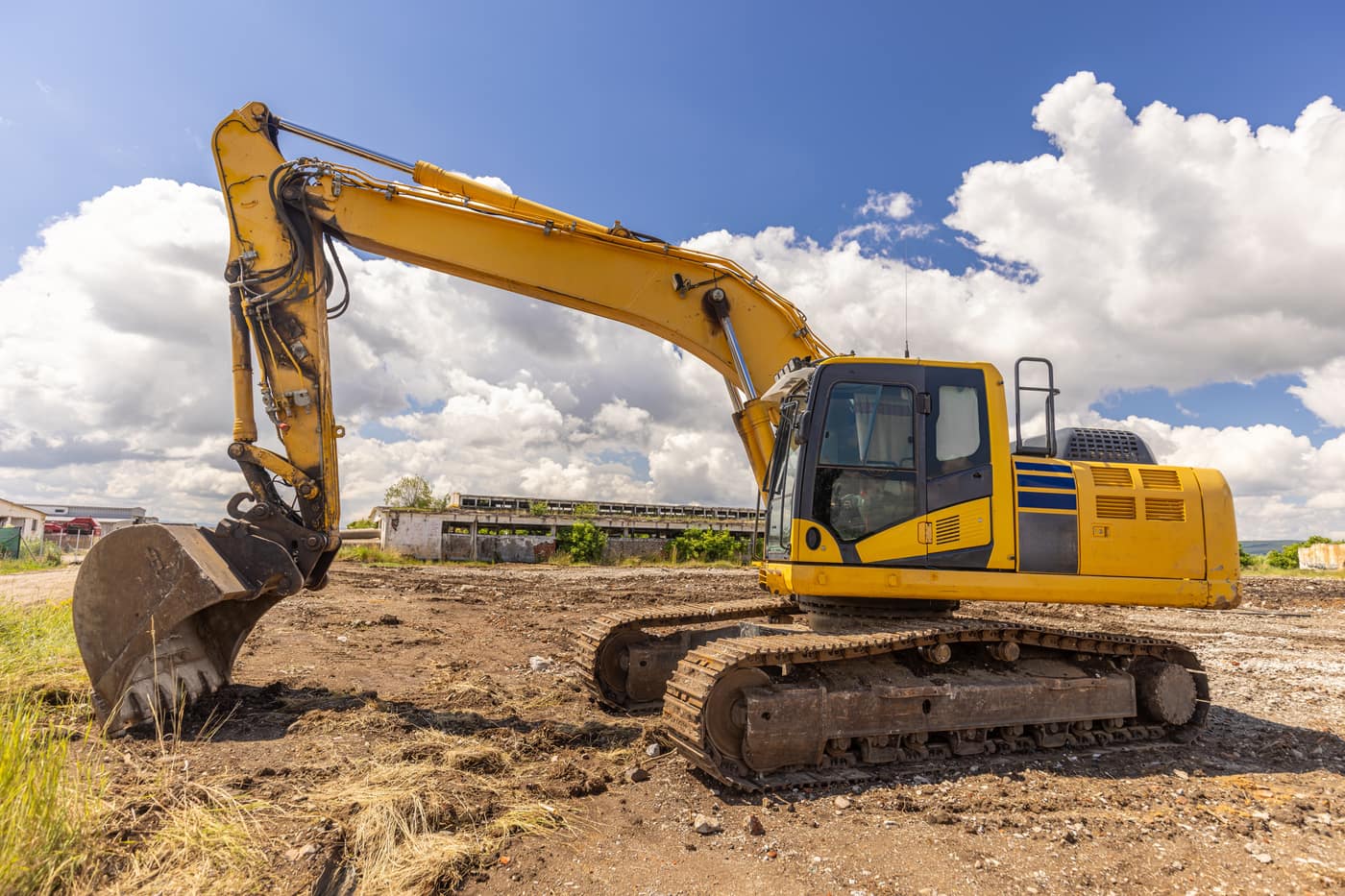
Property insurance is the policy written for the places your business keeps things: the shop, the office, the equipment shed, the parts room and the yard, along with the contents inside. For an excavation contractor the machines spend their days elsewhere, so this policy is about the home base they come back to.
The SBA lists commercial property insurance among the types of business insurance for companies that hold a significant amount of property and physical assets. A dig company can fit that description. The work happens at job sites, but the shop holds the welders, the compressor, the parts, the records and the computers that keep the crews moving. Here is what a property policy is designed to address at those locations, and what to ask your agent. Terms, exclusions, endorsements and underwriting decide what any policy does, so read it as a list of questions rather than a promise.
The rest of your program has its own jobs. General liability is designed for damage the work does to other people’s property, and contractors equipment insurance is written for the scheduled machines; each policy’s wording decides its part. Property insurance stays with the buildings and the business personal property at a fixed place. Start from the excavation insurance overview if you want the whole program in full view.
A policy for the places you keep things
A fixed location is different from a job site. Nobody moves it, it holds a lot of value in a small area, and a loss can reach everything in it at once. A fire in the shop reaches the building, the tools on the benches, the stock on the shelves and the desks in the office. That concentration is what a property policy is designed to address.
Think through every place your business keeps property. Some excavation companies keep more than a shop: an office in town, a pole barn on a rural lot, a yard with a fuel station, a storage container for supplies. Locations can be named on the policy with their own values, so a place left off the list is a place to ask about before a claim, not after.
This comparison sets out how a property policy can divide what is kept at the shop. The building column holds the walls, roof and permanent systems, which sit with an owner or, in a lease, with the landlord. The contents column holds shop tools, parts stock, office furniture and computers. The tenant’s improvements column holds a built-out office or a new overhead door paid for by a tenant in a leased space. Tools that travel on trucks may sit on the equipment schedule, so ask where they sit. No figures are shown.
Buildings, contents and a tenant’s improvements
A property policy sorts what you own into parts, and the sorting is where surprises can start.
The building
If you own the shop, the building is yours to insure: walls, roof, floors, built-in fixtures and permanent systems. If you lease, the lease can say who insures the structure. Ask your agent to read the lease clause with you and say plainly whether the building sits with you or with the landlord.
Business personal property
This is what is inside: shop tools, shelving, parts stock, office furniture, computers, files, and supplies kept on the premises. Ask whether the policy treats supplies and stock the same as furniture, and whether electronic data and records have a separate place on the form.
A tenant’s improvements
A tenant who paid for a new overhead door, a built-out office or a wash bay has money in a building somebody else owns. Some policies address these improvements as their own category. If you built out a leased space, ask how those items are listed and valued.
Tools that travel to jobs on trucks can sit on the equipment schedule rather than on the property policy. Ask where they sit, so no item is left between policies. The scheduled machines are contractors equipment insurance’s question.
The causes of loss the form names
A property policy is built around named or described causes of loss. Causes to look for on the form include fire, lightning, wind, hail, theft, vandalism, and the weight of snow on a roof that leads to a collapse; ask how the form treats each. A yard with a locked shop and a visible stock of copper, batteries and tools can attract theft, and a pole barn with a wide roof span is a fair thing to ask about under snow and wind.
Do not assume a cause of loss is included because it sounds ordinary. Ask your agent to show you the list in the form, to point out any limit or condition attached to theft and vandalism, and to explain how the policy treats a building that sits empty for a stretch. The terms and exclusions on the policy decide.
Water, ground and drains: ask before you assume
Further causes of loss deserve a direct question, because they can be handled differently from fire and wind: flood, earth movement, and sewer or drain backup. The shop sits on the same ground your crews dig.
Do not assert an answer. Ask whether each is addressed by the policy, whether any is available as an endorsement, and what the deductible or limit looks like. A shop in a low area or beside a creek, a floor drain in the wash bay, and a building cut into a slope are each worth describing to your agent in plain words.
Replacement cost, actual cash value and the coinsurance-style clause
How a loss is valued can change the payment as much as the cause. Replacement cost is designed to address the cost of repairing or replacing with similar new property. Actual cash value takes age and wear into account, so an older compressor or a roof with years behind it may be valued lower.
Some forms also carry a clause that compares the amount of insurance you chose to the value of the property. If the amount carried falls short of what the clause expects, the payment on a partial loss can be reduced. You do not need to memorize the mechanics. Ask your agent whether the policy has this kind of clause, how it works on your building and contents, and how it would apply to a loss that damages only part of the shop.
Ask the valuation question separately for the building and the contents. They can be set on different bases, and the choice made at the application can decide how a claim is settled, so ask which applies.
This flow follows a loss at the shop from the event to the restart. A loss such as a fire or storm damages the building or contents. The shop closes while repairs are made. Business income coverage can address income that stops during the shutdown. Extra expense can address the added cost of working from a temporary place until the shop reopens. No figures are shown.
Business income and extra expense when the shop goes quiet
A fire or storm at the shop can stop the business even if the machines are fine. The crews still need parts, dispatch, billing and a place to start the day. Business income and extra expense coverage can be added to a property policy to address income that stops during a shutdown and the added cost of working from a temporary place.
This coverage is tied to a loss at the location the policy names, so it is not a promise for any slowdown. Ask how the policy defines the period of restoration, whether there is a waiting period before it begins, and how it would work for a company whose income comes from job sites rather than from the shop door. Ask, too, what the application wants to know about your income and your payroll while the shop is down.
Shop systems and the yard
Equipment breakdown for the shop’s own systems
The compressor, the lift, the fuel pump, the heating and electrical systems in the shop are building systems that can fail in ways a standard property form may not address. Equipment breakdown is an option some owners ask about for these systems. Ask whether it is offered, what it names, and how it differs from the machines you run in the field.
Outdoor property and the yard
Fences, signs, light poles, fuel tanks and supplies stored outside are exposed to weather and theft. Forms treat outdoor property in different ways, and some limit or exclude parts of it. Ask by name about each item you keep outside, including stored materials such as pipe, fittings and aggregate, and get the answer in writing.
Visitors in the shop
If a supplier or customer is hurt while visiting the shop, that is a liability question to put to general liability. If your own employee is hurt at the shop, ask about it under workers’ compensation. A property policy is for the property.
Lenders, landlords and keeping values current
If a bank holds a mortgage on the shop, it may ask to be named on the policy. A landlord may do the same under a lease. The policy can carry that wording, and your agent can provide the proof the other party asks for. Rules differ from state to state, so the coverage by state pages, from New Jersey, Rhode Island, Connecticut, Delaware, Maine, New Hampshire and Vermont to the rest of the list, are a place to start when a requirement seems to depend on where the shop sits.
Values drift. A shop built out over time, a new parts room, an office upgrade, and rising costs of materials and labor can all leave the amounts on the policy behind the real cost of replacing things. Review the building and contents values with your agent on a regular schedule and after any addition or purchase. The review is also a good time to report new locations, closed locations and a change in how a building is used.
Setting limits in plain words
Choose limits by asking what it would take to restore the shop to working order: the building or the tenant’s improvements, the contents, the stock, the office systems, and the weeks of lost income while that happens. Start from the cost to rebuild and replace, not the price you paid. Then ask where the policy sets sublimits, such as for outdoor property, theft or data, because a policy can carry a lower limit for a category than for the whole.
Deductibles are a trade between what you pay up front at a loss and what you carry in the cost of the policy. Pick a deductible your business can pay without strain. Liability limits above the other policies are a question for umbrella insurance, while this policy’s limits are about the property itself.
Why Excavating Business Insurance
Excavating Business Insurance works with excavation contractors and places the property policy beside general liability, equipment, workers’ compensation and commercial auto, so the seams between them are checked together. A licensed agent can read your lease, walk the list of locations and see what the application asks, then go through the questions above with you.