
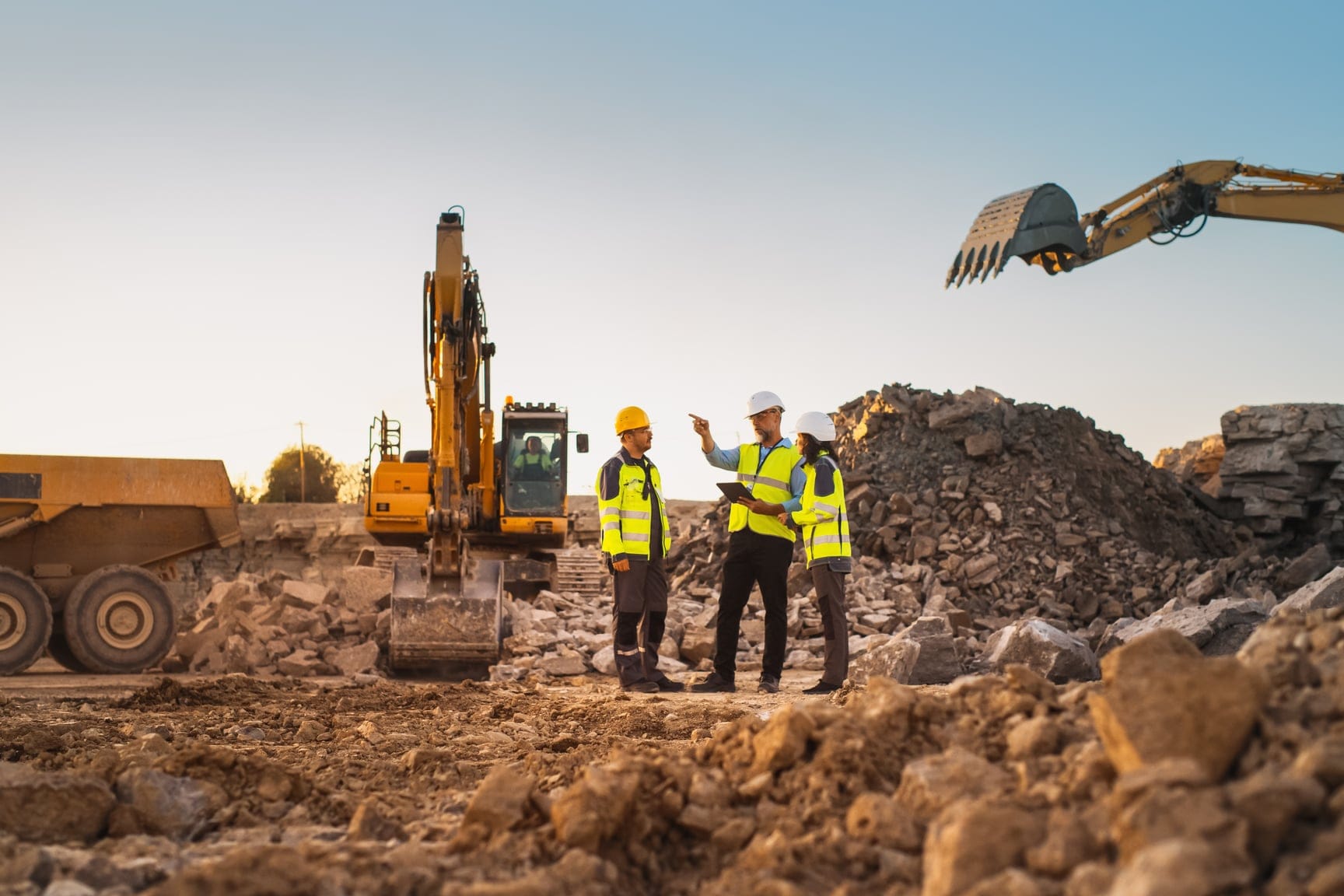
Commercial auto insurance is the policy designed to address the vehicles that move your crews, your spoil and your machines, and the liability that follows those vehicles onto the road. For an excavation contractor, that means dump trucks, pickups, the heavy truck that pulls the lowboy, and trailers, plus rented trucks and employees’ own vehicles used on your errands.
Your digging work sits under other policies. What a machine does on a job site is a question to put to general liability, and the machine itself is a question for contractors equipment insurance. Commercial auto is the part that sits with what happens between the yard and the site: the road. Every policy’s terms, exclusions, endorsements and underwriting decide what actually applies, so treat what follows as a list of things to ask. Your program as a whole starts at the excavation insurance page.
Liability when a truck is on the road
The core of a commercial auto policy is liability for injury and damage to other people from a listed vehicle. A loaded dump truck that rear-ends a car, a pickup that backs into a parked vehicle at a supplier, a tractor that swings wide at an intersection: these are the road losses the liability part of the policy can address, subject to its wording.
What matters is how each vehicle is listed. The policy responds to the vehicles and drivers it describes, so a unit left off the schedule is a question you want answered before a loss, not after. Ask your agent to walk through each truck and trailer you run and confirm that it appears on the policy as you use it.
Your general liability policy is written for a different job. It is designed to address damage your work does to others’ property, such as the struck buried line, while the road belongs here. The seam between them is worth discussing, because an accident can have a road part and a site part.
Commercial auto sits at the center of this picture. Around it are the dump truck, the crew pickup, the tractor that pulls the lowboy, a rented truck and an employee’s own pickup. Each raises a different question about how it is listed and who may drive it. The rented truck and the employee’s pickup are hired and non-owned questions. No figures are shown.
Trailers and the lowboy hitch
A lowboy or equipment trailer raises its own set of questions. Ask how the trailer is listed, whether it appears on the policy by itself or only when attached to a listed power unit, and how the policy treats a trailer that is detached and parked at the yard or on a site.
The tractor and the trailer
The tractor or heavy truck that pulls the lowboy is a vehicle with its own classification. The application may ask about its weight, how far it travels and what it hauls. Describe the real work: short hauls between local sites, or long trips with a machine aboard.
The machine on the deck
The excavator or dozer riding on the trailer is a question to raise apart from the truck. Whether a machine is protected in transit is a matter for the schedule on your equipment policy, and the policies should be read side by side. Ask your agent which policy responds if a machine slides off the deck, and get that answer in writing.
Drivers: the questions behind the list
A commercial auto application asks who drives. The underwriter may look at driver records, and a policy can handle drivers by naming them or by wording about permitted use. The answer varies, which is why the question belongs on your list.
- Who is allowed to drive each truck, and how is a new hire added before the first day behind the wheel?
- What might an underwriter ask about records, and how can a driver’s record affect a unit?
- Do operators who run machines ever drive a truck, and does that change the answer?
- Does a seasonal worker or a short-term helper fall inside the policy’s wording?
Keep a plain list of everyone who has driven a company vehicle, and give your agent the list when it changes. A mismatch between the application and the real crew is a gap worth closing before a claim, not after. Trucks and drivers are part of what moves a program’s price, and our post on what a Salt Lake City excavation quote is built from sets them beside payroll, machines and contracts.
Mud, spoil and shifting loads
Dirt work leaves the site on tires. Mud tracked onto a public road, spoil that falls from a loaded bed, and a load that shifts in a turn all create road exposure that touches your trucks. Whether a given event is a commercial auto matter, a general liability matter or both depends on the facts and on each policy’s terms. Debris hauled from a tear-down raises the same questions, which the page on insurance for demolition contractors follows.
Rather than guess, bring these to your agent:
- How do your trucks leave a site, and do you clean wheels or sweep the road?
- Are loads secured, tarped or leveled before they travel?
- If spoil falls from a truck and damages a vehicle behind it, which policy is written to respond?
- Does any exclusion in either policy speak to loads or to the material hauled?
Your answers help the agent describe your operation accurately, and an accurate description is what lets the policy be read the way you expect.
On the site or on the road: how a vehicle is classified
A truck that works inside a fence line can be treated differently from the same truck on a public road. A policy can draw a line between a vehicle that is licensed and driven on the road and mobile equipment that works at a site. Where a given unit lands is a classification question to ask, not a rule to assume.
This matters for units that work on the road and on the site: a water truck that fills at the yard and sprays on the site, or a dump truck that shuttles spoil within a project and then travels to a disposal location. Ask your agent to name how each is classified, which policy is written to answer for it in each setting, and what the policy’s exclusions say about the site side.
This comparison sets the road beside the job site. On the road, the questions are about liability to other people, drivers and shifting loads. On the site, the questions are about how a vehicle is classified and which policy answers for it. A water truck or a dump truck that works on the road and on the site belongs in each column. No figures are shown.
Rented trucks and the employee’s own pickup
Hired and non-owned auto reaches vehicles that are not on your schedule, within its terms. A truck rented for a project is a hired vehicle. An employee’s own pickup, used on a parts run or to carry a crew member to the site, is a non-owned vehicle. Neither appears on your schedule, and both can still bring a claim to your door.
Ask whether hired and non-owned auto is on your policy now, how a rental is described in the policy, and whether the wording speaks to employees using personal vehicles on business errands. Because the answer depends on the wording and on underwriting, ask for it in writing before the truck leaves the lot.
An employee who is hurt while driving for you raises a workers’ compensation question; ask how the policies divide it. Keep those policies in mind together when you describe your operations.
Your own trucks and the optional parts
Liability is written for harm to other people, within the policy’s terms. Physical damage for the vehicles themselves is a choice you can make unit by unit. Newer, financed trucks and older, fully paid trucks can call for different decisions, and a lender may have wishes of its own. Ask how a loss would be valued, what the deductible wording says, and how the policy treats attachments such as a dump bed or a hoist.
Further options deserve a question each:
- Uninsured and underinsured motorist. This option is designed to address a loss caused by a driver who has little or no insurance. Ask whether it is offered, and what the policy says about it.
- Medical payments. This option is written to help with medical bills for people in your vehicle. Ask how it fits next to workers’ compensation for your crew.
Your yard buildings, shop and tools are questions for property insurance rather than this policy; ask where each sits. Keep that handoff straight when you review the whole program.
Limits, and trucks that cross state lines
Limits on a commercial auto policy describe the ceiling on what the policy can pay for a loss. Think about what a serious road loss could look like for a loaded truck in traffic, then ask your agent whether the liability limit leaves a gap you are not comfortable carrying. If the gap is a concern, umbrella insurance is written to sit above the limits of the underlying policies, and its own terms and underwriting decide how.
Trucks that cross a state line add another question. Registration and filing rules differ from state to state, and the right answer for a truck that crosses state lines depends on where it travels. Review coverage by state, where Nebraska, Oklahoma, New Mexico, Wisconsin, Louisiana and Tennessee have their own pages, and give your agent a plain account of the routes your trucks run. Do not assume a policy that works at home works the same way over the border.
Why Excavating Business Insurance
Excavating Business Insurance is an agency that works with excavation contractors and writes through licensed agents who read the policy wording with you. A truck, a trailer and a hired rental each raise a question that a form alone does not answer. We help you put those questions to the underwriter, and we line the auto policy up with your general liability, equipment, workers’ compensation and umbrella so the seams are visible before a claim.