
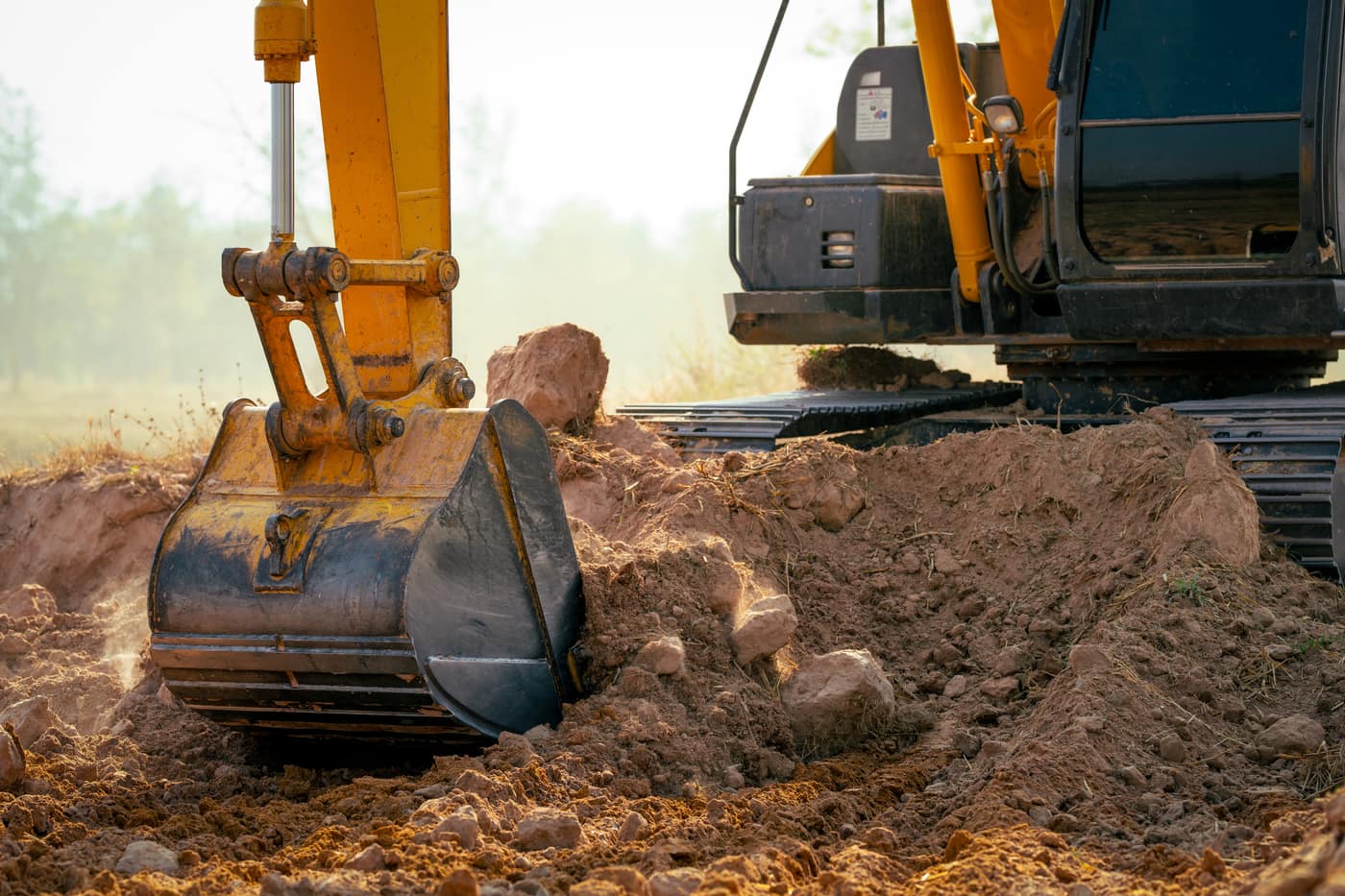
Two Tennessee rules shape an excavation business before any bucket goes in. The Bureau says that “businesses engaged in the construction industry are required to have workers’ compensation coverage for everyone including the business owners. Other businesses need insurance if there are five or more employees” (workers’ compensation, who must carry insurance). And the state’s damage prevention law puts a duty of notice on the person responsible for the dig, which the next section quotes word for word.
Read the sections below in the order a job runs: the notice, the cut line, the license question, the crew, the trucks. Then check the program against them, starting from our page on excavation insurance, and send a quote request when the picture is clear.
Serving notice under the Damage Prevention Act
Tennessee’s call-before-you-dig law is cited as “Tenn. Code Ann. Title 65, Chapter 31 Underground Utility Damage Prevention Act” (Tennessee Code Annotated, damage prevention chapter). Its notice section says that “each person responsible for such excavation or demolition shall serve written, telephonic or electronic notice of intent to excavate or demolish at least three (3) working days prior to the actual date of excavation or demolition” (notice section). Statute text changes over time, so confirm the current wording and any later amendment with Tennessee 811 before you rely on it for a particular job.
On who carries the duty, the same section reads “each person responsible for such excavation or demolition shall serve written, telephonic or electronic notice” (notice section). The definitions section treats the word excavator separately, and how it lines up with a hired operator or a subcontractor is still open, so put the duty in writing on every job. If you are the general contractor, say whether you serve the notice. If you are the sub, ask who does.
The statewide center describes itself in these words: “Tennessee 811 serves as the statewide official one-call center” (Tennessee 811). Its own site, at https://www.tenn811.com/, is where a locate request starts, and the statute’s notice section is the place to check what the request must contain.
A written note of the notice does real work in the insurance conversation. Save the confirmation the center gives you, write down the date you served it and who served it, photograph the paint and flags before the machine arrives, and keep those pages with the job’s contract. An underwriter reading your application and an adjuster reading a claim may both be asking the same plain question: did the crew do what the statute asked before it dug? A dated note answers it in a minute, and a gap in the note leaves the question hanging. If a utility’s marks look faded, wrong or missing on the morning of the dig, write that down too, and tell the foreman to hold the machine until someone answers.
A flow from left to right. It starts with the locate request the statute asks the responsible person to serve, moves to the marks left on the ground, then to a machine that meets a line despite them, and ends at a claim read against the application, the limits and the contract. No figures are shown.
Who pays when the cut line is not yours
On a Tennessee site the lead claim is damage to somebody else’s property while a machine is working: a gas service, a fiber duct, a water main, a neighbor’s footing or slab. A struck line may bring a repair bill, a utility’s outage costs and a neighbor’s complaint all at once. The liability policy is what that claim is read against, along with any injury to people nearby, and what it pays turns on three things you can gather before anything happens.
First, the work as the application described it. If the application says basements and the crew was cutting a long utility trench for a developer, the question of whether the policy answers gets harder. Second, the limits printed on the policy and any umbrella above it. Third, the contract that sent your crew to the job, because some contracts push damage costs onto the excavation sub, and some require named parties on your policy. None of this is a promise about any one policy; ask your agent how the wording reads before the season starts.
When the bucket meets a line, the operator shuts down, the foreman secures the area, the line’s owner hears about it as the job’s plan requires, and the operator’s own account goes on paper that day. Then call your agent early. A claim that begins with photographs, a dated locate note and the operator’s own account is a claim an adjuster can read without guessing. Keep the machine’s position, the depth of the cut and the weather in the account, since each one may bear on how the loss is described.
The Board for Licensing Contractors and an unanswered excavation question
The Tennessee Board for Licensing Contractors is the licensing regulator the state lists, and its page for general contractors says: “The current requirements for the licensure of contractors, home improvement contractors, limited licensed electricians, and limited licensed plumbers can be found in Tennessee Code Annotated, Title 62, Chapter 6” (Tennessee Board for Licensing Contractors). That page describes general contractor licensure. It does not name an excavation-specific license, and whether grading, site preparation or trench work falls inside a licensed classification or a monetary limit is still open. The Board can tell you; put the question to it in writing and keep the answer with your bid documents.
If you work as a sub under a general contractor, the contract may spell out what the general expects the sub to hold. Read that clause when the subcontract arrives and ask about it before signing, not after the crew has mobilized.
Construction employers, owners and the Bureau of Workers’ Compensation
The Tennessee Bureau of Workers’ Compensation is the workers’ comp regulator the state lists. On the basic duty, its page says “The Tennessee Workers’ Compensation Law requires certain employers to provide workers’ compensation insurance benefits” (who must carry insurance). That makes the Tennessee system compulsory for the employers the law reaches. For threshold, the same page says “businesses engaged in the construction industry are required to have workers’ compensation coverage for everyone including the business owners. Other businesses need insurance if there are five or more employees” (who must carry insurance).
Whether an excavation contractor is a construction-industry business under that wording is open. The Bureau’s page does not say how excavation work is classed, so ask the Bureau before you assume either way. For a company where the owner runs the machine, the question that follows is the owner’s own position, and the agency’s employer page says “The exemption allows a business owner to exempt him or herself from the requirement to carry workers’ compensation insurance on him or herself” (employer page). The conditions for that exemption are not stated in that sentence, so ask the Bureau what a registration requires and what it leaves out.
Tell your agent the headcount on payroll, which of those people run machines, which only dig by hand, who drives, and whether any labor comes through a subcontractor who carries a policy of his own. Who may write Tennessee workers’ comp for an excavation employer is open too, and the Bureau is the place to ask. Our page on workers’ compensation insurance sets out how classification and audit work for crews of this kind.
Tennessee’s liability minimums and the commercial truck question
For auto liability, the state’s Drive Insured page lists the ordinary minimums for a liability policy in this form:
“The required minimum limits of your liability car insurance are: $25,000 for each injury or death per accident. $50,000 for total injuries or deaths per accident. $25,000 for property damage per accident” (Drive Insured Tennessee)
That is the ordinary-policy minimum. A separate limit for a commercial truck or a motor carrier is still open, so what applies to a dump truck, a tag-along trailer or a lowboy hauling the excavator is a question for the Tennessee Insurance Division and your agent. Ask them about the vehicle the way it is registered and used.
A commercial auto schedule for an excavation company lists each truck with its garaging address, the drivers who may take it, the trailers it pulls and what it hauls. Spoils, stone, fill and a machine on a deck are different loads, and an application should say which a truck carries. A crew that uses an employee’s pickup for a short errand to a supply yard may want to talk through that use with the agent, because the way a vehicle is used can matter to the wording.
A stack of labeled layers, top to bottom: Tennessee call-before-you-dig center; Tennessee Insurance Division; Tennessee Board for Licensing Contractors; Tennessee Bureau of Workers’ Compensation; Your agent, with each reply. No figures are shown.
Matching the policies to what a Tennessee excavation crew does
General Liability
For an excavation business this is the policy a damaged utility line is brought to first. The damage a bucket does to a neighbor’s wall or a buried service is what it is read against, on its terms, along with injury to people near the cut. The questions are the ones the application raises: which kinds of dirt work you described, what you subcontract out, and what limits the contracts you sign require. A basement dig beside a neighbor’s wall, a trench across a lawn and a pad graded beside a road all put other people’s property within reach of the bucket, so describe each kind of work plainly.
Workers’ Compensation
The Bureau describes compulsory coverage for the employers the law reaches, and construction-industry businesses are named in the threshold sentence quoted above. For a crew, the working questions are who is on payroll, who runs the machines, who rides the trucks, and what the owner does. An operator with a loader, a laborer in a trench and a foreman who sets stakes may not carry the same exposure. Whether the owner is on the policy or has registered an exemption is a question for the Bureau and for your agent.
Commercial Auto Insurance
Dump trucks, a tri-axle for stone, service pickups and the trailers behind them travel between the yard and the cut. The state’s page quotes limits for an ordinary liability policy, and a commercial limit is still open, so list each vehicle, its driver and its load for the agent. The question of a truck that hauls a machine on a deck, or leaves spoils on a county road, belongs on the application before the first bill of lading is signed.
Contractors Equipment Insurance
The excavators, skid steers, compact loaders, trench boxes and laser levels are what the crew works with, and a day without one can cost more than the repair. This policy is the one built around machines and tools on a schedule: what you own, what is financed, what you rent for a job and where the iron sits overnight. If a machine tips on a slope or is stolen from the site, the schedule and the policy wording decide what is paid. Ask your agent how the policy reads for the machines you actually run.
Umbrella Insurance
A contract may ask for limits above the base general liability or auto policy, and an umbrella is the policy that sits on top of them. A utility strike that reaches several parties, or a truck that causes a serious wreck, can run past a base limit. Read the umbrella’s terms for what sits underneath it and what it will not touch. Bring each contract’s insurance article to the agent so the limits can be compared before a bid goes out.
Property Insurance
The shop, the yard, the storage trailer and the tools, fuel and parts inside them are what this policy looks at. An excavation company that parks its fleet beside a small office may have more value in what stands there than it expects. Ask what the policy treats as a building, what is business personal property, and what happens to machines parked in the yard overnight, since those are the points where a loss can be argued.
When you are ready to see the six policies together, send a quote request and we will walk through them with you.
Six kinds of dirt work, and how an application reads each
General excavation
This is the cut itself: opening ground, loading spoils, backfilling and compacting. An application would ask what machines the crew runs, how deep the cuts run in a plain description, and whether the crew digs near buildings or lines.
Land grading and building pads
Grading shapes ground for a slab, a lot or a drive. The application may ask about the site, the grading plan, the drainage and the neighbors’ property lines, because water and fill move onto other people’s land.
Site preparation
Stripping topsoil, laying stone, cutting temporary roads and staging materials make up site preparation. Say plainly which of these your crew does itself and which it hires out.
Utility and trench work
Trenches for water, sewer, gas, power and communications put the bucket nearest to other people’s lines. This is where the locate notice and the cut-line questions above carry the greatest weight, so an application would ask who serves notice and who backfills.
Basement and foundation digging
A basement or foundation cut sits close to the house next door, the road and a buried service. An application may ask about shoring, who owns the ground, and what the owner or builder has promised in the contract.
Hydro excavation
A vacuum truck that opens ground with water is used to expose lines without a bucket. An application would ask about the truck as a vehicle and as a piece of equipment, and about what the crew does with the slurry it hauls away.
What an insurance application asks a Tennessee excavation contractor
Whether your search began as contractor insurance in Tennessee, construction insurance for a small outfit or the equipment you own, the application asks the same plain things. It wants the work you do, described kind by kind. It wants the machines, the trucks and where they sit. It wants to know who is on payroll, who is a subcontractor and whether those subs carry their own policies. It wants to know what you haul, where the sites are and what contracts send you there.
Answer in the words the crew uses on the job, and be complete. A job the application did not mention may be a job the policy’s wording is read against later. If your work changes during the year, tell your agent when it changes, not at renewal. East Tennessee, Middle Tennessee and West Tennessee jobs may call for different machines and different haul distances, and an agent can only write what you describe.
Bring the plain details with you: the machines by make and type, the trucks and trailers by use, the sites you work from, the names of the subcontractors you lean on and the kinds of owners who hire you, whether homeowners, builders or public bodies. A short list prepared in advance saves a round of questions and makes the first quote more accurate.
Where to take each Tennessee question
The Tennessee Insurance Division is the state’s insurance regulator and the place to ask about insurance. The Tennessee Board for Licensing Contractors is the licensing regulator the state lists, and the place to ask whether excavation work needs a license. The Tennessee Bureau of Workers’ Compensation is the workers’ comp regulator, and the place to ask how the construction rule, the exemption and the insurer question apply to you. Tennessee 811 is the statewide center to call before the dig. Each name above links in the sources list at the foot of this page.
Insurance wording in a Tennessee subcontract
The contract package from a builder or a public body can list limits, named parties and an indemnity clause, and a certificate of insurance is how the proof reaches them. What Tennessee requires of a certificate holder on any given job is open, so read each contract on its own terms. Send the insurance article to your agent before you sign, and ask for the certificate with the wording the contract asks for.
When you hire subcontractors for hauling, hand digging or hydro work, ask each for a certificate of its own and a note of what the policy lists. A sub with no policy may leave your policy answering for work you did not do. If you are starting a Tennessee excavation business, gather the contracts you hope to win, the machines you will buy or lease and the crew you expect to hire, and bring them to the agent before the first bid.
A working list before the next Tennessee bid
- Write down who serves the locate notice on each job and save the confirmation.
- Photograph the marks before the machine arrives.
- Ask the Board for Licensing Contractors whether the job needs a classification.
- Ask the Bureau of Workers’ Compensation how the construction rule and the owner exemption apply to you.
- List each truck, trailer and driver for the commercial auto schedule.
- List each machine you own, finance or rent for the job.
- Read the insurance article of every contract before you sign it.
Where the Tennessee rules are stated
Each quotation above links to the statute or agency page it comes from. Still open, and worth a call before you bid: how the notice duty lines up with a hired operator, whether excavation is a licensed classification, how the construction rule reaches an excavation employer, who may write the workers’ comp, and the limit for a commercial truck. The offices named above can answer each.