
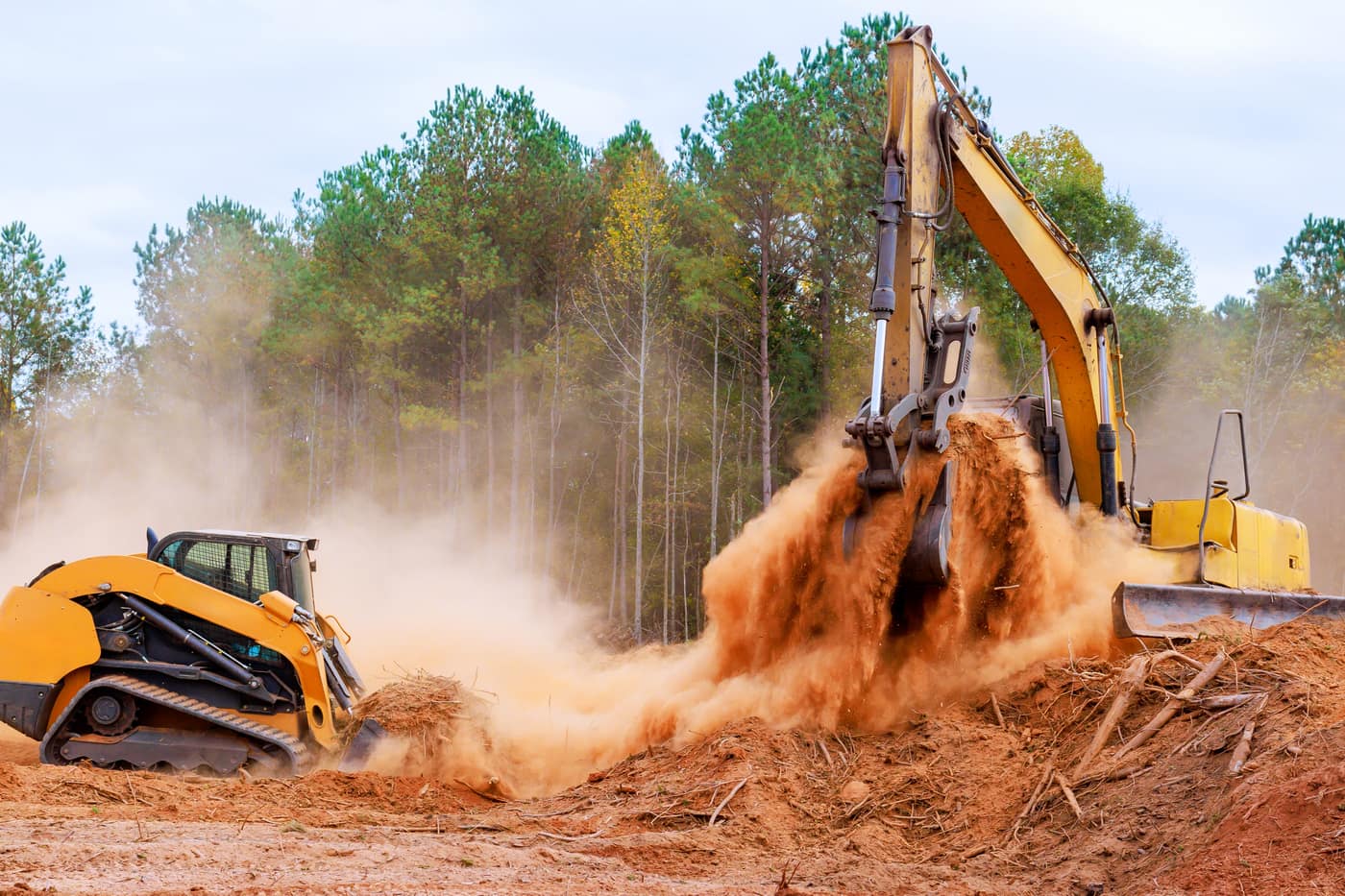
Colorado puts the duty in a single sentence: “A PERSON SHALL NOT MAKE OR BEGIN EXCAVATION WITHOUT FIRST NOTIFYING THE NOTIFICATION ASSOCIATION. NOTICE MAY BE GIVEN BY ELECTRONIC METHODS APPROVED BY THE NOTIFICATION ASSOCIATION OR BY TELEPHONE”. Before the bucket goes in, a locate request goes to the notification association. Licensing for excavation work, the workers’ compensation rule and a commercial-vehicle minimum are still to be settled, and each is paired below with who to ask.
The rest is about your business: the machines, the crews, the jobs and the paper that goes with them. The wider program is on the excavation insurance page, and our quote form is at the bottom.
Notice to the notification association before excavation begins
The section on notice of excavation is printed as “9-1.5-103. Plans and specifications - notice of excavation - duties of excavators - duties of owners and operators - fee - repeal” (amending bill). That heading comes from the enrolled bill that amended the section, so today’s compiled statute may read differently. Ask your agent or the notification association whether the wording has moved.
On who must call, the bill says “A PERSON SHALL NOT MAKE OR BEGIN EXCAVATION WITHOUT FIRST NOTIFYING THE NOTIFICATION ASSOCIATION” (amending bill). It defines excavation to include grading, trenching and hydro excavating, which are kinds of work a Colorado excavation crew may do. Some arrangements, such as an employer’s own underground facilities, are treated separately in the bill, so ask the center how your own jobs fall.
The center is Colorado 811, called the notification association in the statute. On timing, its website says “you are legally required to contact Colorado 811 at least three business days before you dig” (one-call center). That is the center’s statement of the lead time, not the statute’s own sentence, so confirm it with the center for each job.
An underwriter or claims examiner reading a strike may ask when the request was made and what came back. Write down the request number, the date, the name of the caller and take a photo of the marks, and keep them in the job folder so the answer is on paper when someone asks.
A Colorado excavation job moves from the locate request to the marks on the ground, to the dig itself, and, if a buried line is hit, to a claim whose handling turns on the policy wording. No figures are shown.
A struck line and what the policy reads: work, limits, contract
A cut gas service, a severed fiber line or a neighbor’s flooded basement puts someone else’s property into the claim, and the question becomes which policy responds.
Whether the general liability policy responds turns on its wording: the work described on the application, the limits, the exclusions and the job contract. If the application lists basement digging and the strike comes during utility trenching, ask your agent now whether the wording reaches that work.
Colorado’s notice duty does not decide the policy, and the policy does not stand in for the duty. Damage to your own machine from a strike may be a contractors equipment question; ask your agent how each policy reads.
Excavation credentials in Colorado: ask before you bid
Whether Colorado licenses excavation or earthwork contractors at the state level is a point we have not confirmed, in either direction.
The Division of Insurance within the Department of Regulatory Agencies is the insurance regulator. For licensing, ask whoever issues the permit where you dig, and read the credential language in your customer’s bid documents.
Name each kind of excavation your crew does on the application, and keep whatever the permit office tells you in the same folder; an underwriter may read the work you describe.
Workers’ compensation for the crew: the Colorado rule is still open
We have not confirmed the compulsory-coverage rule, the number of workers at which it begins, or whether an owner may elect coverage; ask the office rather than guess.
Ask the state agency that administers workers’ compensation, and your agent, how an employer obtains the coverage. Then bring payroll divided by the kind of work each person does; the term-end audit compares it with what you reported. See the workers’ compensation insurance page for the policy itself.
Colorado’s liability minimums for vehicles, per a legislative staff summary
A legislative staff summary lists the required minimum liability coverages as “$25,000 for bodily injury or death to any one person in an accident; $50,000 for bodily injury or death to all persons in any one accident; and $15,000 for property damage in any one accident” (legislative staff summary). It summarizes the requirement; the statute’s own text is the place to confirm it.
A separate commercial-vehicle or intrastate carrier minimum is not something we have confirmed; your agent can tell you whether one applies, and the Division of Insurance is the state’s insurance regulator. Read your customer’s contract for the limits it wants.
Schedule each vehicle by the work it does: dump trucks, pickups, service trucks, trailers that carry machines. Say who drives them and where they run, and tell your agent when employees drive their own vehicles on company business. Crews working out of Denver, Fort Collins or Colorado Springs can run the same schedule, with the garaging address listed for each truck.
A stack of labeled layers, top to bottom: Colorado call-before-you-dig center; Division of Insurance; Your agent, with each reply. No figures are shown.
Colorado dig crew exposures and the policies that may respond
General Liability
This is the policy aimed at the damage your work may leave on someone else’s property: a bucket tooth through a gas service, a trench that undermines a neighbor’s wall, runoff that fills a basement. It may respond to that damage on its terms, and the application description of your work shapes how the policy reads. A basement-and-foundation contractor and a utility-trench contractor describe different work, and an underwriter may read the difference. The Colorado notice duty above is the legal setting for the dig, and the way your crews request locates is a fair topic for your agent. No other Colorado rule is tied to this policy here. Contractors searching for general liability insurance for contractors in Colorado are looking for this one first.
Workers’ Compensation
An excavation crew works with moving machines, open cuts and heavy lifts, and the injured person may be an operator, a pipe layer or a laborer on the ground. The Colorado coverage rule is still open on this page, so ask the state agency and your agent how an employer obtains the policy. Your payroll is reported by the work each person does, and the term-end audit compares what you reported with what you paid, so keep time records that show who ran the machine and who worked the cut. Subcontractors who work under you raise a further question: ask your agent whether certificates from them reduce what is counted on your policy.
Commercial Auto Insurance
A dump truck, a service pickup and a lowboy that hauls a machine to a site are all vehicles on a public road, and the policy may respond to claims that arise from them on its terms. The legislative staff summary above lists general minimum liability coverages; whether more is asked of a commercial truck is for your agent and your contracts to settle. A construction truck out of Denver and a pickup that tows a trailer to a Fort Collins site go on the same schedule, each with its driver, garaging address and use. Ask about physical damage for the trucks you own outright, and about the trucks you rent for a season.
Contractors Equipment Insurance
Your excavators, loaders, skid steers, compactors and attachments are the tools of the business, and an equipment floater, also called inland marine coverage, may respond to loss of them on its terms. List each machine with its serial number and its value, and say whether it travels on a trailer, sits at a job site overnight or is rented in for a job. Rental equipment and tool hire raise their own question: ask your agent how a machine you rent for a week is treated while it is in your care. No state statute is tied to this policy here.
Umbrella Insurance
An umbrella may sit above the liability and auto limits where a customer’s contract asks for more than the underlying policies carry. Utility strikes and truck crashes are the two events on an excavation business where large claims can start, and your agent can explain how the umbrella reads when a strike and a crash are both in play. The underlying policies matter: the umbrella may ask to see them, and a change to one midterm is worth reporting. No Colorado provision is tied to the umbrella itself; the contract in front of you is the source of the limit you carry.
Property Insurance
The shop, the yard, the fuel tank, the fence and the stock of pipe, fittings and parts you keep on hand may be the subject of this policy, on its terms. If you rent the building, ask your agent what the lease expects you to insure, and whether a landlord or lender is to be named. A fire, a storm or a theft that closes the yard may raise a question about lost income, so ask whether the policy responds to it. Machines that stay in the yard may be a property question or an equipment question, and your agent reads the wording to place them. No Colorado rule is tied to this policy here, so your lease and lender may set its limits.
To see these priced together, use the quote form.
What a Colorado application wants to know about each kind of dig
An application asks what you actually dig. Colorado contractors describe it in six ways, and a business may do several of them.
General excavation
Moving earth for a customer: cutting, loading and hauling soil away. An application describes the machines, the haul distance and whether the crew works near buildings or roads.
Land grading and building pads
Shaping a lot so water drains and a slab can be poured. The application names the grading equipment and says whether the work is done for a developer, a builder or a property owner.
Site preparation
Clearing the way for the next trade by staking, stripping topsoil and setting rough grades. Say what comes after your work, since the next trade may be working beside your crew.
Utility and trench work
Opening a trench for water, sewer, gas, electric or fiber lines. This is where the buried-line claim begins, so the application should say who on the crew files the locate request and what happens if the marks do not show up.
Basement and foundation digging
Excavating a basement or footing for a house or small building, frequently on a lot beside a neighbor. The application names the depth range in words, not figures, and says whether shoring is used.
Hydro excavation
Using water or air and a vacuum to expose buried lines. Customers search for hydro excavation in Colorado when they need a gentler way to find a utility, and your application should say it is part of your work if it is.
What a Colorado insurance application asks an excavation contractor
Construction insurance in Colorado starts with the same set of questions whether you are searching for contractors insurance in Colorado or for a quote on a single policy. Expect to describe the work you do, with each of the kinds above named; the machines you run and who owns them; the trucks and trailers; the subcontractors who work under you; the places you work; and the contracts you sign.
Say how you handle locate requests, who on the crew makes them, and where the written note is kept. Say whether you haul spoil away, whether you work near water or a road, and whether any jobs sit beside a school, a hospital or a rail line. Answers that match the work you actually do let a policy be read cleanly when a claim arrives. Answers that leave out a kind of work may leave a question open on a loss.
Certificates, subcontractors and starting a Colorado excavation business
A customer, a general contractor or a public owner may ask you for a certificate of insurance. Ask your agent to issue one for each job, and check that the wording matches what the contract demands, including any additional-insured wording. If you work as a subcontractor in Colorado, read the subcontract’s insurance clause before you sign it. If you hire subcontractors, ask each for a certificate and keep it with the job folder.
A new excavation company can ask its agent to quote the policies together from the first job. Bring the work you expect to do, the machines you own or will rent, the trucks, the people on payroll and any contracts already in hand. Customers that ask for proof before the work starts are easier to satisfy when the certificate is ready.
Colorado bodies named for each question, and the two left open
Colorado 811 receives notice before excavation. The Division of Insurance within the Department of Regulatory Agencies is the state’s insurance regulator. For licensing and for workers’ compensation, ask the office that issues permits where you dig and the state agency that administers workers’ compensation.
Insurance clauses in the bid documents you sign
Bid documents from a general contractor or a public owner can carry insurance clauses: limits, additional-insured wording, proof of workers’ compensation. No Colorado rule is tied to any of them here, so the contract in your hand is the source. Read the clause before you bid, and if it asks for limits or endorsements your program lacks, tell your agent before the work starts.
Before the next locate request
- Request the locate, and keep the response with the job folder.
- List every kind of excavation on the application.
- Ask the permit office what the site requires of you.
- Confirm the workers’ compensation rule with the state agency and your agent.
- Match your vehicle schedule to your contracts.
Where these dated sources stop
The notice section rests on the enrolled amending bill and the one-call center’s public statement; the vehicle minimums rest on a legislative staff summary. Excavation licensing, the workers’ compensation rule and a commercial-vehicle minimum remain open until the offices named above confirm them.