
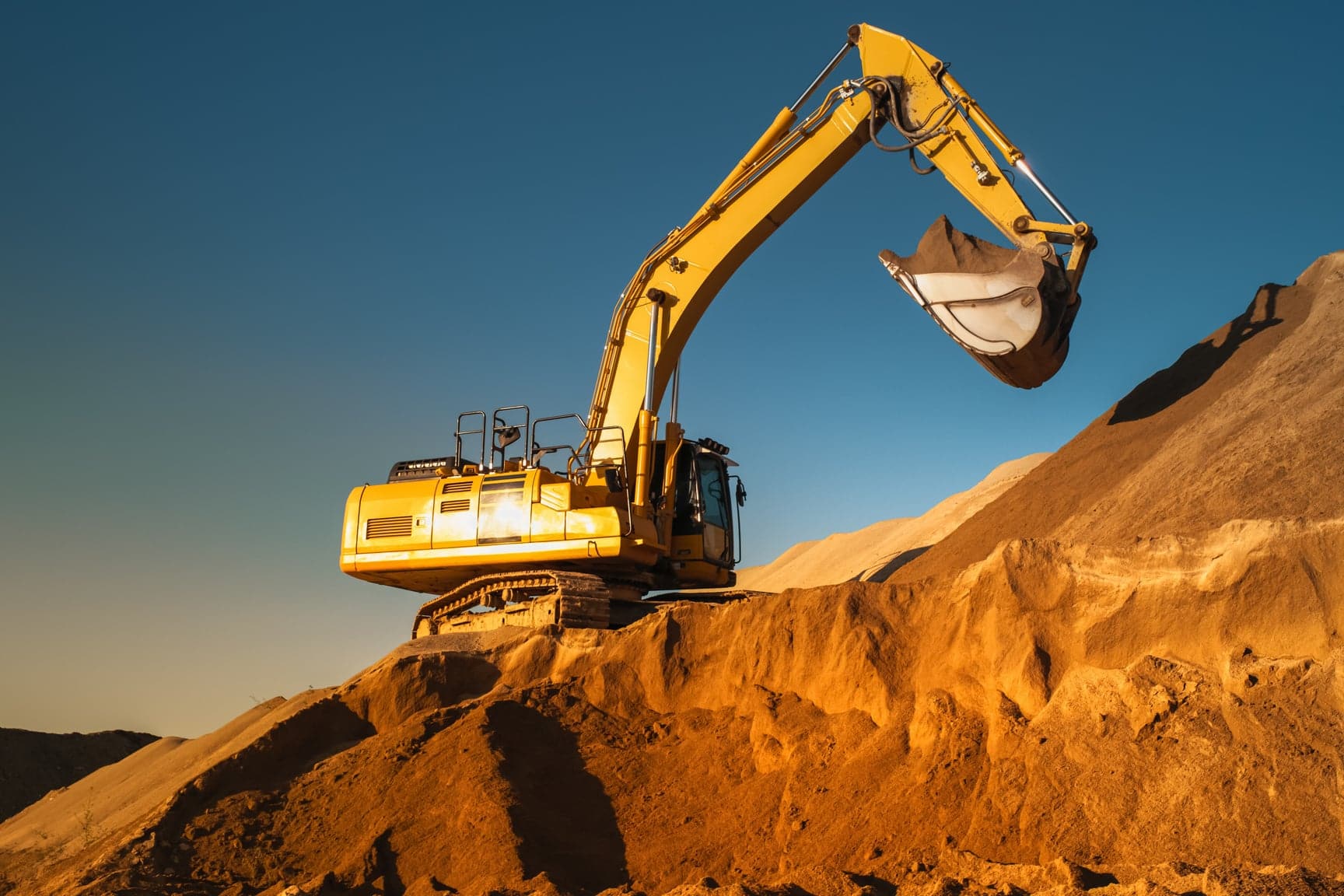
A Kansas excavation business answers to a short, plain duty before the machine starts: the statute says “An excavator shall not engage in excavation near the location of any underground facility without first having ascertained, in the manner prescribed in this act, a location of all underground facilities in the proposed area of the excavation” (K.S.A. 66-1803). What follows from that duty lands on your payroll, your trucks and your policies, and this page takes each in turn.
Start by reading the one-call part, then tell us about the crew, the machines and the hauling you run. Our excavation insurance overview shows how the six coverages fit together.
Kansas811, and the duty to ascertain facilities before you dig
The Kansas underground facilities act is cited here as K.S.A. 66-1803. It puts the duty on the excavator: “An excavator shall not engage in excavation near the location of any underground facility without first having ascertained, in the manner prescribed in this act, a location of all underground facilities in the proposed area of the excavation” (K.S.A. 66-1803). The word the statute uses is ascertain. Locating comes first, and the digging waits on it.
The statute also says who counts as an excavator: “‘Excavator’ means any person who engages directly in excavation activities within the state of Kansas” (definitions section). Read that against your company. If your own operators run the machine, the duty points at you. If you hire a hauler or a sub to open the trench, ask the general contractor and your agent how the notice is split before the first cut, because the wording of the definition is about who engages directly in the work.
The notice itself has a window. The notice section says “an excavator shall serve notice of intent of excavation at least two full working days but not more than 20 calendar days before the scheduled excavation start date, on each operator having underground tier 1 facilities” (notice section). The days and the operators it names are the statute’s own words, so read the section in full for the tier of facility on your job.
The statewide center is Kansas811. Its own site prints “Kansas811 – Always Call Before You Dig” (Kansas811). The Kansas Corporation Commission is listed for the one-call role (Kansas Corporation Commission); ask it about rules for the center that are not quoted here.
Your notice paperwork earns its keep once the insurance questions start. When a loss comes in, an adjuster or an underwriter may ask when the notice went in, who served it and what the operators sent back. Keep the date, the confirmation, the marks and photographs of the ground before the cut. A clean trail lets your agent answer the application questions about your locating practice without guessing, and it may help your insurer read a claim against the work you described.
This flow runs from serving notice to the statewide center, through the operators’ marks and the cut itself, to a claim read against the policy wording. No figures are shown.
Gas, water or fiber in the cut: how a Kansas loss gets sorted
The claim that weighs heaviest on an excavation owner is damage to someone else’s property while the machine is running: a gas service, a water main, a fiber duct, a neighbor’s wall or footing. A buried line struck during a dig is the loss this whole page is built around, and the questions after it are the same wherever the cut lands.
The policy wording decides what is paid. Four things get read together: the work your application described, the limits you bought, the contract you signed and the conditions in the policy. General liability may respond to the neighbor’s damage on its terms; an umbrella may sit above it; a rental or owned machine may be handled under a different policy. Ask your agent how the policy reads for each.
What you do in the first hours matters for the paperwork. Stop the machine, make the site safe, call the utility, and tell your agent and insurer. Write down who was on the machine, what the locate marks showed and when the notice went in. Do not promise the owner of the damaged line that you will pay; let the policy, the contract and your agent’s read of them come first.
Searches that bring Kansas owners here, such as Kansas contractor insurance and general contractor insurance in Kansas, point to one question underneath: what happens if a line is cut? The answer begins with the application. If the work is described as basement digging and the crew is also grading a pad and running a trench, say so, so that the application matches the jobs you run.
Who to ask about a Kansas excavation license
We have not confirmed how Kansas licenses excavation or earthwork contractors. Excavation licensing is therefore unconfirmed on this page. The quickest way to an answer is local: the city or county office that issues the permit for your site can say what it wants from a contractor, and the owner or general contractor who hired you may name a credential in the contract.
Your insurance agent can also tell you what the application asks about licenses, registrations and local permits. Insurance and the credential question are separate questions; this page answers only the insurance one.
Every Kansas job may carry its own requirement, so ask again when the job moves to a different city or county. Write down who you asked and what they said; that note may be useful when an underwriter or a general contractor asks about it later.
The payroll line in the Kansas workers’ compensation act
The security section of the compensation act says “Every employer shall secure the payment of compensation to the employer’s employees by insuring in one of the following ways” (security section). For an excavation company, the people on that payroll are the operators, the laborers, the drivers and the foreman.
The act also has an application section with a payroll line. It reads “the employer had a total gross annual payroll for the preceding calendar year of not more than $20,000 for all employees” (application section). That section may carry other exceptions that are not quoted here, so treat the line as a quoted rule, not a ruling on your crew. Ask your agent to read the full section against your payroll.
Whether a Kansas owner may elect to be covered or left off the policy is still open; ask your agent or the agency that administers the act. We also cannot say who writes the coverage in Kansas. Your agent can tell you which markets quote Kansas compensation for excavation work.
Payroll is the number your premium may follow, and classification is the question that may drive it. A crew that digs, hauls and grades can be described in several ways on an application. Describe the real work and let your agent sort the classes; the audit at the end of the year compares what you said with what you did.
Per-vehicle limits in the Kansas motor vehicle liability statute
Kansas prints its liability limits in the statute on motor vehicle liability policies. It says a policy must carry limits of:
“not less than $25,000 because of bodily injury to, or death of, one person in any one accident and, subject to the limit for one person, to a limit of not less than $50,000 because of bodily injury to, or death of, two or more persons in any one accident, and to a limit of not less than $25,000 because of harm to or destruction of property of others in any one accident” (motor vehicle liability policy section)
Those are the limits per vehicle as the statute states them.
Whether Kansas sets its own minimum for a dump truck or a motor carrier is still open, so ask your agent what applies to a dump truck or a lowboy before you assume the quoted limits are the only test.
A commercial auto schedule for an excavation company names each tractor, dump truck, pickup and trailer by what it hauls and where it travels. List the drivers, the garaging address and the weights you know. A machine that rides a trailer to the site is a different question from the trailer itself: ask your agent which policy picks up the excavator while it is on the road and which picks it up once it is in the cut.
If you run a lowboy or a dump truck alongside the machines, the statute’s per-vehicle limits tell you the quoted floors; your contracts and your own appetite for risk tell you whether to carry more. An umbrella policy may sit above the auto limits on its terms.
A stack of labeled layers, top to bottom: Kansas call-before-you-dig center; Kansas Corporation Commission; Your agent, with each reply. No figures are shown.
The policy stack for a Kansas dig crew, tied to the cut, the haul and the payroll
General Liability: the neighbor’s wall and the cut main
General liability is the policy your excavation program is built around. It may respond to third-party property damage and bodily injury arising from your work on its terms, whether that is a cut gas service, a damaged water main, a cracked neighbor’s footing or a fence taken down by the bucket. Your application should describe the real work: basement and foundation digging, land grading for building pads, utility and trench work, site preparation and hydro excavation. In Kansas the statute puts the locating duty on the excavator, so the policy conversation starts with how your crew serves notice and keeps its notes. Ask your agent about the limits for each job and what the contract adds.
Workers’ Compensation: the crew on the payroll
Kansas quotes an employer’s duty to secure payment of compensation and a payroll line in the act’s application section. Workers’ compensation is the policy that answers to that duty. For a Kansas dig crew the exposure is the machine, the trench wall, the haul and the heat of a summer job. The class an operator falls in, the payroll you report and the audit at year end all shape what you pay. We have not confirmed the owner election or who writes the coverage in Kansas, so ask your agent to walk you through both. The coverage page explains how the policy and its audit work.
Commercial Auto Insurance: dump trucks, pickups and trailers
Commercial auto is the policy for the vehicles that carry your spoil, your tools and your people. The Kansas statute quoted above prints per-vehicle limits for bodily injury and property of others, and your agent can say whether a dump truck or a tractor and lowboy needs more. A schedule lists each unit, its use, its garaging and its drivers. Ask how the policy treats a machine loaded on a trailer and how it treats a pickup that a foreman drives home. Keep the schedule current when you add a truck, since a vehicle that is not on the schedule may be a question on a claim.
Contractors Equipment Insurance: the machines themselves
Contractors equipment insurance is the policy aimed at the machines you own, such as excavators, loaders, skid steers and attachments, on its terms. A machine that slides off a trailer, is stolen from a laydown yard or is damaged in a cut may be a question for this policy, on its terms, rather than for liability. List each machine, its value and where it works. Ask your agent how the policy treats rented machines and the attachments you swap between jobs. If one of your jobs is far from your yard, ask where the machine is considered to be when the claim happens. The coverage page describes the policy in more detail.
Umbrella Insurance: limits above the cut
An umbrella may add limits above general liability, commercial auto and, where the policy permits, employer’s liability. For a dig crew the reason to ask is a loss that could outrun the underlying limit: a cut main that shuts down a block, a collision involving a loaded dump truck, an injury on a trench job. Contracts with a general contractor or public owner may call for a stated umbrella limit. Have your agent name the underlying policies the umbrella sits above and what the umbrella excludes, since the terms follow the underlying policies and the endorsements on them.
Property Insurance: the shop, the yard and what is in them
Property insurance is the policy for the building and contents you own or rent: the shop, the office, the parts and the tools in a Kansas yard. It may respond to fire, wind and theft on its terms, and the details are in the form. Ask your agent how the policy treats tools stored in a trailer or a job-site container and how it treats stock you keep outside. Machines on the road or in a cut may be a matter for the equipment policy, on its terms, so be sure the two policies do not leave a gap between yard and site. The coverage page lays out the policy.
When you want the six priced together, send the details through our quote form.
What a Kansas insurance application asks about your dirt work
An excavation application asks about the work in plain terms, and an underwriter may read it before anything else. Expect questions about the kind of digging you do: basement and foundation work, land grading for building pads, site preparation, utility and trench work, and hydro excavation. Say which of these you actually do and say which you hire out.
Expect questions about machines and trucks as well: what you own, what you rent, how the equipment moves and who hauls it. Expect questions about subcontractors: whether they carry their own insurance, whether you collect certificates, and whether your contracts hold them to the same terms. Expect questions about locating practice: how notices are served, who keeps the confirmation, and what the crew does when marks look wrong.
Answer from the work you really do. A match between the application and the jobs is what lets your agent argue for the claim after a loss. If the work changes during the year, tell your agent; an application is a description at a moment, and the policy reads against it.
The Kansas Corporation Commission, and the offices to ask
The one agency this page can name for Kansas is the Kansas Corporation Commission, listed here for the one-call role. For anything about the notice center, start there.
We have not confirmed which Kansas body administers workers’ compensation for the quoted act, which one regulates insurers, or which one handles contractor licensing. For each, ask the local permit office, the owner or general contractor on the job, and your agent, who deals with these offices every day.
Insurance articles in Kansas subcontracts and public bids
A contract package from a builder or a public owner may carry a request for a certificate of insurance and an endorsement. The document may name additional insured parties, a waiver of subrogation, minimum limits and the period of coverage. What a Kansas contract asks is set by that contract; read the insurance article of each contract before you sign it.
When a subcontract comes in, send it to your agent with the application. Ask whether the policy can meet the clause as written, what the endorsement costs in terms of the premium discussion and what the certificate will say. A certificate shows what a policy says at a moment; it does not change the policy.
If you sub out part of the dig, ask for your subs’ certificates and hold them with the job paperwork. A new excavation business that has not yet collected a certificate may find it is one of the first questions a general contractor asks, so begin collecting early.
Kansas job checklist for the office and the cab
- Confirm the notice went to Kansas811, and keep the confirmation and the marks.
- Photograph the ground before the first cut.
- Write down who runs the machine and who hired the hauler.
- Ask the permit office and the owner what license the job wants.
- Give your agent your payroll and the work each person does.
- List each truck and trailer on the auto schedule.
- List each machine and attachment on the equipment schedule.
- Read the subcontract’s insurance article before you sign it.
Where the Kansas rules are printed
The Kansas rules quoted above are cited to the Revisor of Statutes pages and the notification center’s own site, each linked in the Sources list. Still open are excavation licensing, the workers’ compensation owner election, who writes Kansas compensation coverage and any separate commercial-vehicle minimum. Ask the offices named above before you rely on any of them.