
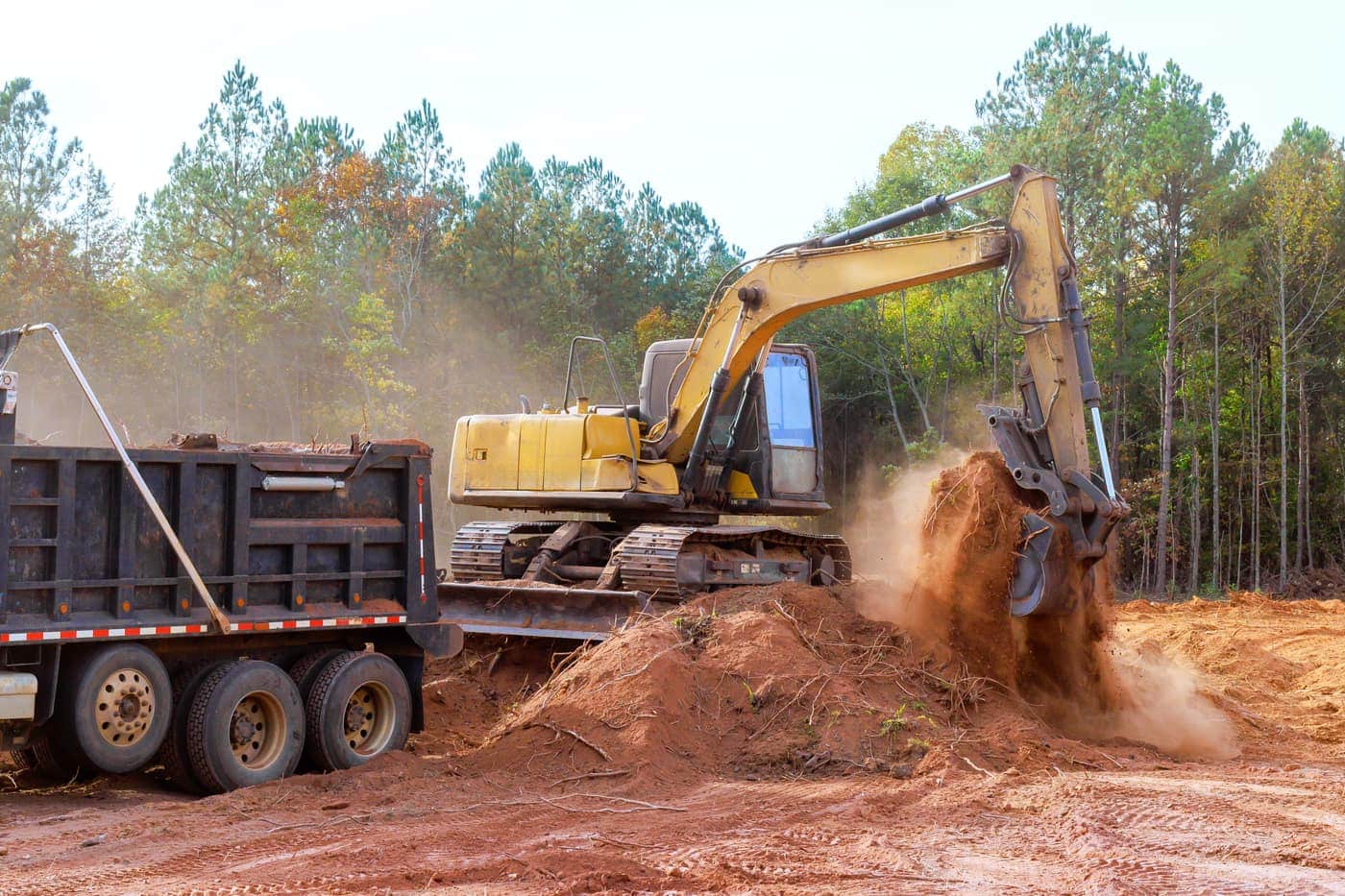
Dig in the desert Southwest and three Arizona statutes shape your insurance conversation. The excavation statute, 40-360.22. Excavations; determining location of underground facilities, says “A person shall not make or begin any excavation in any public street, alley, right-of-way dedicated to the public use or public utility easement or in any express or implied private property utility easement or in any apartment community or mobile home park without first determining whether underground facilities will be encountered”. The workers’ compensation statute says “Employers shall secure workers' compensation to their employees in one of the following ways”. And the motor vehicle statute prints a bodily injury limit for vehicles. The program you build sits on top of those three rules.
If you run a grading outfit in the Valley, a trench crew in Tucson or a foundation digger in the high country, start with a conversation about the work itself. Your crew, machines and hauling decide the program, and our excavation insurance page shows how the six core coverages fit together before you open the quote form.
Asking each underground facilities operator first, and the one-call center’s role
Arizona’s excavation statute is 40-360.22. Excavations; determining location of underground facilities. It puts the duty on whoever is digging, and the place of the work matters: “A person shall not make or begin any excavation in any public street, alley, right-of-way dedicated to the public use or public utility easement or in any express or implied private property utility easement or in any apartment community or mobile home park without first determining whether underground facilities will be encountered”. The statute says who carries it with the words “A person shall not make or begin any excavation”.
On the facility operator’s side, the statute says “the underground facilities operator shall respond as promptly as practicable, but not later than two working days, by carefully marking the underground facility”. The statute also defines excavation broadly enough to reach grading, trenching, digging, drilling and boring, which is the work you do every day.
The one-call center that takes the request has its own website, the one-call center’s site, which says “Contact Arizona 811 from anywhere in Arizona at least two full working days prior to digging”. The statute defines a notification center in general terms. Use the center’s own page for the working steps, and keep the regional crews and foremen on the same routine.
A written note of each notice is useful to your agent and your underwriter. It shows who asked, which day, which operators answered and what the markings looked like when the crew arrived. When a line is later struck, an adjuster, a general contractor or a lawyer may ask for that note, and it costs your office a few minutes at the start of the job.
A flow that runs in steps. A crew asks the underground facilities operators about the lines near the cut. The operators answer with markings. The crew digs near those markings and keeps a written note of the work. If a line is struck anyway, the claim is read against the policy wording. No figures are shown.
A damaged line in a Phoenix-area easement: what the policy wording sorts out
A bucket tooth finds a gas service, a water main or a fiber duct in a utility easement behind a new subdivision. The loss that leads an excavation business’s claims is the damage to someone else’s property, and it can land on the line owner, the neighbors and the general contractor at once.
Whether a liability policy pays for that kind of loss is a matter of its terms. The answer depends on four things: how the application describes your work, the limits you bought, the exclusions and conditions in the policy, and the contract you signed for the job. Read together they decide who pays for repairs, for lost service to the neighbors and for the legal defense that follows.
Two habits make the conversation easier. First, describe your real work on the application, including trenching and boring if your crew does it. Second, keep your notice, your locate markings and your job photos in one place for each site. When a claim does come, you can hand your agent the same package an adjuster may ask for.
The Registrar of Contractors and the earth moving question
Arizona’s licensing regulator is the registrar of contractors, and its site is roc.az.gov. The licensing statute describes a classification this way: “General engineering contracting, which is engaging in the contracting business other than residential contracting in connection with fixed works requiring specialized engineering knowledge and skills and includes irrigation, drainage, water power, water supply, flood control, inland waterways, harbors, railroads, highways, tunnels, airport runways, sewerage, bridges, earth moving projects, paving and transmission lines”. This classification is stated for general engineering contracting and is not stated to reach excavation work.
We have not confirmed whether your own scope of work needs a classification. Ask the Registrar of Contractors, and ask the general contractor or owner whose contract your crew signs, because a bid package may state its own requirement. Bring the answer to your agent so the application and your actual work match.
If you are a grading subcontractor, the same question applies to the job in front of you. A developer, a municipality or a general contractor may describe the work in the bid package, and that description is worth comparing with your application before you sign. Differences between the two are what an underwriter may notice first.
The Industrial Commission of Arizona and the compulsory workers’ comp duty
The workers’ compensation statute says “Employers shall secure workers' compensation to their employees in one of the following ways”. The regulator named for this area is the industrial commission of Arizona, at azica.gov. The statute’s wording ties the duty to employers and offers insurance or other approved security as routes.
We have not confirmed the head-count line or whether an owner may elect out, and the Industrial Commission is the place to ask. Meanwhile, hold the policy up against the crew you actually have: the operator, the laborer in the trench, the driver of the haul truck and the foreman on the ground.
The workers’ compensation insurance page explains what a payroll audit looks at in plain words. When you request a quote, tell us how the work is split between crew roles and office roles, and whether you use subcontractors for any of it. Your agent can then match each role to the right description.
Dump trucks and pickups on Arizona roads: the printed bodily injury limit
The motor vehicle statute is Arizona’s financial responsibility provision, and it includes this line:
“$25,000 because of bodily injury to or death of one person in any one accident” (Arizona Revised Statutes motor vehicle chapter)
That is a per-person limit for bodily injury in one accident. We have not confirmed a separate minimum for commercial or motor-carrier use. The Department of Insurance and Financial Institutions, at difi.az.gov, is one place to ask, and your agent will know which others apply to your trucks.
On the schedule, list the haul trucks, the pickups that tow lowboy trailers, and any vehicle a foreman drives between sites. Say who drives, how far the trucks run from the yard, and whether a driver ever uses a personal vehicle for company errands. Those answers let the commercial auto insurance quote follow the work.
A stack of labeled layers, top to bottom: Arizona call-before-you-dig center; Registrar of Contractors; Industrial Commission of Arizona; Insurance and financial institutions department; Your agent, with each reply. No figures are shown.
Policy lines for a valley-to-high-country excavation business
General Liability
A struck line, a cracked sidewalk or a neighbor’s damaged wall may be read against the general liability policy. A crew that grades a pad or trenches for a utility has the same questions as any other: what the application says about the work, what the limits are and which exclusions apply. Describe the machines you run, the sites you work and the subcontractors you use. Your agent can show you the wording that matters for utility work and how the policy reads on injury to others and damage to their property.
Workers’ Compensation
The statute’s duty on employers is quoted above, and the workers’ compensation policy is how a payroll meets it. A crew spends its days around moving iron and in trenches, so the application should name each job honestly: operator, laborer, driver, foreman and any office staff. Tell your agent about any subcontractors, because their status can change how the audit reads your payroll. Ask the Industrial Commission about points we have not confirmed.
Commercial Auto Insurance
Your haul trucks, trailers and service pickups move between a yard and sites that may be far apart. The commercial auto policy is written around the vehicles and drivers you list, the distance they run and the loads they carry. Arizona’s statute prints a bodily injury limit for vehicles in general, and we have not confirmed a separate commercial minimum, so use the schedule to show what you actually run. Add the vehicles you buy during the year to the schedule when you buy them.
Contractors Equipment Insurance
An excavator parked on a graded pad, a skid steer on a trailer and a compactor in the yard are all money you have invested in the business. Contractors equipment insurance is the policy that may respond to damage to your own machines on its terms, including theft from a jobsite or loss while a unit is moved. Keep a current list with serial numbers, and tell your agent how units are stored overnight on sites near the Valley, in Tucson or in the north.
Umbrella Insurance
A general contractor’s contract may ask for limits above the primary policy. The umbrella policy sits over general liability, commercial auto and employer’s liability on its terms, and a large loss from a utility strike or a haul-truck wreck could reach it. Your agent will ask which underlying policies it must follow and how the contract words the requirement, so bring the contract with you when you ask for the quote.
Property Insurance
A shop with a bay for repairs, a yard of attachments, a trailer of tools and an office with the job paperwork are the places where a fire or a storm could hit. Property insurance may respond to damage to the buildings and contents you list, on its terms. Ask what the policy says about wind, water and theft, and keep photos of the shop and yard on file.
Ready to see these six built into one Arizona program? Start on the quote form.
Six kinds of excavation work, from Tucson footings to Gilbert trenches
General excavation
This is the dirt work that fits no other heading: digging, loading and hauling soil away from a lot. An application for an Arizona crew may ask what you dig, what you load, which trucks haul it and which sites you reach.
Land grading and building pads
Crews that bring a lot to grade, cut a pad for a slab or shape drainage on desert ground are doing grading work. The application asks about the machines, the size of the sites and who sets the elevations.
Site preparation
Before a developer pours or frames, someone clears a lot of debris, shapes the access and sets the working surface. Describe the preparation you do and the work you leave to other trades.
Utility and trench work
Trenches for water, sewer, gas or conduit are where a struck line can come up. An agent will want the kinds of lines you work near, how you shore a trench and whether your crew or a subcontractor opens it. Trenching jobs in Gilbert and Mesa make the question practical.
Basement and foundation digging
A footing or foundation cut near a neighbor’s wall raises questions of support and vibration. Say whether you dig for residential builders or commercial owners and how you handle the neighboring structures.
Hydro excavation
Vacuum trucks that open the ground with water and suction are used where a line must be exposed with care. An application may ask about the truck, the disposal of the spoil and the kinds of lines you expose.
What an Arizona application asks an excavation contractor, from the cut to the haul route
An application for an Arizona excavation contractor starts with the work: the kinds of jobs, the sites and the soil. After that come the machines, the trucks, the people on payroll and the subcontractors who work alongside you. Be ready to say how you hire out trenching or hauling, and where your crews are working this year. If a line of work is a small part of your business, say so; an application that leaves it out can leave you without an answer later.
Agents also ask about the way your office handles notices to facility operators, because that routine is the part of the work you control. Share the written note of each notice, your job-site photos and your safety habits. A clear and honest description helps the quote fit the business you run, whether the sites are in Phoenix, Tucson, Flagstaff or the open desert between them.
Grading, trench and site work: how an Arizona application words the job
Arizona excavation contractor insurance, Arizona grading contractor insurance and Arizona utility contractor insurance all start from the same four questions. What work do you do, what do you run, who works for you and what does the contract ask? Answer those four, and an agent can find the right shape for a grading business, a trench crew or a site-work outfit.
Subcontractors, certificates and a new excavation business in Arizona
Excavation jobs involve a subcontract with a general contractor, a developer or a public owner, and these may ask your agent for a certificate and for additional insured wording. A new business can be asked for the same paperwork on its first job, so call your agent as soon as the bid is in play rather than the day before mobilization.
If you hire out trenching, hauling or hydro work, ask those subcontractors for their own certificates and keep them with the job. A hired outfit with no policy of its own is a question your agent will want answered. If you are only starting out, begin with the quote request, tell us about the work you plan to do, and we will help sort what the program needs.
Where an Arizona excavation owner takes each question
The one-call center is named in the sources with its own website. The licensing regulator is the Registrar of Contractors. The workers’ compensation regulator is the Industrial Commission of Arizona. And the insurance regulator is the Department of Insurance and Financial Institutions. Each is linked in the sources list as well.
Send your licensing question to the Registrar of Contractors, your workers’ compensation questions to the Industrial Commission of Arizona, and your insurance-regulator questions to the Department of Insurance and Financial Institutions. We can help you place coverage, but we do not speak for any of them.
Contract paper from Arizona developers and public owners
A developer’s subcontract or a public owner’s bid package may ask for limits, additional insured status and a waiver of subrogation. Read the insurance article before you bid, and send it to your agent early. If the contract asks for a limit above your primary policy, that is where an umbrella conversation starts. We do not state what any Arizona owner requires; the contract in front of you does.
Before you request an Arizona quote: a short list
- Write down the kinds of work you do, the sites and the soil.
- List the machines and trucks, with serial numbers where you have them.
- Gather the payroll roles and any subcontractors you use.
- Keep a written note of each notice to the facility operators.
- Ask the Registrar of Contractors about your classification.
- Bring the contract’s insurance article with you.
Where the Arizona rules are stated, and what is still open
Each quote above carries a link to the statute behind it. Still open: whether a stand-alone excavation license exists, the head-count line and owner election for workers’ compensation, and a separate commercial vehicle minimum. For those, ask the Registrar of Contractors, the Industrial Commission of Arizona and the Department of Insurance and Financial Institutions, then bring the answers to your agent.