
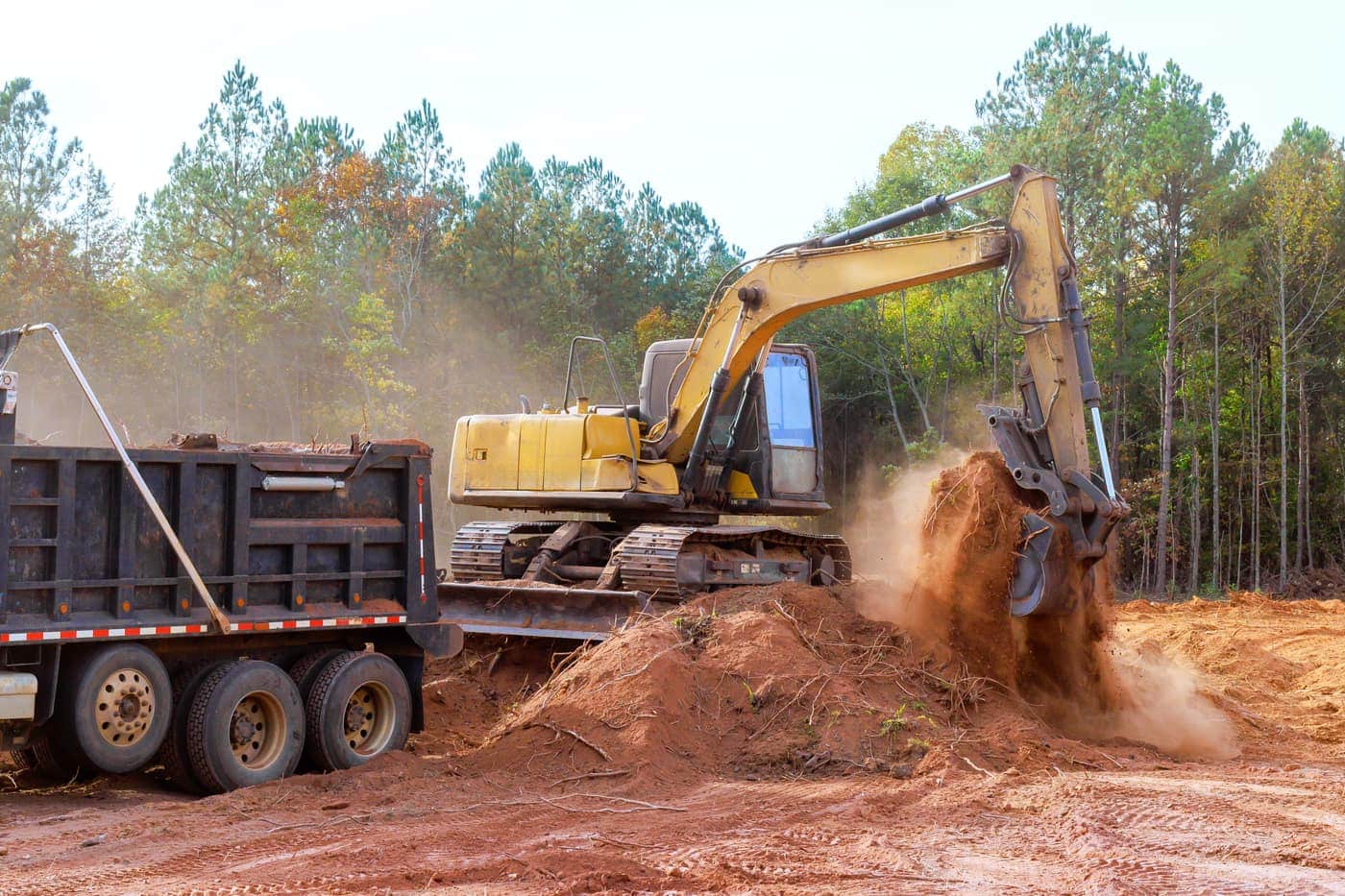
Virginia states its call-before-you-dig rule in a single sentence: “No person shall make or begin any excavation or demolition without first submitting a locate request to the notification center.” (Code of Virginia) For an excavation business, the date and author of that locate request are facts an agent may ask for after a struck line.
Next, pull together your job list, your machine list and your payroll, and read the sections below against them. The wider picture of excavation insurance sits on our hub, and the quote form takes the same facts a Virginia application will ask for.
The Underground Utility Damage Prevention Act and the locate request
The statute’s section heading reads “§ 56-265.17 . Notification required prior to excavation or demolition; waiting periods; marking of proposed site” (Code of Virginia). The notification center the statute refers to is Virginia811, and its home page is at Virginia811. Settle early whether your own office, your foreman or a subcontractor’s crew places the request, and put that in the contract.
The same section speaks to how long a request lasts: “The excavator's notification shall be valid for 15 working days from 7:00 a.m. on the next working day following a locate request” (Code of Virginia). It also deals with waiting periods and the marking of the site. Ask Virginia811 how those work for the job in front of you, since a long trench or a series of house pads may outlast a single request.
What does a written note of the request do for the insurance side? It gives your agent a dated fact to lay beside the application. Keep the time of the request, the name of whoever placed it, the job address and any answers or marks received, in the job folder or on the foreman’s phone. If a utility is hit months later, an adjuster may ask to see that note.
A flow of steps. A locate request is filed before the cut. The operators answer on the ground. The machine reaches a buried line. The adjuster may read what the application and the contract say about limits. No figures are shown.
A hit utility on a Virginia job, and the papers the claim will want
Third-party property damage while a machine is running is the loss an excavation owner worries about: a bucket tears a gas service, a trench opens a neighbor’s water line, a loader drags a fiber duct from its bed. Whether a given loss is paid turns on the policy wording, which an adjuster may read beside your application, the limits you bought and the contract the crew worked under.
That is why the application deserves care. If your crews do trenching, basement digs and grading, say so. If a hydro excavation truck goes out, say so. General liability may respond to a utility strike on its terms, and your agent can walk you through those terms before a loss rather than after one. After a hit, call your agent promptly, follow the utility’s own instructions for making the site safe, and gather the locate request note, photographs, the contract and the application you signed.
Put one more question to your agent: what the policy’s notice conditions, its meaning of property damage and any underground-work exclusions say when a utility owner sends a repair bill. Ask for those pages in writing and read them before the work begins.
Class A, B and C at the Board for Contractors, and what stays open about excavation
The Board for Contractors sorts contractors into Class A, Class B and Class C by contract value (Code of Virginia). Its definitions speak of construction, removal, repair and improvements in general terms, which makes it a general-contractor route. We have not confirmed that it reaches excavation work, and how Virginia licenses excavation is likewise unconfirmed; the Virginia Department of Professional and Occupational Regulation, listed as the licensing regulator, can tell you before you bid.
Put three plain questions to that office: whether your kind of dirt work falls into a classification, whether a job’s contract value changes what the Board expects, and whether a specialty designation touches grading, trenching or basement digging. Write down the answer and the date. A prime contractor may ask for a license number on a subcontract, and your agent may raise it on the application.
Virginia’s presumed acceptance of the compensation title, and the officer’s rejection
Virginia’s workers’ compensation law is compulsory for covered employers. The Code puts it this way: “Every employer and employee, except as herein stated, shall be conclusively presumed to have accepted the provisions of this title respectively to pay and accept compensation” (Code of Virginia).
On the owner’s side of the business, the same section says “An executive officer may reject coverage under this title for injury or death by accident, but not with respect to occupational disease” (Code of Virginia). That sentence concerns an executive officer, and it is not about a sole proprietor or a partner. Ask your agent how your own situation is handled before you decide whether to be on the policy.
The employee count that brings a Virginia employer under the title remains to be confirmed; the Virginia Workers’ Compensation Commission, listed as the workers’ compensation regulator, is the body to ask. The same goes for which insurers write the coverage in Virginia: put it to your agent. For payroll, an excavation crew’s operators, laborers and drivers may be assigned classifications from the work they actually do, so keep payroll books that show the split.
Virginia’s per-vehicle owner’s policy limits, and the commercial question left open
For the trucks, the owner’s policy limits the statute prints read:
“subject to a limit exclusive of interest and costs, with respect to each motor vehicle, of $50,000 because of bodily injury to or death of one person in any one accident and, subject to the limit for one person, to a limit of $100,000 because of bodily injury to or death of two or more persons in any one accident, and to a limit of $25,000 because of injury to or destruction of property of others in any one accident” (Code of Virginia)
That is the statute’s text for each motor vehicle. We have not confirmed a separate commercial minimum for a dump truck or a lowboy. Your agent can tell you what a heavy truck needs under your contracts, and the State Corporation Commission, listed as the insurance regulator, takes insurance rule questions. An application may also ask for the weight of each unit.
A schedule for an excavation company may list each titled unit: the dump truck, the pickup that pulls the machine trailer, the service truck, the trailer itself. Drivers go on the schedule, and so may the radius of travel. If a worker drives a personal pickup to a jobsite on your errand, tell your agent, since that exposure may sit outside the schedule as written.
A stack of labeled layers, top to bottom: Virginia call-before-you-dig center; Professional and Occupational Regulation; Virginia Workers’ Compensation Commission; State Corporation Commission; Your agent, with each reply. No figures are shown.
The policy lines of a Virginia excavation program, each tied to the machine or the crew
General Liability
For a crew opening ground around Richmond subdivisions or Alexandria streets, general liability may answer when a machine damages another party’s property or injures a person, on its terms. A cut utility is the familiar example, but a retaining wall that shifts after a neighboring dig or a driveway undermined by a trench belong in the same talk with your agent. What is paid depends on the wording, the limits and the contract. The locate request note may be the first paper your agent wants. Put your questions about underground work and about damage that shows up after the crew has left.
Workers’ Compensation
Virginia’s Code presumes acceptance of the compensation title, so an employer with covered employees may want to set up workers’ compensation with care. The operator on the seat, the laborer in the trench and the driver hauling spoil may be classed by the work each performs, and a payroll audit may compare your reported work to the policy. An executive officer may reject accident coverage under the Code’s text, though not coverage for occupational disease, and that choice deserves its own conversation. Which insurers write the coverage in Virginia is unconfirmed.
Commercial Auto Insurance
A dump truck carrying spoil from a foundation dig, or a pickup pulling a trailer to a pad job, may be written on a commercial auto policy. Virginia’s owner’s policy limits appear in the blockquote above, and your contracts may call for more. List each titled unit, each driver and the places the units travel. If you rent a truck for a big haul, ask whether rented or borrowed vehicles are included. A trailer detached from its truck on a jobsite is another wording question.
Contractors Equipment Insurance
The loader, the trencher and the attachments in the yard represent an excavation company’s capital, and contractors equipment insurance may respond to their loss on its terms. A theft from a trailer parked overnight, a machine that rolls off a ramp or a tool lost in a water-filled cut are loss pictures an agent can walk through with you. List each machine with its make, year and value, and say where it sits overnight. A rented machine in your care is a separate question.
Umbrella Insurance
When a strike on a large utility or a serious auto accident exceeds the limits beneath it, umbrella insurance may add limits above general liability and auto, on its terms. A prime contractor or public owner may ask for limits that a small excavation business’s primary policies do not reach alone. Ask which underlying policies the umbrella follows, how it treats workers’ compensation and what its defense terms say, since an umbrella follows its own wording.
Property Insurance
A parts room, a fuel tank, the shop floor and the machine yard are what property insurance looks at. A fire in the machine shed is a different loss from a utility strike, and it follows different wording. Tell your agent about stored materials, fuel and the age of the buildings. If a machine sits in the building at the time of a loss, ask whether the property policy or the equipment policy picks it up, since the answer depends on how each is written.
To price these together, send a quote request through our form.
Six kinds of excavation work, from Richmond lots to Chesapeake sites
General excavation
General excavation is opening ground and moving the spoil, whether the job is a lot in Richmond or a site in Chesapeake. An application may ask how deep, how close to buildings and who hauls the material. Say who runs each machine and who supervises the cut.
Land grading and building pads
Grading shapes a parcel so a builder can set a slab or a road. Describe the machines on the grade and whether you are finishing to a developer’s plan. A grading crew working beside a stream or a ditch is worth flagging for the underwriter.
Site preparation
Site preparation clears the way for what comes next: stripping, stockpiling, rough grading and haul-off. Because it can bring other trades onto the ground, list the trades you hire and the ones the owner brings.
Utility and trench work
A trench for water, sewer, gas or fiber puts the machine right beside buried lines, and it is the part of the application an underwriter may read closely. The locate request, the marking and the depth of the cut belong in how you describe it.
Basement and foundation digging
Cutting the hole for a basement or footing puts a machine close to the neighbor’s lot, a street and a possible service line. Say how you shore or slope the cut and whether the builder or your crew sets the forms.
Hydro excavation
Hydro excavation uses water and vacuum to expose a buried line, and a truck dedicated to it is a separate unit on an auto schedule and an equipment list. Ask your agent how the application wants that truck described.
What a Virginia insurance application wants to know before it prices the dig
An application for construction insurance in Virginia may ask about the work, so describe the jobs you do in plain terms: trenching, grading, foundations, site prep, hydro excavation. It may ask about the machines, so list each with its make, year and value. It may ask who works for you and who works under you, so name your employees, your subcontractors and any day labor.
It may ask about hauling, so describe the trucks, the trailers, who drives and how far. It may ask about the sites, so say whether you work on residential lots, commercial pads or public jobs, and where. If a contractors insurance clause in a Virginia contract raises a question, keep it and bring it with your request. An agent builds a program from what the application says, and a loss may be read against it.
A search for contractor insurance or construction insurance in Virginia returns pages written for every trade alike. An excavation business has its own loss picture, led by third-party property damage while operating a machine, and your application should read that way.
Virginia subcontractors, certificates and the first year of a new excavation company
A new excavation company’s first year turns on paperwork. A prime contractor may ask for a certificate before your crew arrives, and a certificate is paper from your agent about the policies issued; a claim is decided by the policy itself. If you hire a subcontractor to run a trencher or haul spoil, ask for that subcontractor’s certificate and keep it in the job folder, since your own policy may look at who was working under you.
If you are just starting out, you will have little history to show, and an agent may still be able to place a program from your description of the work, the machines and your experience. Keep a log of locate requests, contracts and certificates from the first job. Ask the licensing office about the contractor classes before bidding, and ask your agent how a subcontractor’s coverage sits beside yours. Add machines to the schedule as you buy them and tell your agent when the work changes.
Virginia’s regulators, each under the name it uses
The notification center is Virginia811, the body the statute calls the notification center. Licensing questions go to the Virginia Department of Professional and Occupational Regulation, listed as the licensing regulator. Workers’ compensation questions go to the Virginia Workers’ Compensation Commission, listed as the workers’ compensation regulator. Insurance questions go to the State Corporation Commission, listed as the insurance regulator.
Call each body with the question it is listed for, and write down who answered and when. Your agent can carry the answers into the application, and a short list of them helps when a prime contractor’s contract asks about licensing or limits.
Insurance clauses in a Virginia prime contract or public bid
A prime contractor or a public owner may ask for a certificate, additional insured status, limits stated in the contract, a waiver of subrogation or notice of cancellation. Read these clauses before you sign, and send them to your agent with your quote request, since an endorsement can take time to add. If the contract names limits, compare them with what you carry, and ask about umbrella if a gap shows.
Where a clause requires a license, put the question to the Virginia Department of Professional and Occupational Regulation. Where a clause asks about workers’ compensation, your agent can issue a certificate once the policy is in place. Read the policy itself as well as the certificate.
A Virginia dig-day checklist for the cab and the office
- Place the locate request, and write down when, by whom and what came back.
- Keep the job contract and its insurance clauses in the job folder.
- Confirm every subcontractor’s certificate before they start.
- Update your machine and truck list when anything is bought or sold.
- Take the open questions to the listed offices, and note the answers.
- Tell your agent when the work changes, then request a quote.
Where the Virginia Code sections are linked, and what is still unconfirmed
The citations above link to the Code of Virginia on its legislative site, and each regulator is linked to its own site. Still unconfirmed: whether excavation is licensed as its own class, how many employees bring a Virginia employer under the compensation title, which insurers write that coverage, and any separate commercial vehicle minimum. The offices named above can answer those, and your agent can carry the answers into a quote.