
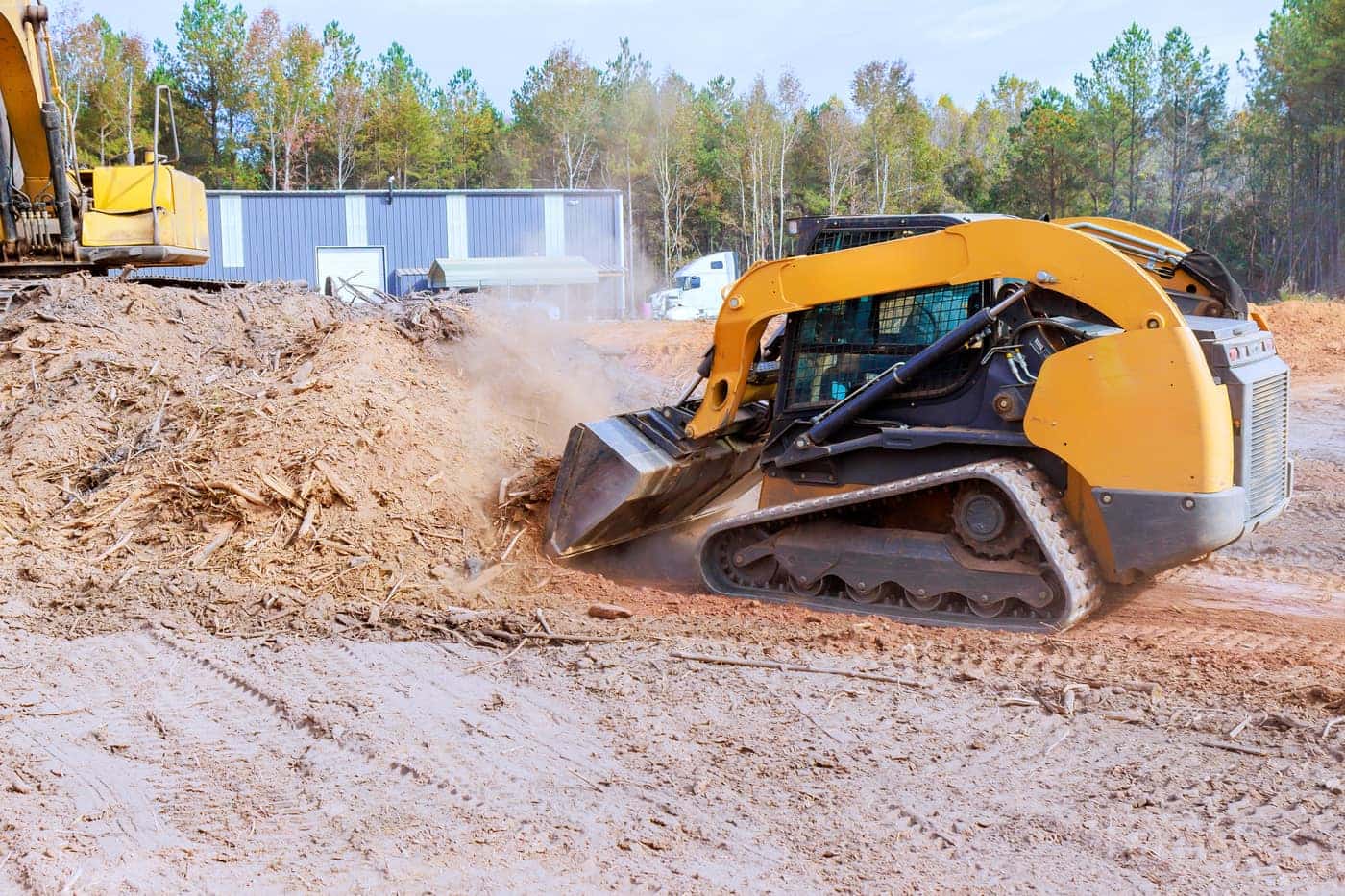
Wyoming’s one-call act tells an excavator to notify the state’s notification center before the ground is opened, and a damaged buried line is the claim an excavation business with a machine has to plan for (enrolled act). Workers’ compensation in Wyoming runs through a state division rather than through us, while excavation licensing and the commercial-truck limit are open questions that the sections below name an office for.
Start by writing down how your Wyoming work is described: the cut, the machine, the haul and the contracts. Then read the sections that follow in order, and bring them to an agent who places the rest of a program. Our excavation insurance page lays out the full picture before you ask for a quote.
The enrolled notice act and One-Call of Wyoming, Inc.
The amendment that the legislature enrolled says that “no excavator shall make or begin excavation without first notifying the notification center of the proposed excavation”, and the same act sets the window: “at least two (2) full business days, but not more than fourteen (14) business days prior to any excavation” (enrolled act). The one-call center for the state prints its own name as One-Call of Wyoming, Inc., and its site is the place to start a request.
Two parts of the law are still unsettled for us. The act is a session law, so the number of the codified section is not confirmed; the legislature’s printed text is where to look for it. The act also gives us no definition of who counts as the excavator, so a crew leader who hires out trenching should read the definition section of that printed text before assuming the subcontractor makes the call.
A written note of the notice is useful on the insurance side. Keep the date you called, the work you described and the name of whoever took the request, and file it with the job. When an adjuster or an owner’s lawyer asks what was done before the ground was opened, a note kept at the time answers faster than memory.
A flow of steps. The crew notifies the center, the ground is opened, a buried line is damaged, and a claim is read against the policy wording. No figures are shown.
A broken line near a Casper work site: what the policy wording reads
The lead claim for an excavation contractor is third-party property damage: a buried gas main, water service, communication cable or fiber duct that belongs to someone else gets hit by the machine. The owner of the line may bill for the repair, and neighbors may ask about an outage. Whether a policy responds depends on its terms, so the questions are the same wherever the job sits, whether that is a pad near Gillette or a trench in Rock Springs.
Liability coverage for a hit line may answer on the policy’s own terms, and an adjuster can read three papers side by side: the job description on the application, the limits purchased and the signed contract. When the application says grading but the crew was cutting a trench for a utility, that mismatch is the first thing a careful reader may raise. Describe the real work, including any change of plan while the machine is running, and name the sites where it happens.
A struck line can also touch other lines of a program. The machine may need repair, the truck may have been on the shoulder, and a hurt worker is a separate question for the state division. Keep those pieces apart in your notes so each policy’s wording can be read for its own loss.
Excavation licensing in Wyoming: the open question and who answers it
We have not confirmed how Wyoming licenses excavation work; start with the permit desk where the project is located and the customer who offers your crew a contract. Write the answer into your bid file along with the date you asked, and keep it with the bid so the next job starts from a known point.
Keep that question apart from insurance. A policy is written from the work you describe, and the credential question belongs to whoever hands you the contract or the permit.
Workers’ compensation through the Department of Workforce Service Workers’ Compensation Division
The Department of Insurance’s consumer page states that “most employers must obtain workers' compensation coverage through the Department of Workforce Service Workers' Compensation Division” (Wyoming Department of Insurance). The state’s page says most employers must obtain the coverage through the Department of Workforce Service Workers’ Compensation Division, so for them it is not placed through private insurers; it also says certain employers are exempt. Ask the division which group your crew is in. We do not place that coverage and we do not quote it.
The state’s workers’ compensation act has a subsection that speaks to owners: “Any corporation, limited liability company, partnership or sole proprietorship may elect to obtain coverage under this act for any or all of its corporate officers” (workers’ compensation act). Whether that election suits a sole proprietor who runs the loader is a question for the division and for your own advisers, not something we decide for you.
Where exactly the line falls between an employer who must go through the division and one who does not is not settled for us, and no workers’ compensation agency is listed for Wyoming, so take that question to the division and to your agent. We place the other policies that sit around that coverage, and those policies can be written once you know where the crew stands.
Wyoming plates on a dump truck: the bodily injury figures in the liability section
For vehicles, an earlier code compilation prints the liability-policy section this way (Wyoming financial responsibility chapter), so check the current text with your agent before you rely on it.
“twenty-five thousand dollars ($25,000.00) because of bodily injury to or death of one (1) person in any one (1) accident and, subject to the limit for one (1) person, fifty thousand dollars ($50,000.00) because of bodily injury to or death of two (2) or more persons in any one (1) accident”
What a heavier truck must carry has not been confirmed, and the property-damage limit that follows in that section is a figure to ask your agent for. Bring both questions when you schedule the trucks.
On the schedule, list every dump truck, pickup, trailer and service vehicle your crew drives to a site, along with who drives and what each one hauls. A rental truck, a borrowed pickup and a driver’s own vehicle used on an errand are the situations an application may ask about, so name them rather than leave them for a claim.
A stack of labeled layers, top to bottom: Wyoming call-before-you-dig center; Wyoming Department of Insurance; Your agent, with each reply. No figures are shown.
The policy lines for a Wyoming grading and trench business
General Liability
For the crew that cuts trench for water, sewer and cable, general liability insurance may respond to property damage and bodily injury to others on its terms. A struck line, a fence taken out by a swinging bucket or a neighbor’s wall cracked by a cut are the pictures an application may ask you to think about. The limits, the work you described and the contract decide what is paid, and an agent can read them with you before a job starts, including any hold-harmless clause a contractor puts in front of you.
Workers’ Compensation
The Department of Insurance’s page says most Wyoming employers must obtain workers’ compensation insurance through the Department of Workforce Service Workers’ Compensation Division; ask the division whether your crew is among them. We do not place it. What we can do is write the policies around it, so that a question about an operator’s injury goes to the division if your crew is among those employers, while a neighbor’s damaged property, the truck and the machine sit on lines an agent builds.
Commercial Auto Insurance
A grading outfit lives on its trucks, and commercial auto insurance is the line an application may use for the dump truck, the lowboy hauling a dozer and the pickups that carry the foreman between sites. The bodily injury figures quoted above are the printed liability-policy wording; a commercial-vehicle minimum is not confirmed, so schedule each unit with your agent and ask what limits fit your haul, your drivers and your customers’ contracts.
Contractors Equipment Insurance
Hydraulic hammers, buckets, compact tracked loaders and a trailer-mounted compactor are the kind of listed machinery contractors equipment insurance is written around. A machine parked at a Laramie yard and one working at a customer’s site are both owned property, and the policy wording says how theft, damage and transport are treated. List serial numbers and attachments, say where each machine sleeps overnight, and mention rented units separately.
Umbrella Insurance
An owner who bids pad work for a Casper developer may be asked for limits beyond a single liability policy. Umbrella insurance is a layer that may sit above the liability and auto lines on its terms, and its wording lists what it follows. Ask how its underlying requirements read before you promise a general contractor a number, and tell your agent which contracts ask for extra limits.
Property Insurance
The repair bay, the office trailer, the stock of hoses, teeth and filters, and the fuel tank by the gate sit under property insurance as an owner’s own buildings and contents. The wording decides what is paid after a fire or a break-in, so list what is inside, who has keys and what is kept outdoors. A yard near Sheridan and one near Cheyenne are written from the same questions.
To start these conversations side by side, send the details through our quote page.
Excavation jobs a Wyoming application may describe, from Sheridan basements to Rock Springs hydro work
An application asks you to name the work, because the wording of a policy follows the description. Here is how each kind of job may be put into your own words, with the details a reader of the application may want to see.
General excavation
This is moving earth with a bucket or a blade where nothing more specific applies. Write what machines open the ground, how deep your crews cut and what is hauled away, in your own terms rather than a form’s. If a job changes shape halfway, with a trench turning into a pad, say so, because the description should follow the work as it is done.
Land grading and building pads
A pad for a shop on the edge of Gillette needs finish grade, slope and drainage worked out before footings go in. Describe the dozer, the grader or the compact tracked machine, and say whether the work is for a developer, a builder or a landowner. Mention any hauling in or out, because it ties the job to the truck schedule, and say whether you set the grade stakes or someone else does.
Site preparation
Clearing topsoil, stockpiling fill and cutting a haul road are site prep for a parcel before anyone builds. Say how long the machines stay on the site, who else works there and whether another contractor is in line behind you.
Utility and trench work
A trench for water, sewer, gas or cable near a Rock Springs subdivision puts the crew closest to buried lines. Name the utilities you work around, the shoring you use and whether you lay pipe yourself or hand it to a subcontractor. A trench that stays open overnight raises its own questions, so mention how you guard it and who inspects it.
Basement and foundation digging
A cut for a basement in Laramie or Sheridan sits close to neighbors and their buildings. Describe the depth you expect, how you protect adjacent structures and whether you backfill, because those details tell a reader how close the work comes to someone else’s property.
Hydro excavation
A hydro crew opens the ground with a water jet and a vacuum, and a hydrovac truck is a separate machine with its own questions. Say whether you own the truck, rent it or work with a hydrovac subcontractor, and where the spoil goes afterward.
What an insurance application asks a Wyoming excavation contractor
Expect questions about the work you do and the sites where you do it: which of the jobs above you bid, the size of the cut and whether you work on public or private ground. Expect questions about the machines, their value, where they are kept and whether you rent more. A clear equipment list saves time on the first call.
Expect questions about subcontractors too. If you hire a trucker, a trenching sub or a hydrovac outfit, an application may ask whether they carry their own insurance and whether you collect a certificate. Say what you do now, not what you plan, and keep each subcontractor’s paper with the job file.
Haul details matter. Where soil goes, who loads and how far trucks run are the facts that connect the work to the commercial auto schedule. Payroll questions about workers’ compensation go to the state division, with your agent asking only what the other policies need. If you also work for homeowners, say how much of the business that is, because a reader may ask.
Finally, expect to be asked about your own history: how long the business has operated, what jobs the crew has done before, and whether any past claim involved a buried line. Answer plainly and keep the notes from earlier jobs, because a clean description can help an underwriter see the work you actually do.
Wyoming Department of Insurance and One-Call of Wyoming: who answers what
Two bodies appear for this state with a role attached. The Wyoming Department of Insurance is the state’s insurance body, and its consumer page is the one that describes workers’ compensation coverage through the state division. One-Call of Wyoming, Inc. is the one-call body, so it is the office for questions about filing a notice.
The state’s listed bodies include neither a licensing office nor a workers’ compensation agency. For those questions, use the offices named in the sections above and bring the rest to your agent.
Contracts, certificates and a new excavation business in Wyoming
A general contractor or a public owner who hires you for a utility trench may attach insurance wording to the subcontract: required policies, limits and a request to be named on a certificate. Read those clauses against what your agent can write, and ask before you sign rather than after a crew is on site.
If you are launching a new excavation business, start with the machines you will own, the work you will describe and the first customers who may ask for paper. Your agent produces a certificate from the policy you hold, and it follows that policy’s wording. Keep copies from every subcontractor you hire with the job papers.
Keep a short folder for the Wyoming bid: the contract, the notice note, the certificate request and the date you asked a local office about the license question. When a claim lands, that folder is the first place everyone looks.
A checklist for a Wyoming crew on the way to a quote
- Write the kinds of work you bid and the towns where you do them.
- Note the date and details of every notice you give the one-call center.
- List machines, attachments and where each is kept.
- List trucks and drivers for the commercial auto schedule.
- Ask the state division about your crew’s workers’ compensation.
- Keep the contracts that name insurance wording.
Where the Wyoming rules are stated
The citations above are the sources: the legislature’s enrolled notice act, the one-call center’s site, the Department of Insurance’s workers’ compensation page, the election subsection of the workers’ compensation act and the liability-policy section of the financial responsibility chapter. The codified section number, the definition of the excavator, excavation licensing, the line for who must use the state division and the commercial-truck minimum remain to be answered by the offices named in each section above.