
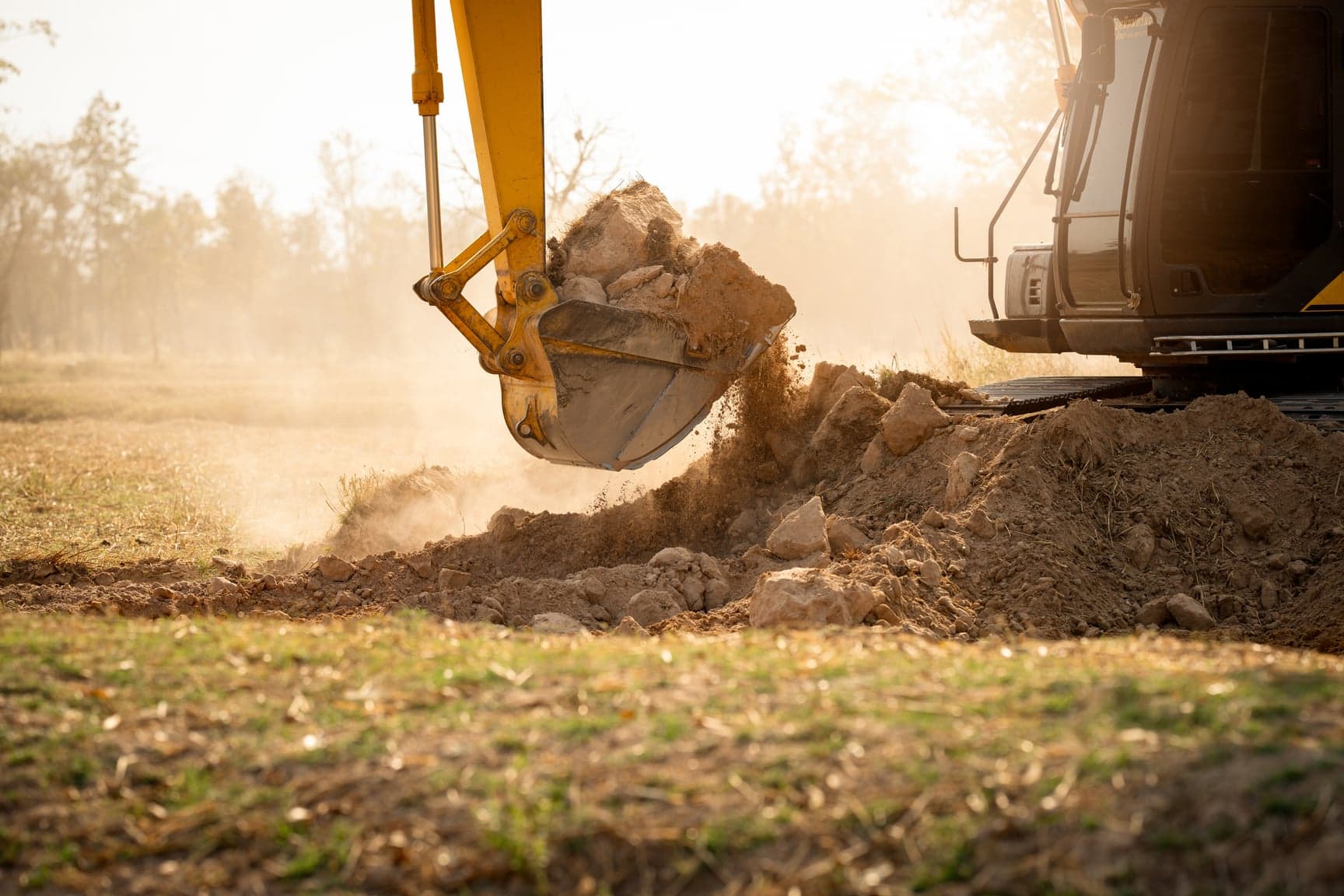
A South Carolina excavation business works under a written notice duty: the damage prevention act puts it on the excavator before the ground is opened. Licensing, workers’ compensation and truck limits are laid out below with the offices that can settle what we have not confirmed.
Your next step is a quote request that lists the jobs you take, the equipment you operate and the contracts you sign. The hub for this kind of program is excavation insurance, and each policy section further down shows where a coverage line meets a South Carolina rule.
Notice to the notification center under South Carolina’s damage prevention act
The act speaks to the excavator directly. It states: “Before commencing any excavation or demolition, the excavator must provide timely notice to the notification center of his intent to excavate or demolish” (South Carolina damage prevention act). On timing, the same act states: “Notice for any excavation or demolition that does not involve a subaqueous facility must be given within three to twelve full working days, not including the day upon which notice is given, before the proposed commencement date of the excavation or demolition” (same act).
The act defines the excavator as any entity or person engaged in excavation work. The notification center’s own site calls itself SC811, and that is the place to start a notice.
Keep a written note of each notice: the date it was given, the job address and the work described. If a line is hit later, your agent or an adjuster may ask for that note.
A notice goes to the notification center, the crew opens the ground, a machine may reach a buried service, and a claim file may open with the paperwork behind the job. No figures are shown.
Struck line on a South Carolina job: the questions the policy puts to the work
Excavation work puts a machine next to other people’s property, and a buried gas or utility line is the plainest way a job turns into a claim. A loader, a trencher or a backhoe can reach a service the notice did not account for.
What an insurer pays after a strike may turn on the policy’s wording, which is fed by the application description of your work, the limits you chose and the contract you signed. General liability may respond to the damage on its terms; whether it does is a question about those papers.
After a strike, the first calls are to the facility owner and to your agent. Keep the written note of the notice, photographs of the damage, the job address and the names of the people on the crew that day. Do not discuss fault with the property owner until your agent has heard the facts.
The Contractors’ Licensing Board, grading, and the stand-alone excavation question
South Carolina’s contractor licensing chapter names the South Carolina Contractors’ Licensing Board. The chapter’s definition of general construction names grading among the work it describes, and a general contractor license is required for general contracting work above a cost threshold the chapter states (contractor licensing chapter).
That route is a general-contractor license. Whether a stand-alone excavation business needs it is unconfirmed, and so is any license written for excavation alone. The Board can answer that. Ask before you bid grading or pad work, and tell your agent what you were told.
Workers’ compensation: the Commission, the State Accident Fund and what stays open
Compulsion for a business like yours, the employee threshold and any choice the owner of the company has about being on the policy are all unconfirmed. Put those questions to the Workers’ Compensation Commission, the workers’ compensation body in South Carolina’s state listing.
The state also keeps a fund. Its statute says: “There is established as a separate agency of state government a separate fund to be known as the State Accident Fund” (State Accident Fund statute). We make no offer to place coverage through it; speak with the Commission and your agent about how your payroll is handled, and use the quote request to describe each job on your crew.
Pickups and dump trucks on South Carolina plates: the limits we have not confirmed
We have not pinned down a liability figure for pickups, haul trucks or trailers. Your agent can state what a policy for your vehicles carries, and the Department of Insurance is the place to start for general insurance questions.
For the schedule itself, a quote request may ask which trucks haul spoil, which pickups tow the trailer and who drives each. List every vehicle with its use, since a truck hauling fill off a pad and a pickup that only visits sites may be described differently on the application.
A stack of labeled layers, top to bottom: South Carolina call-before-you-dig center; Department of Insurance; South Carolina Contractors’ Licensing Board; Workers’ Compensation Commission; Your agent, with each reply. No figures are shown.
Coverage for a South Carolina grading and trenching business
Each policy below ties to the machine, the cut, the haul or the crew. Where a stated South Carolina fact applies, it is named; where it does not, the policy is described on its own.
General Liability
A bucket that reaches a neighbor’s service line, or a trench wall that lets a footing drop, is the kind of loss general liability may respond to on its terms. The damage prevention act puts a notice duty on the excavator, so an application may ask how your crew gives notice and whether you keep a written note of it. The description of your work, the limits and any contract wording are what an adjuster may read. Describe your site work plainly, including work beside buildings and roads.
Workers’ Compensation
The operator, the laborers and the driver are the people workers’ compensation insurance is written around. The state’s compulsion rule and its employee threshold are unconfirmed; ask the Commission. In the meantime a quote may still ask what each person on your crew does, which machines each runs and whether anyone works alone. Write those descriptions with the same care you give a bid, since a policy may be priced against them.
Commercial Auto Insurance
The dump truck that hauls fill off a pad, the pickup that tows the trailer and the water truck that follows the grader all go on the schedule for commercial auto insurance. The state’s vehicle limits are not confirmed, so the schedule and the limits are worked out with your agent. A quote may ask who drives, where the trucks park overnight and what each one hauls. Say plainly if a truck also serves another business.
Contractors Equipment Insurance
Excavators, loaders, trenchers and the attachments that ride with them sit on a schedule for contractors equipment insurance. Machines that move between sites may draw questions on the application about where they sit overnight and how they are secured. List each machine by make, year and the attachments you own, and name any machine you rent.
Umbrella Insurance
A strike that damages a utility line and a road at once may produce a loss larger than the first layer of liability. Umbrella insurance is a way to add limits above the underlying policies, on its own terms and conditions. An application may ask which underlying policies it should sit over, and a general contractor’s contract may name a limit it expects. Bring the contract language to your agent so the limits can be compared before you sign.
Property Insurance
Your office, your equipment yard and the tools stored there are the property property insurance is written around. An application may ask whether the yard is fenced, what is stored there and whether anything sits outdoors. Describe the buildings, the contents and the tools separately from the machines, since machines belong on the equipment schedule.
To see these coverage lines priced together for your jobs, send a quote request with the work you do and the places you do it.
The work an application asks you to name, from general digging to hydro jobs
General excavation
Opening ground and moving it: digging out, loading, hauling and stockpiling. An application may ask which machines do the digging, how deep the work goes and where the spoil is taken.
Land grading and building pads
Bringing a lot to the elevations a builder’s plans call for. The application may ask who sets the grades, whether you work beside existing buildings and roads, and whether you build the pad or only rough it out.
Site preparation
Getting a lot ready for the trades that follow, from rough cuts to the access road the concrete trucks will use. Sitework for residential and commercial builders can sit on the same application, and the form may ask you to separate them.
Utility and trench work
Cutting lines for water, sewer, gas and communications and closing the cut again. This is the work closest to the notice duty above, so an application may ask how your crew gives notice and marks its own cuts.
Basement and foundation digging
Excavating for footings, basements and slabs on a builder’s schedule. An application may ask how deep the cuts go, how close they run to a neighbor’s wall and whether you shore the sides yourself or hire it out.
Hydro excavation
Working the ground with water pressure and a vacuum truck. An application may ask what the truck is, who runs it and which buried utilities it works around.
Questions on a South Carolina application before anyone prices the dig
Describe the work in your words. Describe the kinds of excavation you do and how your year divides among them, without figures you cannot support. Name the machines and whether you own them, rent them or run them under a lease.
Say whether you hire subcontractors for trenching, hauling or hydro work, and whether they carry their own policies. Say where the spoil goes and who hauls it. Name the sites you work: new subdivisions, commercial pads, roadside utility runs or work for another contractor. Describe the people who run machines and the people who work the cut by hand, so the application reads like your shop.
Who answers what: a South Carolina question list
- Department of Insurance: start here for general insurance questions, and bring vehicle limits to your agent.
- South Carolina Contractors’ Licensing Board: bring the stand-alone excavation question here.
- Workers’ Compensation Commission: bring the compulsion, threshold and owner-election questions here.
- SC811: takes the notice before a dig, so bring notice and timing questions here.
Insurance paragraphs in a South Carolina prime contract or county bid
A prime contract or a public bid may include an insurance article that asks for limits, additional insured wording and a certificate. Compare that article with your policy, and hand it to your agent ahead of the signature page. A bid may also ask for proof of workers’ compensation and for a list of the trucks that will be on the site.
A certificate that matches the contract’s wording is easier to issue when the contract reaches your agent before the crew mobilizes. Keep a copy of each certificate with the job file, next to the written note of the notice.
A new South Carolina dirt company: who you hire, what you hand out
A new excavation business may have little history to show an insurer, so the application leans on the description of the work, the machines and the people. Give the operators’ experience in plain terms. Say which jobs you will do with your own crew and which you will subcontract.
If you hire subcontractors, ask whether each carries its own policies and whether your contracts ask for certificates from them. If you hand out certificates, keep a list of who holds one. Your agent can help you set the order of these papers before the first bid goes out.
Palmetto State job-folder checklist
- The written note of each notice given, with the date and the job address.
- The contract or subcontract, with its insurance article marked.
- The list of machines, attachments and trucks on the job.
- The names of the people on the crew that day and what each runs.
- Photographs of the site before work starts.
- Any answer from the Board, the Commission or the notification center that changes how a job is described.
Citations behind the Palmetto State sections, and the gaps left
The notice duty and its timing are quoted from the damage prevention act, linked above, and the State Accident Fund sentence is quoted from its own statute. Still unconfirmed are whether a stand-alone excavation business needs a license, the workers’ compensation compulsion rule, its employee threshold, the owner’s choice, and the limits for commercial vehicles; the offices above can answer each, and your agent can put the answers into the application.