
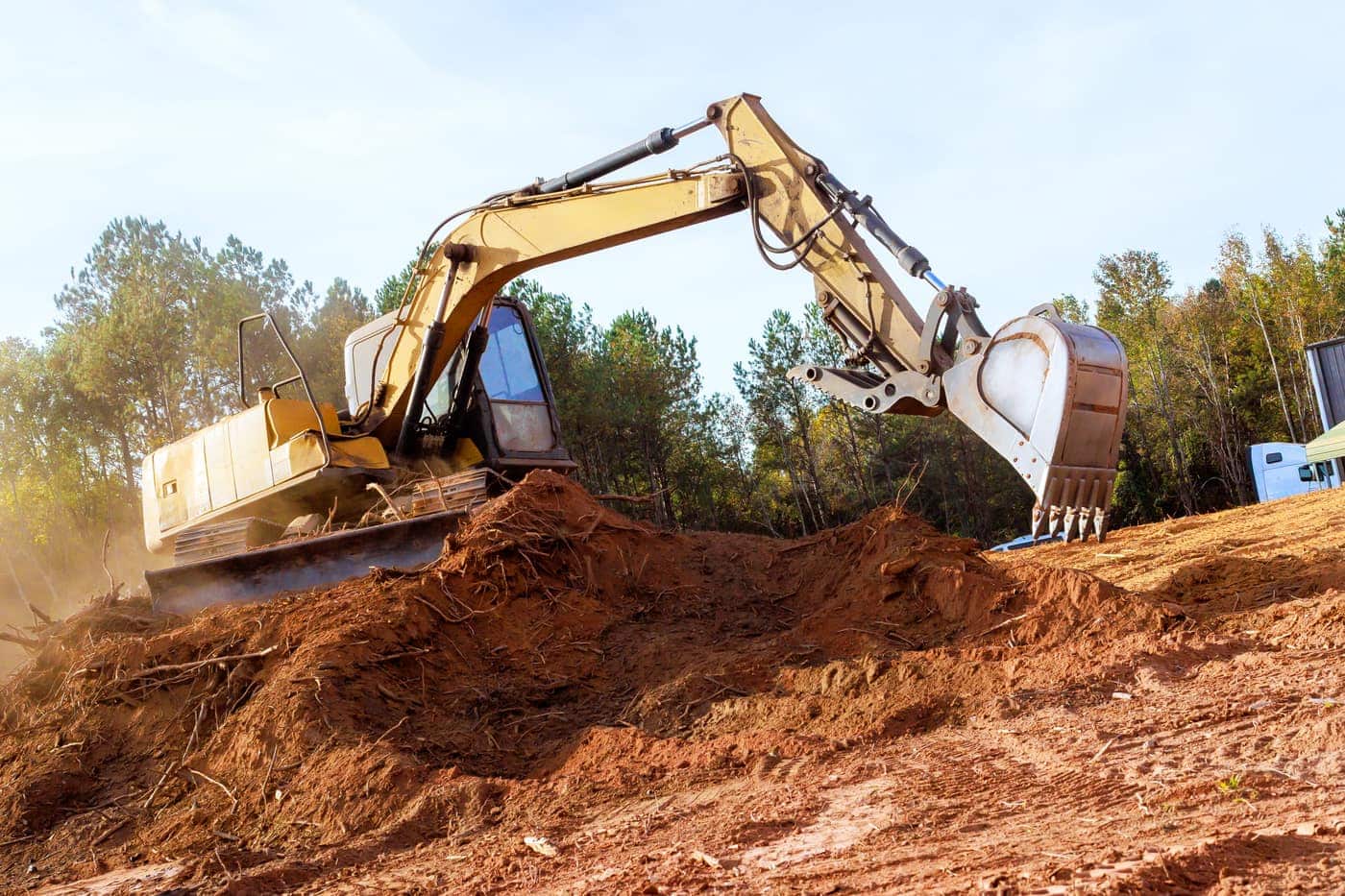
For a Georgia excavation business, the rule that matters ahead of the first cut is a locate request: the statute’s own words are “No person shall commence, perform, or engage in blasting or in excavating with” (source). The employer rule is just as direct, with the State Board of Workers’ Compensation printing “Every employer, individual, firm, association, or corporation, regularly employing three or more persons, part-time or full time, shall provide workers’ compensation insurance coverage” (source).
Two questions are still open on our side, licensing for excavation work and the limits on a commercial truck, and we name who can answer each below. Send your work description with a quote request, and we will shape a program for your excavation insurance needs from what your crews dig, haul and hire out.
The locate request and the Utilities Protection Center
Georgia’s locate-request section is cited as 25-9-6, and its subject is notice before excavating. The text of the duty reads “No person shall commence, perform, or engage in blasting or in excavating with” (source). The chapter defines who is bound: “'Excavator' means any person engaged in excavating or blasting” (source). When a specific period applies, the printed words are “has given 48 hours' notice” (source).
Georgia’s locate-request wording is being amended, so ask the Georgia Public Service Commission which text applies on your start date before you promise a schedule to an owner.
The rules identify the receiving organization as the Utilities Protection Center (UPC), and the rule that defines it is on the Georgia administrative code page. The center’s own site is not linked here; start from the Georgia Public Service Commission’s site.
A written note of the notice matters to the insurance conversation. Date it, name who submitted it, note the ticket the center gave you and the marks found on the ground. When an underwriter or an adjuster asks what your crew did before a cut, that note is the answer you can hand over.
A flow in steps. A crew submits a locate request to the notification center, watches the marks, cuts near a buried line, and a claim is read against the policy wording. No figures are shown.
A severed service line on a Georgia job, and what the wording weighs
Third-party property damage while operating a machine is the lead claim for an excavation business, and a struck gas, water, power or communications line is the sharpest form of it. A loader bucket in a grading cut or a trencher outside Macon can reach a buried line in seconds, and the repair bill, the outage and a neighbor’s lost business can follow.
A general liability policy may answer a loss like that, but only as its wording reads. What you told the underwriter about your work, the limits you bought and the contract you signed with the owner or general contractor are the three things to compare. Tell your agent about trenching, grading and hydro excavation before the policy is written, because a description that leaves out a type of work leaves a question open after a claim.
Georgia’s notice duty and your insurance sit side by side. A crew that can show it submitted a locate request, waited as the statute directs and watched the marks may be better placed than one that cannot. The page you are reading does not promise a result; the policy wording does the work.
Excavation licensing in Georgia: a question for the permit desk and the prime contract
We have not confirmed how Georgia licenses excavation work. Until you have an answer in writing, treat the question as open. Ask the building or permit department of the city or county where you dig, and read the prime contract your crew works under, since an owner or general contractor can set conditions of its own.
Your insurance application is a separate document from any license. What the application does ask is what you do, so describe the work you perform and the work you sublet.
Georgia’s regular-employee threshold for workers’ compensation
The State Board of Workers’ Compensation states the employer duty this way: “Every employer, individual, firm, association, or corporation, regularly employing three or more persons, part-time or full time, shall provide workers’ compensation insurance coverage” (source). The threshold language is “regularly employing three or more persons, part-time or full time” (source). The quoted wording is what counts, and the State Board of Workers’ Compensation is the body to ask how your crew is counted.
We have not confirmed how Georgia treats an owner or an officer who wants to stay off the policy, and the same Board can answer that. We also say nothing here about who writes the coverage in Georgia; ask your agent and the Board. The workers’ compensation insurance page walks through how the audit that follows the policy works.
Hauling dirt on Georgia plates: where the auto minimum stands
We have not confirmed the liability limits Georgia sets for a pickup, a dump truck or a lowboy, so this page prints no figure for them. The Office of the Commissioner of Insurance and Safety Fire is the insurance regulator Georgia lists, and your agent can tell you what the plates on your trucks call for before the policy is bound.
What belongs on a commercial auto schedule is within your control. List each truck that carries fill, each pickup that tows an excavator, the trailers, and the drivers who run them. A hired truck brought in for a heavy haul day and a worker’s own pickup used on a site raise separate questions, so tell your agent about both.
A stack of labeled layers, top to bottom: Utilities Protection Center; Insurance and Safety Fire commissioner’s office; State Board of Workers’ Compensation; Georgia Public Service Commission; Your agent, with each reply. No figures are shown.
Policies for a Georgia grading, trench and basement operation
General Liability
A cut line, a cracked neighbor’s driveway or a flooded basement may be where a claim begins. A general liability policy is the place to ask how that loss would be read. For a Georgia crew grading building pads outside Atlanta or digging footings near Macon, the policy’s wording is read against the claim, so the quote should name every type of digging you do. Where a locate request was required, keep your notice paperwork with the claim file.
Workers’ Compensation
Operators, laborers and spotters work around moving machines and open trenches. Georgia’s regular-employee threshold, quoted above, is the line to check against your payroll. The workers’ compensation policy is priced from job classes and wages, so a crew that splits time between grading and trenching should describe each. Keep your time sheets clean for the audit.
Commercial Auto Insurance
Dirt moves on trucks, and a trucked load from a Savannah pad or a north Georgia road cut is a liability of its own. The commercial auto policy is built from a schedule of vehicles and drivers, and the limits Georgia expects are a question we have left open above. Tell your agent whether trucks run on public roads daily, whether you haul for others, and whether a trailer carries the excavator.
Contractors Equipment Insurance
An excavator on a Georgia hillside, a skid loader in a basement dig and a hydro excavation unit parked overnight are valuable machines in weather and theft exposure. Contractors equipment insurance is written on a schedule of what you own, so give the year, make and value of each. Ask how the policy reads for rented and borrowed machines, and for attachments that ride on a trailer.
Umbrella Insurance
A severed main under a busy Georgia road can produce a claim that exceeds the limits on a primary policy. Umbrella insurance may sit on top of the liability and auto policies, on its own terms, with conditions on the underlying coverage. Ask your agent what it needs to see underneath, and which of your contracts call for a higher limit than you carry today.
Property Insurance
A shop, a fuel tank, tools and the stock you keep in the yard are exposed to weather and theft on a Georgia job. Property insurance protects buildings and contents on its terms, and it is a different policy from the one that insures machines out on the job. Tell your agent where the shop sits, what is stored outside, and whether you rent or own the ground under it.
Send the quote form with the work you do in Georgia.
Six kinds of excavation work a Georgia application may name
General excavation
Digging and hauling ground to a plan for an owner or a general contractor. An application may ask whether you also sublet work and who runs the machines.
Land grading and building pads
A Macon lot graded so rain runs off and a slab can sit level. An application may ask about slopes, retention work and how close the cut runs to a neighbor’s boundary.
Site preparation
Stripping topsoil, staging stone and setting a lot to a builder’s grade. Underwriters may ask about the size of sites and the traffic that moves around the machines.
Utility and trench work
Cutting a line for water, sewer, gas or power in a Georgia street or subdivision. This is the work where a strike is the sharpest worry, so expect questions about locate requests and shoring.
Basement and foundation digging
A cut beside an existing home or a new footing in an Atlanta infill lot. An application may ask how you protect the neighboring structure and who engineers the wall.
Hydro excavation
A vacuum truck and water used to expose a line without a bucket on it. Say whether you run the truck yourself or sublet it, and whether it travels with a tank.
What an underwriter may ask about an Atlanta or Macon dig crew
An application is a description of your business in your own words. Expect it to probe the jobs you take on, the equipment you operate and who owns it, the subcontractors you use, how dirt gets hauled and how far, and the sites you work. It may ask about past claims and about how your crew prepares before a cut.
Answer from what you do, not from what you hope to win. A bid for a new kind of work belongs in a conversation with your agent before the work starts. Honest, specific answers make the policy match the job, and a mismatch is the sort of thing that comes back after a loss.
Georgia question, Georgia office: a short directory
Insurance questions go to the Office of the Commissioner of Insurance and Safety Fire, whose site is at its Georgia page. The State Board of Workers’ Compensation is listed for workers’ compensation, and its employer page is the source of the threshold language above. The Georgia Public Service Commission is the body tied to the locate rules. Ask each about the open items on this page.
Subcontract paperwork for a Georgia start-up excavator
A new excavation business meets paperwork fast. Before the first yard of dirt moves, an owner or prime contractor may request a certificate of insurance and added-party language. Ask your agent what each phrase means, since a certificate is a summary and the policy holds the terms.
If you hire trenching out, ask whether your subcontractor carries its own coverage and keep its certificate. If you are the sub, expect the same ask from above. Nothing here states a Georgia rule on subcontract wording, so read each contract as its own document.
Checks to finish before the next Georgia bid
- Confirm which locate-request text applies with the Public Service Commission and keep your notice paperwork.
- Ask the State Board of Workers’ Compensation how your crew is counted against its threshold.
- Ask the permit department where you dig how excavation work is licensed there.
- Get the commercial truck limits for your plates from your agent.
- Write down each machine, its value and where it is parked overnight.
Where Georgia’s rules are stated, and what stays open
The citations above lead to the statute text, the administrative code rule and the Board’s employer page, and they are the sources for each quoted sentence. Still open: the applicable locate-request wording, how excavation work is licensed, how the owner of a business is treated for workers’ compensation, and the liability limits on commercial trucks.