
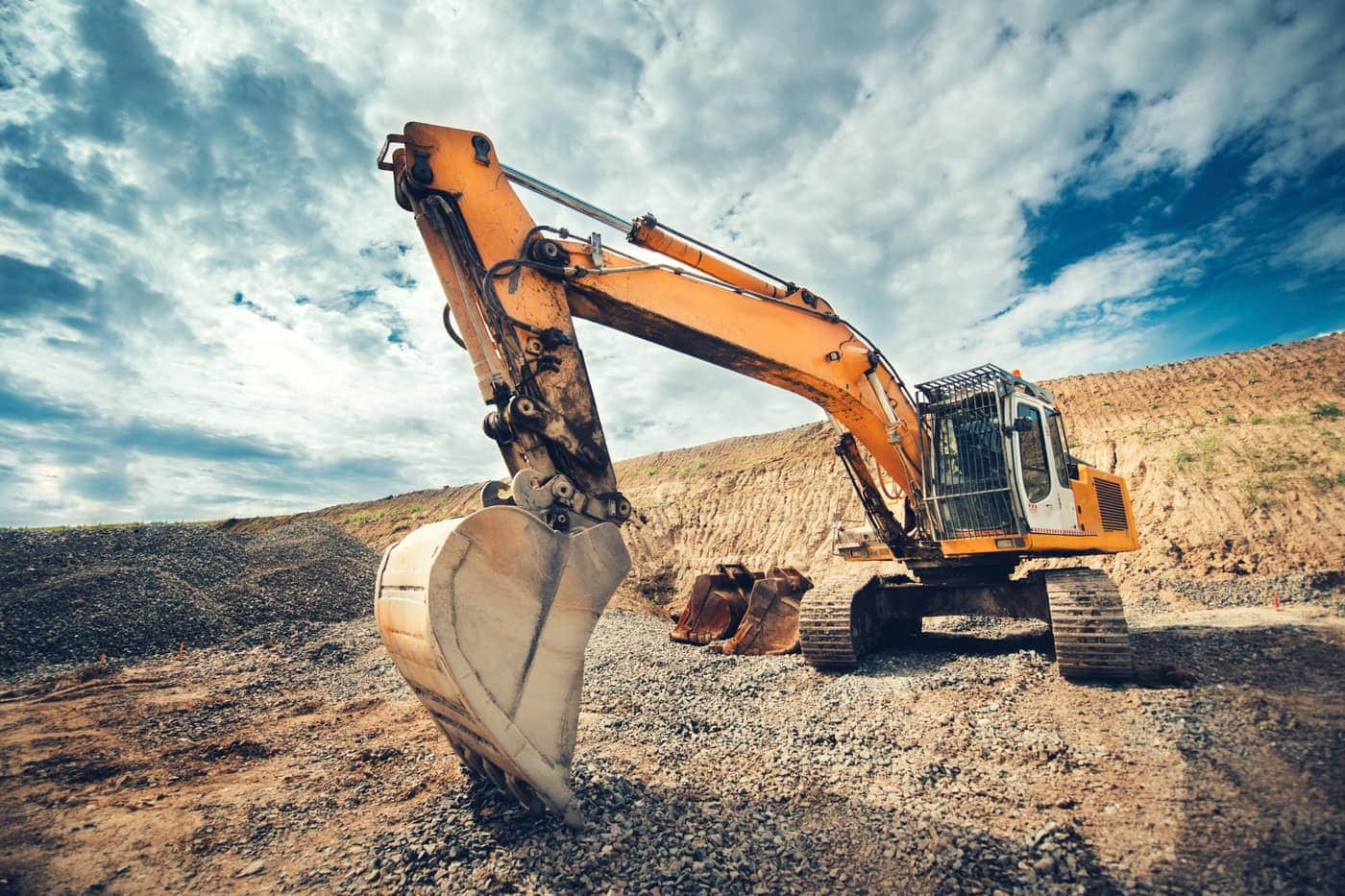
Estimate an excavation job by pricing each cost on its own line: quantities, haul, machines, crew, overhead and insurance. Nationwide, a small excavating business pays around $500–$1,200+/yr for general liability and a full program runs above $2,000–$7,000+/yr as the contractor grows, figures Nate Jones, CPCU, has verified from the agency’s own experience.
The rest is method. Production rates, hourly prices and markup belong to your own books, so none appear here.
What an estimate has to answer
An estimate answers three questions in order: what has to be moved, what it takes to move it, and what else the job asks of the company. If any of them is answered with a guess, the price is a guess, however tidy the spreadsheet looks. Write the answers down as you go, because the writing is what you will check against later.
Begin with the documents. Plans, a survey, a soil report if there is one, the specification, the schedule and the contract all carry costs that never appear on a takeoff. Read the insurance pages at the same time as the drawings. They can call for endorsements, limits or policies that take time to arrange, and that is part of the price too.
Then walk the site with the plan in your hand. A plan shows the finished grade. The site shows the gate that is too narrow, the neighbor’s fence on the line, the wet corner and the place a truck cannot turn around.
Scope and quantities: measure the dirt first
Quantities are the base of the estimate, so measure them before anything is priced. Work out the cut, the fill, the strip, the trench by length and depth, and the backfill and bedding that go back in. Keep each as its own line. A single lump for dirt hides the part that will hurt.
Remember that soil changes volume. What comes out of the ground loose is not the volume it had in place, and what goes back compacted is different again. Use the swell and shrink behavior you have seen in your own soils, note which condition each quantity is in, and never add loose and compacted quantities as if they were alike.
Draw the edges of the scope with care. Who strips the topsoil, who handles erosion control, who brings the bedding, who patches the street and who tests compaction are questions a vague bid answers in the customer’s favor. List what is included, then list what is not.
Access and soil: what the site will let you do
Access decides which machine can do the work, and the machine decides how long it takes. Note the gate, the overhead lines, the slope, the distance from the cut to the pile and the room to load. A bigger machine is only cheaper when it fits, can turn and has trucks waiting for it.
Soil decides the rest. Sand that will not stand, clay that will not dry, rock that does not show on the surface and old fill with debris in it all change the pace, the protection a trench needs and where the spoil can go. Ask for the soil report, and if there is none, say in the bid what you assumed.
Trench protection is a cost line and a safety duty at once. OSHA publishes the federal excavation standards, and a competent person on your side should decide what the cut needs. Price the box, the shoring or the extra width before you price the pipe. Protection that was left out of the number can be argued about in the hole.
Utilities, locates and time spent waiting
Locates cost time, so give them a line. Count the lead time before the work can start, the walk with the marks, the hand work or vacuum work close to a line, and the hours a crew may stand by when a mark is missing. A request can start with the national before-you-dig service.
Notice and marking rules differ by state, and the state pages list who to ask where your jobs are. Put the wait in the schedule rather than in hope: a job that cannot start until the marks are down is a job with a fixed cost before the first bucket.
Private lines deserve a question of their own. Ask the owner about anything on the property that a utility would not mark, such as a line to a barn, a light pole or an old tank, and write the answer into the bid.
Haul and disposal: follow the load to the end
Haul is a separate job riding inside the estimate, and it is priced by following a load all the way to where it stays. Count the loads from the loose quantity, the distance, the wait at each end and the trucks it takes to keep the machine busy. An idle excavator is a cost, and so is a line of idle trucks.
Disposal needs a destination before the bid is final. Clean fill, wet soil, broken concrete and suspect material go to different places on different terms. Ask the site for what it knows about the history of the ground, and say in the bid who pays if the material turns out to be something else.
Import belongs here too. Stone, sand and select fill arrive on trucks with the same waits, and their price can change between bid and delivery. Date the quote you are relying on, and say how long your own price holds.
Equipment and crew time, written as line items
Equipment and crew time are the largest pieces an owner controls, and they are easiest to check when they are broken out by task. For each task, name the machine, the operator, the laborers and the hours. Then add the pieces that are easy to lose: moving in, moving out, setup, cleanup, fuel, wear and the day it rains.
Cost your own machines as though you rented them. A paid-for excavator still wears out, still needs tracks and pins, and still takes a place on the contractors equipment schedule. If the machine is rented, read the rental agreement for who answers for damage while it is in your hands, because that can add a coverage question to the job.
Crew time includes the cost of employing the crew. Payroll taxes, time off, training and workers’ compensation follow every hour on the sheet. An estimate that shows operator hours and laborer hours separately also gives you the split a payroll review can ask about. If a crew rule is unclear where the job sits, the U.S. labor department lists who to call in each state.
Real-World Scenario: An owner bids a basement dig from the plans alone and prices the spoil as a short haul to the next lot. On the first day the neighbor withdraws permission, and the trucks have to run across town instead. The quantity was right, the machine was right and the crew was fast, and the job still lost money on a line that was never written down. On the next bid the owner lists where the spoil goes, who agreed to it and what happens to the price if that changes.
Overhead: the costs no job owns alone
Overhead is the part of the business that exists whether or not a machine is running, and every job has to carry a share of it. The office, the shop, the yard, the phones, the truck that runs for parts, the estimate you did not win and your own time all belong in it. Leave it out and busy seasons hide the loss.
Spread it in a way you can defend. Some owners spread overhead across crew hours, others across machine hours or total direct cost. The method matters less than using the same method every time, so that a price from this spring can be compared with a price from last fall.
Check the yard while you are at it. The buildings, the tools and the stock inside them are a property insurance question, and their cost is overhead that a new owner can forget until the renewal arrives.
Insurance as a cost line and a bid requirement
Insurance shows up in an estimate twice: as a cost the company carries all year, and as a requirement a particular job can add to. Keep those apart. The premium for the excavation insurance program you carry all year can sit in overhead. Whatever this contract alone adds, such as an endorsement or a higher limit, can go on this job’s sheet.
Read the insurance pages before the price is final. General liability wording on underground damage, an umbrella for a higher limit, commercial auto for the haul: each can be named in a contract, and each can change what the job costs you. Our guide to the general liability and workers’ compensation lines of a bid goes through an exhibit slowly.
If the cost of a request cannot be known before bid day, say in the bid that the price assumes the program you carry now. Owners setting up a first program can start with the federal small-business insurance page.
Contingency, so the unknowns have a price
Contingency is money set aside for the things you know you do not know, and it is not a cushion for sloppy measuring. List the unknowns first: hidden rock, water, an unmarked structure, a late start, a price that moves. Then decide, item by item, whether to carry it, exclude it or share it with the customer by way of a change procedure.
Write the choice into the bid. A customer who reads that rock is handled as a change knows what to expect. A customer who finds out later feels ambushed, and the conversation is harder with a machine sitting in the hole. Clear terms are cheaper than a good argument.
Small, familiar jobs on ground you know may need little of it. A deep cut beside an old building, on a site with no history, is a different conversation, and the honest answer may be that you will not price it without more information.
Check the number before it leaves the office
A finished estimate deserves a second look by someone who did not build it. Have them follow the quantities to the hours, the hours to the machines and the haul to its end, and ask what would have to go wrong for the job to lose money. If the answer is a single item, fix that item.
Then compare it with a job you have done. If a similar cut took far more crew time than this sheet allows, find out why before you send it. Keep the sheet afterward, put the real hours beside the estimate, and the next bid starts from evidence.
If the number includes insurance you do not yet carry, ask for a quote before the bid goes out and attach the contract. Owners weighing what a program costs in a single market can read our Salt Lake City cost post.