
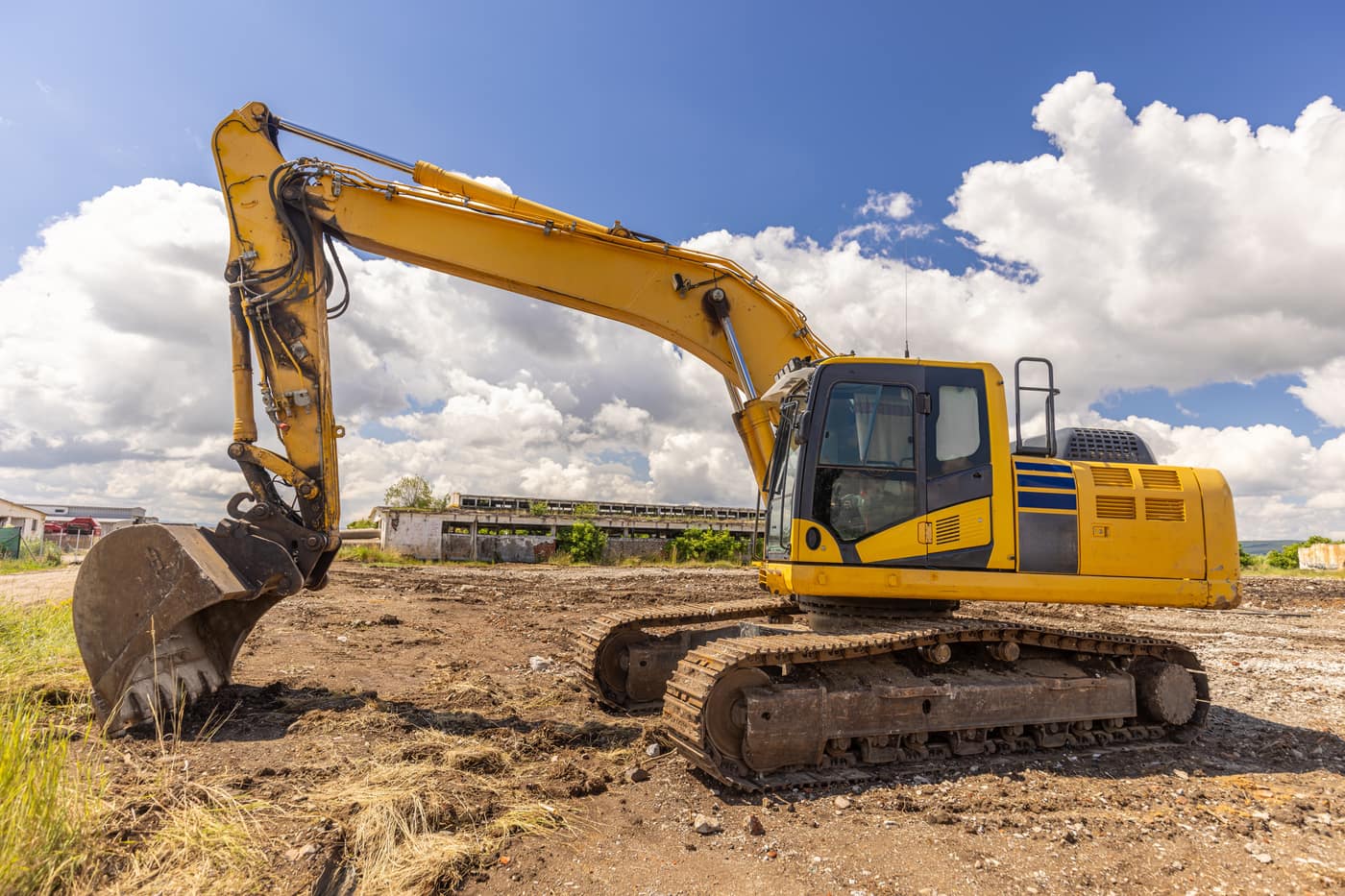
Minnesota’s statutes define an excavator in these words: “means a person who conducts excavation in the state” (§ 216D.01). For an excavation business that definition sits next to a notice duty, a workers’ compensation duty that follows the payroll, and a licensing rule for excavation work that we have not confirmed.
The useful next step is to gather what an application asks for and send it through our quote form. Our overview of excavation insurance explains the program in general, and the sections below set Minnesota’s stated rules beside each part of it.
Gopher State One Call and Minnesota’s notice-of-excavation section
Gopher State One Call is Minnesota’s one-call notification system. The notice section reads: “an excavator must and a land surveyor may contact the notification center and provide notice at least 48 hours, excluding the day of notification, Saturdays, Sundays, and holidays and not more than 14 calendar days before beginning any excavation or boundary survey” (§ 216D.04).
The section makes an exception for an emergency, and how the center handles one is a question for Gopher State One Call. The excavator is the person who conducts the excavation, so a foundation digger, a utility trench crew and a site grader each ask whether they are the ones working the ground or the ones who hired it out.
A written note of each notice earns its place when a claim arrives. Record the date and time, who made the call, the address and the work described, and the ticket details the center gives back. Staple it to the job folder. An adjuster reading a loss may want to see when the crew called and what it said it would do, and your agent can answer a question about your contract much faster when the note is already in hand.
A diagram of a Minnesota job in stages. The notice goes to the state notification center, the crew digs, a utility line is struck, and a claim may follow that the policy wording then answers. No figures are shown.
Cut main, cracked duct, claim letter: reading a Minnesota loss
What an excavation business worries about first is harm to a neighbor’s or a utility owner’s property when a machine strikes a buried gas or utility line. A bucket that finds a service line in Minneapolis may be presented to a liability policy as a claim, and whether it pays depends on the policy’s own terms.
Three papers shape that answer. The first is the application, where you described the work, the machines and the sites. The second is the limits page of the policy. The third is the contract your crew signed, which may allocate who answers for damage to a line. A gap between what the application said and what the crew did is a conversation worth having with your agent before a loss, not after.
A claim from a utility owner or a neighbor may arrive as a letter that asks for repair costs. Send it to your agent the day it comes, with the written note of your notice and the contract. Do not promise payment in writing before the policy has been read, and keep photographs of the cut and the line if your crew took any. Notes on who was on the machine and who was spotting help the agent describe the loss accurately.
Excavation licensing in Minnesota: an open question
We have not confirmed how Minnesota licenses excavation work. The Minnesota Department of Labor and Industry is a reasonable first call, though we have not confirmed that it handles excavation licensing. Read the bid documents of whoever hired you for license terms, and bring what you learn to your agent, since the application asks which licenses and registrations you hold.
Minnesota workers’ compensation: the insure-or-self-insure section and two open lines
Minnesota’s security-for-compensation section says: “Every employer, except the state and its municipal subdivisions, liable under this chapter to pay compensation shall insure payment of compensation with some insurance carrier authorized to insure workers' compensation liability in this state” (§ 176.181).
Two parts are unconfirmed: the headcount at which an employer becomes liable under the chapter, and whether an owner may choose to stay off the policy. The Minnesota Department of Labor and Industry is the place for both questions. Your agent can then build the policy on what it says.
On the payroll side, the application asks for the work each person does, since the person who runs the loader and the person who sets pipe in the trench may be described differently. Keep job titles and hours straight from the start of the year so the payroll you report matches the work done.
The no-fault statute’s limits, and the commercial-truck question left open
Minnesota’s no-fault law prints residual liability limits for plans of reparation security. The statute reads:
“of not less than $30,000 because of bodily injury to one person in any one accident and, subject to said limit for one person, of not less than $60,000 because of injury to two or more persons in any one accident, and, if the accident has resulted in injury to or destruction of property, of not less than $10,000 because of such injury to or destruction of property of others in any one accident” (§ 65B.49)
A separate minimum for commercial vehicles is not confirmed. A dump truck, a tag trailer and a pickup that hauls a skid of pipe are each described on the commercial auto schedule, with their weights, their uses and who drives them. Ask the Minnesota Department of Commerce about the commercial question, and have your agent read your schedule against its answer before you pick limits.
A truck rented for a one-off haul, or a crew member’s own pickup driven on the job, should be named on the application too.
A stack of labeled layers, top to bottom: Minnesota call-before-you-dig center; Minnesota Department of Commerce; Minnesota Department of Labor and Industry; Your agent, with each reply. No figures are shown.
A Minnesota excavation program: the cut, the crew, the truck, the machine, the limits, the lot
General Liability: the bucket and what is on the far side of it
General liability insurance is the line a neighbor’s or a utility owner’s property damage claim may be presented under. Picture a footing dig in Rochester that reaches a service line, or a trench at the edge of a lot that undermines a wall. The application’s description of the work, the limits on the policy and the contract decide what is paid. Ask about the exclusions that touch underground work, and describe your hydro excavation and trenching so the policy is written for what the crew does.
Workers’ Compensation: the payroll behind the machine
Workers’ compensation insurance sits close to the payroll. The operator, the laborer, the pipe layer and the driver may each carry a different description on the application. The headcount line and the owner’s choice are the two open questions. Keep payroll records by job title from the first week of the policy year, since the premium may be adjusted against them afterward, and note which workers are employees and which are subcontractors with their own policies.
Commercial Auto Insurance: the dump truck leaving a Bloomington lot
Commercial auto insurance follows the vehicles that carry spoil, stone and pipe between sites and the yard. Minnesota’s no-fault statute prints residual liability limits for plans of reparation security, and a separate commercial minimum is unconfirmed, so the schedule is worth reading closely. List each truck with its use, its garaging address and its drivers. Add the trailers that tow behind them, the pickups that go to the supply house and any vehicle a foreman owns that the crew drives on the job.
Contractors Equipment Insurance: the track machine and its attachments
The track excavator, the skid steer, the plate compactor and the buckets, thumbs and breakers that bolt onto them are a different exposure from the trucks. Contractors equipment insurance may list each unit with a stated value, so the machine that rolls off a trailer or goes missing from a Duluth job site is read against that figure on the policy’s terms. Tell the agent where each unit is parked overnight, who moves it and whether you rent equipment in or out, since the wording on rented machines and on transit may differ between policies.
Umbrella Insurance: a second layer for the large loss
A struck gas main, a collapsed wall or a damaged fiber duct can produce a claim larger than the limits of the primary liability policy. Umbrella insurance may add limits above the underlying liability policies, subject to its own terms and to what the underlying policies require. A general contractor or public owner may name a limit in a bid, which is the moment to compare it with what you carry and ask your agent what an added layer would sit above.
Property Insurance: the Minnesota office, shop and parts bins
Property insurance is for the buildings and the contents you own or lease: the tools, the fuel tank, the parts and the stock kept in the yard. A fire in the shop or a break-in at the yard is a different loss from a struck line, and may be handled under a different policy on its terms. Describe the building, how it is heated and protected, and what is stored there. Equipment that lives outside on the lot may belong on the contractors equipment schedule instead, so ask how the two fit together.
When you are ready to see the six together, send the work you do through our quote form and we will come back with options to read.
Excavation work, from basements to trenches
An application sorts excavation into kinds of work, and each kind raises its own questions. Describe each one you do in your own words and the underwriter can see the whole shop. A business that does one kind of job and a business that does all of them are priced from what they say they do, so leave nothing out and add nothing you do not do.
Bulk digging and hauling off
This is the job of opening ground and moving what comes out. The application asks what the crew excavates, to what depth and where the material goes, and whether your own trucks do the hauling or a hired hauler does. Name the sites you load from and any hauling you hand to another company, so the application shows who is on the road with your spoil.
Shaping a pad
Grading a pad for a builder means cutting and filling to a grade. Say whether you work to staked plans, whether you compact, and which jobs sit beside public roads, existing utilities or the next owner’s lot. If a surveyor or an engineer sets the grade, say so, since it shows where responsibility for the numbers sits.
Preparing raw ground
Site preparation readies a lot for the trades that follow. Describe the machines, any subcontractors you bring in and how much of the work happens near property that belongs to someone else. Say who sets up erosion and access controls on the site, if it is your crew.
Narrow cuts for lines
A trench for water, sewer, gas or cable is where a strike can happen. Say how you locate lines, how you hand-dig near marks and who on the crew keeps the notice paperwork. Say too whether you backfill and restore, or hand the open cut to another contractor.
Foundation holes and basement cuts
A hole for a house or a building is dug beside a lot line and may sit beside a neighbor. The application wants to know about shoring, adjacent structures and who answers for each, and whether another contractor pours or backfills after you leave.
Water-and-vacuum digging
Hydro excavation clears soil from around buried lines with a water jet and a vacuum truck. Describe the truck, the operators, where the spoil goes and whether you work for utilities or for contractors, since the equipment and the exposure differ from a bucket.
The questions an underwriter may put to a Minnesota dig business
Expect the application to ask what you dig and how, which machines you own, how large the crew is and in what jobs, what you subcontract out and what you haul. It may ask about your largest jobs, your safety practices around buried lines and your claim history.
It may also ask whether you give notice through Gopher State One Call, and where you keep the notes of each notice. Answer from the paper in your job folders. A tidy answer gives an underwriter something to read, and an incomplete one can slow the quote down. Hold off on guesses, and ask your agent when a question does not fit your operation.
Be ready to describe the people as well as the machines. An underwriter may ask who runs the equipment, who supervises, how new hands are trained and whether a foreman walks the line locations before the machine moves. Those answers are the part of the application that only you can write.
A business that mixes excavation with other trades should describe each on the application, and the agent will sort what belongs in this program and what needs its own.
Where a Minnesota question goes, from the locate to the policy
Gopher State One Call takes questions about notice and the notification system. The Minnesota Department of Labor and Industry takes the headcount and owner-election questions. The Minnesota Department of Commerce takes the commercial vehicle question.
Insurance paragraphs in a Minnesota prime contract or city bid
A prime contract or a public bid may ask for certificates, named insured wording, limits and a waiver of rights against the owner. Read the insurance article before you sign it, and send it to your agent. Where a clause names a limit, compare it with what you carry. Where it names a form of coverage you do not have, ask what it would take to add it.
When an owner asks for proof of insurance, your agent issues the certificate on your request. Send the contract along with the request so the agent sees the wording the owner wants. Keep a copy of each certificate with the job folder, and note the date each one was issued, so you can answer when an owner asks what you sent and when.
Starting out in Minnesota: your first subs and your first requests for proof of insurance
A new excavation business may hire its first subcontractor within months. Ask each one for a certificate of its own, and keep it with the job folder. Your agent can tell you what a subcontractor’s coverage does and does not do for you, and your own application should list the subcontracted work. When the first general contractor asks you for a certificate, send the contract with the request and the agent can set it up correctly.
A first season is also the time to set up habits an underwriter may ask about: a folder for each job, a note of each locate notice, a list of machines with their attachments and a payroll sheet by job title. Those few pages answer much of what an application asks.
Items to gather before a Minnesota quote request
- The written notes of your recent locate notices.
- A list of the work you do, in your own words.
- Each machine, with its attachments and where it is parked.
- Each truck and trailer, with its use and drivers.
- Payroll by job title.
- Your subcontractors and their certificates.
- The insurance paragraphs of your current contracts.
Minnesota’s open questions and who answers each
Four questions remain open: how excavation work is licensed, the headcount line for workers’ compensation, whether an owner may stay off the policy, and the minimum for commercial vehicles. The offices named above take them in turn, and the answers belong on your application.